5 Spiral Stairways to Give Your Treehouse a Statement Entrance
We may earn a commission for purchases made using our links. Please see our disclosure to learn more.
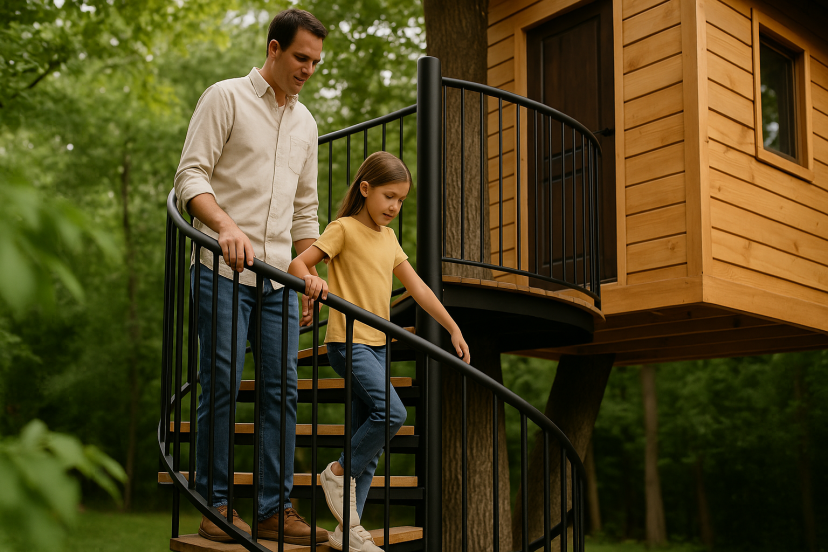
If your treehouse feels amazing once you’re up there… but getting up there feels like a wobbly ladder situation, you’re not alone. A lot of treehouses start with “we’ll figure out the access later,” and later turns into: steep steps, awkward landings, and everyone gripping the railing like they’re boarding a pirate ship.
That’s exactly where Spiral Stairways shine. They’re space-saving stairs with serious personality—like giving your treehouse an entrance that says, “Yes, this is a real destination.”
In this guide, I’ll walk you through how Spiral Stairways work in real life (not just in dreamy Pinterest photos), what size and safety details matter, the 5 statement styles worth considering, and a practical Amazon product shortlist if you’re ready to build.
Affiliate note: This article includes a small selection of products; if you buy through those recommendations, you may support the site at no extra cost to you.
Why Spiral Stairways feel like the “main character” entrance
A straight staircase is practical. A ladder is… a ladder. But Spiral Stairways? They turn the climb into part of the experience.
They’re especially great when:
- Your treehouse platform is small and you can’t spare a long run for straight stairs.
- You want a wow-factor entrance without building a giant deck.
- You need a compact staircase that fits between trees, posts, or landscaping.
And honestly? They feel fun. Like walking into a tiny tower—without needing an actual castle budget.
Spiral Stairways vs ladders and straight stairs
Let’s be real: Spiral Stairways aren’t automatically “better.” They’re better for certain goals.
Spiral Stairways (best for):
- Tight footprints
- Style-forward builds
- A controlled, guided path up
Straight stairs (best for):
- Moving bulky stuff (coolers, bins, awkward furniture)
- High traffic daily use
- Maximum comfort
Ladders (best for):
- Tiny builds
- Minimal budgets
- Occasional use (not “multiple kids sprinting up at once” use)
If your treehouse is a hangout spot you’ll use often, Spiral Stairways can be a sweet middle ground: safer and more stable than a ladder, and far less space-hungry than straight stairs.
The sizing cheat sheet you’ll thank yourself for later
Sizing Spiral Stairways is where most people either win big… or end up with a staircase that “works” but feels cramped.
Here’s the friendly cheat sheet:
- Bigger diameter = happier feet. More room at the walkline, less tip-toeing.
- Plan your “well opening.” You need adequate clearance at the top where you step off.
- Headroom matters. Nothing ruins the magic like bonking your head every climb.
If you’re unsure, size up. Spiral stair comfort improves fast with a little extra diameter.
Comfort reality check: who’s actually using these stairs?
This is my favorite “be honest” moment.
Ask yourself:
- Will toddlers use this?
- Will grandparents use this?
- Will someone carry snacks, blankets, or a sleepy kid up and down?
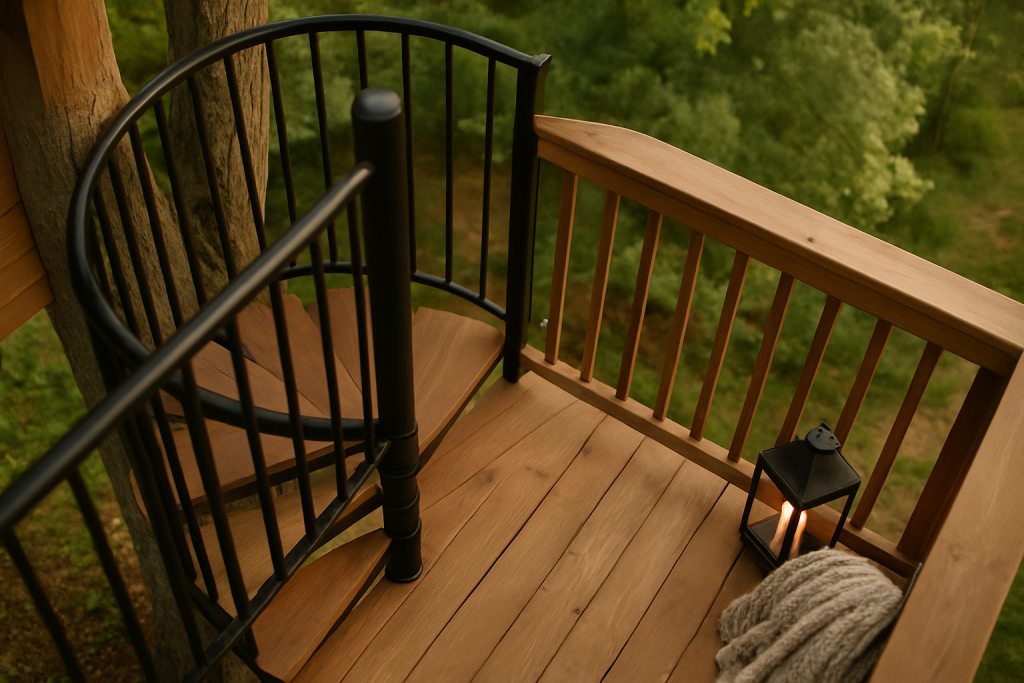
Spiral staircases naturally narrow toward the center. Most people walk at the walkline (roughly mid-to-outer area), so you want enough usable tread depth there.
If your treehouse is primarily for kids, great—kids adapt quickly. If it’s a family hangout for all ages, prioritize:
- wider diameter,
- solid handrails,
- non-slip surfaces,
- good lighting.
Safety features you shouldn’t compromise on
If Spiral Stairways are “the vibe,” safety is “the foundation.”
Must-haves:
- A continuous handrail you can actually grip the whole way.
- Consistent riser height (no surprise “tall step” halfway up).
- Non-slip treads (especially for outdoor spiral staircase setups).
- A protected top exit so the step-off feels stable, not cliffy.
If you only upgrade one thing: upgrade traction. Wet steps plus excitement equals chaos.
Codes, permits, and neighbor-proof planning
I’ll keep this simple: codes vary by location, but many building codes include specific spiral stair allowances (often with minimum clear width and tread depth requirements). For example, the International Residential Code (IRC) spells out minimum clear width at/under the handrail and minimum tread depth measured at a specific point on the tread.
Even if you’re building a backyard treehouse and not a formal “dwelling,” permits may still apply depending on height, electrical, or structural scope.
If you want the low-stress route:
- check your local rules,
- keep the stair structure sturdy and consistent,
- and don’t skip railings just because it “looks clean.”
Materials & finishes that survive outdoors
Your material choice affects more than looks—it affects maintenance and grip.
Metal spiral staircase options
- Strong, stable, and often lower maintenance
- Can get hot in direct sun
- Needs rust-resistant coatings outdoors
Wooden spiral staircase options
- Warm, natural, treehouse-friendly
- Needs sealing and periodic care
- Can get slippery without texture/grip
Hybrid (metal frame + wood tread covers)
- Great compromise: structure + warmth
- Often feels more comfortable underfoot
Think of it like shoes: metal is the tough boot, wood is the cozy sneaker, and hybrid is the “hiking shoe that looks cute.”
Lighting that feels magical and keeps feet safe
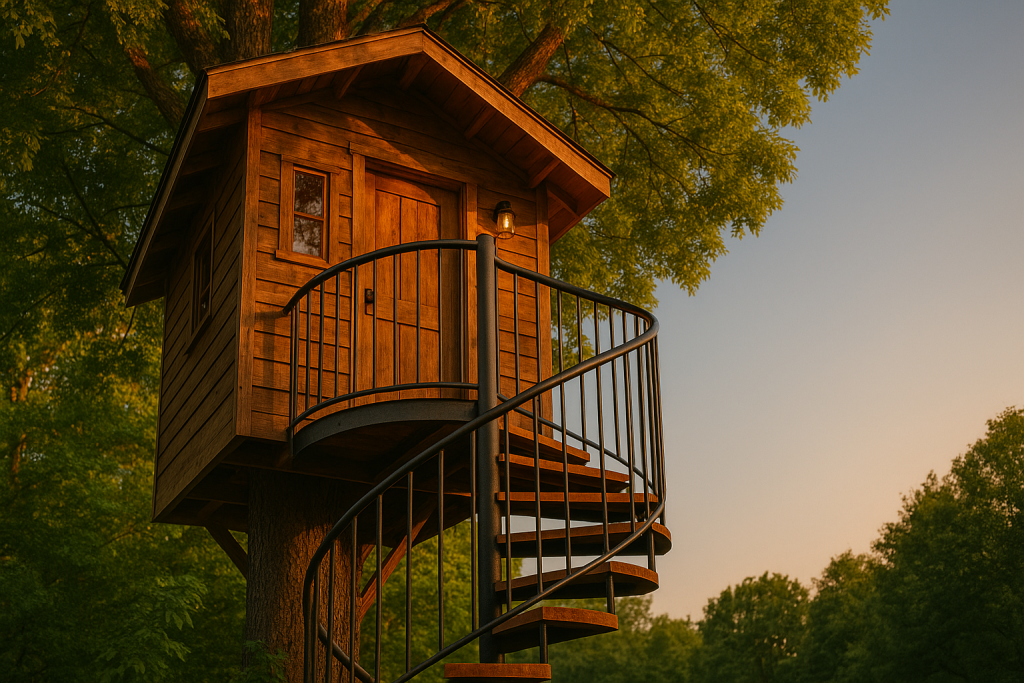
Lighting is both mood and safety. Love that for us.
What works well:
- low-glare step lights (aimed downward),
- warm string lights on railing (not dangling near feet),
- motion lights near the base (so no one starts in the dark).
If your treehouse is a “sunset spot,” lighting is the difference between “cozy” and “slip hazard.”
Weatherproofing and maintenance without drama
Spiral Stairways outdoors live a hard life: rain, sun, dirt, and the occasional muddy shoe stampede.
A simple maintenance rhythm:
- Monthly: quick brush-off, check for wobble, tighten hardware.
- Seasonally: inspect tread surfaces, refresh traction strips if needed.
- Annually: re-seal wood or touch up coatings where wear shows.
Little, consistent care beats the big “oh no it’s rusty” surprise.
Installation game plan: DIY-friendly steps vs call-a-pro moments
Some spiral staircase kits are designed for DIY installation. Others… technically are, but your back and your patience may disagree.
DIY-friendly when:
- you have a solid, level base,
- the kit includes clear instructions,
- you can measure carefully and take your time.
Call-a-pro moments:
- uneven terrain + tall rise,
- complicated anchoring,
- you’re adding electrical lighting,
- you’re not confident in structural fastening.
A treehouse staircase is not the place for “meh, close enough.”
Budget expectations and where to spend (and save)
Spiral Stairways range from budget-friendly to “architectural centerpiece.”
Spend on:
- stability (base, anchoring, hardware),
- handrails,
- traction,
- weather resistance.
Save on:
- cosmetic details you can upgrade later (rail wrap, decorative panels),
- fancy finishes that don’t improve safety.
If you’re torn: choose the safe, sturdy version first. You can always make it prettier.
Make the entry feel like a destination, not just a staircase
One of the easiest ways to make Spiral Stairways feel intentional is to design the “arrival moment.”
Ideas:
- a small landing deck with a bench,
- a shade sail or canopy,
- a cozy seat where someone can wait their turn.
And if you’re building the hangout vibe, pairing the space with a comfy lounge option makes the whole entrance feel like it leads somewhere special.
5 Amazon products to support your Spiral Stairways project
Below are five practical picks—two spiral staircase kits, plus traction + lighting support—because the best staircase is the one people feel confident using.
1) Mylen STAIRS Condor Black Interior 60″ Diameter Spiral Stair Kit
Short description: A spiral staircase kit designed for interior use with a 60-inch diameter footprint and a listed 26-inch clear walk path.
Features:
- 60″ diameter
- 26″ clear walking path
- Fits ~102″–114″ floor-to-floor height (11 treads)
Pros: solid footprint; predictable sizing; “real staircase” feel
Cons: interior-only use cases; needs careful anchoring
Use cases: loft-style treehouse entry, enclosed or covered structures
Review snapshot: Common praise centers on sturdy, kit-based convenience; complaints often involve the need for precise measuring and the bulk of components (typical for stair kits).
2) Mylen STAIRS Reroute Galvanized Exterior 60″ Diameter Spiral Stair Kit
Short description: An outdoor-ready spiral stair kit with a galvanized finish and similar 60-inch diameter footprint.
Features:
- Galvanized/weather-focused finish messaging
- 60″ diameter; 26″ clear walk path
- Fits ~110.5″–123.5″ floor-to-floor height (12 treads)
Pros: outdoor-friendly finish; sized for common deck/treehouse heights
Cons: higher cost tier; still needs traction planning in wet weather
Use cases: open-air treehouses, backyard structures, deck-to-platform access
Review snapshot: People typically love the outdoor durability angle; common gripes tend to be shipping/weight and installation time.
3) Arke Nice1 Wood Tread Spiral Staircase Kit (Satin Grey)
Short description: A style-forward spiral staircase kit with a 63-inch diameter listing and wood tread vibes.
Features:
- 63″ diameter listing
- Adjustable height range in the product title/listing
Pros: warm look; good “statement piece” energy
Cons: verify exact height range + compatibility before buying
Use cases: covered treehouse builds, interior-access treehouses, “modern rustic” designs
Review snapshot: Common praise is aesthetics; common complaints are usually about matching the kit to exact floor heights (double-checking matters).
4) 3M Safety-Walk Slip-Resistant Tapes and Treads 610
Short description: A serious traction upgrade you can add to steps, landings, and “slippery when excited” zones.
Features:
- Mineral-coated slip-resistant surface
- Available in tape/tread formats and sizes
Pros: big safety payoff; easy to apply; works on many surfaces
Cons: needs clean prep; edges can wear over time outdoors
Use cases: outdoor spiral staircase treads, top landing, step-off area
Review snapshot: People love the grip; complaints usually show up when applied on dusty/wet surfaces or without proper prep.
5) SOLPEX Solar Deck Lights Outdoor (16 Pack, Warm White)
Short description: Simple step lighting that adds safety and cozy “treehouse glow” vibes.
Features:
- Auto on/off; charges in about 4–5 hours of sun
- Warm light aimed for stairs/decks
Pros: easy atmosphere; helps kids see steps; no wiring
Cons: brightness depends on sun exposure; batteries/panels age over time
Use cases: spiral stair outer edge lighting; base zone lighting; railing posts
Review snapshot: Praise: easy install + ambiance. Complaints: reduced runtime after cloudy days (common with solar).
One more idea for your treehouse landing: If you want the top (or bottom) of your Spiral Stairways to feel like a mini “arrival lounge,” pair it with a cozy seat—like a pod hanging outdoor chair with cushion—so the entrance becomes part of the retreat.
Research-backed notes: what the data and experts say
Two credibility anchors to keep your build smart:
- Stair injuries are common—and consistent design helps. A large U.S. emergency department study reported an estimated 24,760,843 stair-related injuries over a multi-year period (1990–2012), averaging over 1 million injuries annually. That doesn’t mean Spiral Stairways are “bad.” It means stairs deserve respect—especially around lighting, traction, and handrails.
- Codes specify minimums for a reason. The IRC includes requirements for spiral stairways such as minimum clear width and minimum tread depth measured at a defined point, which helps reduce the “tight + tricky” feeling that can lead to missteps.
FAQ: Are Spiral Stairways safe for kids in a treehouse?
Yes—when you design for them. Choose a larger diameter (roomier walkline), add reliable traction, install a continuous handrail, and use step lighting so every tread is visible.
FAQ: What diameter Spiral Stairways feel comfortable, not cramped?
Bigger is usually better. A larger diameter gives you more usable tread depth where people actually step, which feels more stable—especially for adults and anyone carrying items.
FAQ: Do Spiral Stairways work for an outdoor treehouse?
They can, as long as the materials and finishes are outdoor-ready. Prioritize corrosion resistance, add non-slip tread solutions, and plan for seasonal maintenance.
FAQ: Can I DIY a spiral staircase kit for my treehouse?
Many people do—if the base is solid, measurements are precise, and you take your time. If the install involves complex anchoring, uneven terrain, or tall rises, a pro can be worth it.
FAQ: What’s the biggest mistake people make with Spiral Stairways?
Underestimating traction and lighting. The stairs can look perfect in daylight, then get sketchy at dusk or after rain. Grip + visibility = confidence.
Conclusion (a gentle pep talk):
If you want your treehouse to feel like a real retreat—not just a platform in the air—Spiral Stairways can be the entrance that changes everything. Pick a style that fits your space, size it for real humans (not just photos), and build in the safety details that make everyone relax. And when you’re done? Take a step back and enjoy it—because you didn’t just add stairs. You built a little moment of wonder.