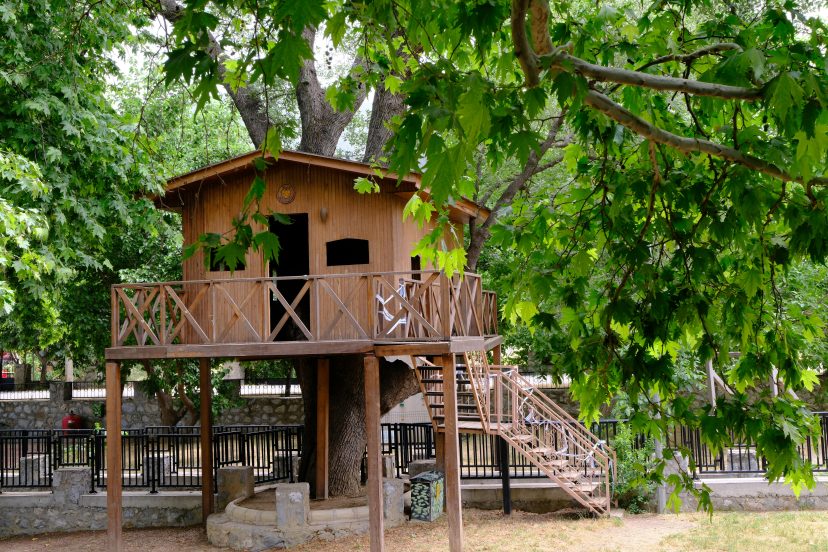
Tree Fort Kit Ideas for a Fun Backyard Build
We may earn a commission for purchases made using our links. Please see our disclosure to learn more.
A lot of parents love the idea of a backyard tree fort. Then reality shows up with a tape measure, a wobbly ladder, and the sudden fear of building something that looks cute on Pinterest but feels sketchy in real life.
That is exactly where a good tree fort kit can help.
Instead of starting from absolute zero and guessing your way through hardware, access points, and safety details, you can use a smarter starting point and build something that feels doable, fun, and worth the effort. This article will walk you through practical tree fort kit ideas, what to look for, what to avoid, and how to create a backyard space your kids will actually use.
This article includes product suggestions for convenience. If you use affiliate links later, I may earn a commission at no extra cost to you.
What Is a Tree Fort Kit?
A tree fort kit is usually a bundle of hardware, access pieces, or add-on elements that help you build a backyard fort or tree-based play structure with less guesswork. Sometimes that means structural treehouse hardware. Other times it means ladders, cargo nets, swing line systems, or safety accessories that turn a plain platform into a real play zone.
Think of it like cooking with a meal kit instead of starting with an empty fridge. You still do the work, but the hard part of figuring out what belongs together gets a lot easier.
Why a Tree Fort Kit Can Be Better Than Starting From Scratch
Building from scratch sounds romantic until you are standing in the hardware aisle comparing ten bolts that all look strangely smug.
A tree fort kit helps because it gives you a clearer lane. It can:
- reduce beginner mistakes
- make planning easier
- help you match accessories that work together
- give your build a more finished look
- save time on trial and error
That matters even more when you are building for kids. School-aged children are supposed to get at least 60 minutes of physical activity a day, and climbing, balancing, and active backyard play can help support that goal.
How to Choose the Right Tree
Before you buy a single bracket or rope ladder, start with the tree.
You want a tree that looks healthy, feels stable, and sits in a safe spot away from utility lines. Nationwide Children’s Hospital recommends choosing a strong, sturdy tree, keeping the structure away from electrical wires, and building low rather than high. It also advises planning a safe way up and down.
A good starter checklist looks like this:
- Mature trunk with no obvious decay
- No major dead limbs overhead
- No mushrooms or rot around the base
- Good distance from fences, sheds, and wires
- Enough open space below for safer fall surfacing
If your tree already makes you nervous, trust that feeling. Backyard projects should feel exciting, not like a future urgent care story.
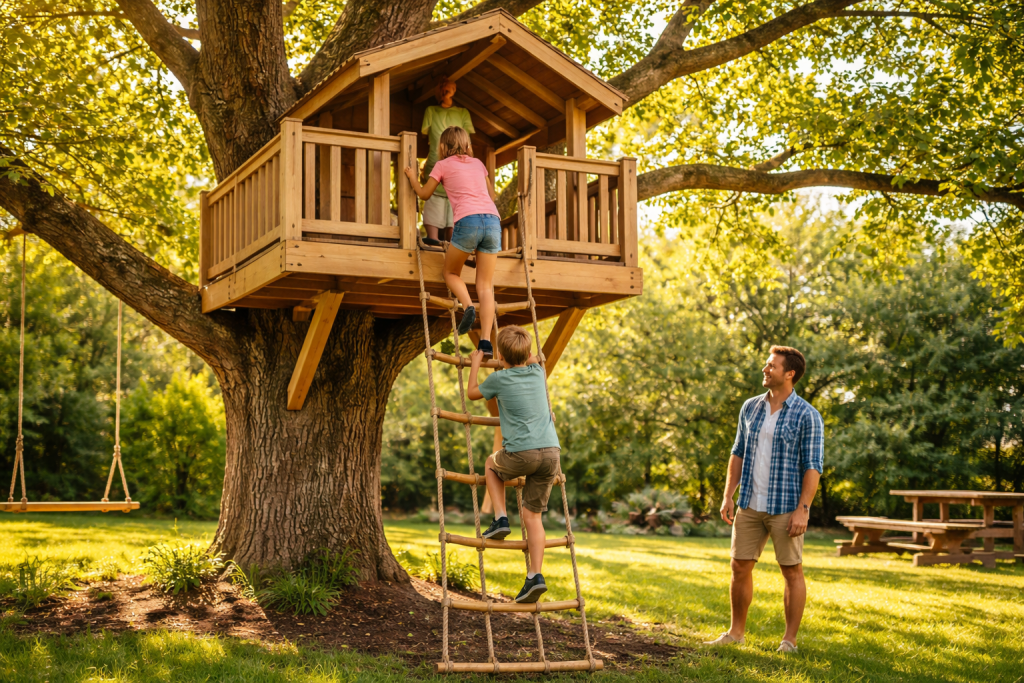
When a Tree Is Not the Right Choice
Not every yard needs a real tree-supported build.
Sometimes the smartest move is using your tree fort kit ideas on a freestanding play fort nearby instead. That can be the better choice if your tree is too young, too narrow, visibly stressed, or likely to have root damage from construction. University of Illinois Extension notes that construction can harm trees and roots if you are careless about the site.
That is not failure. That is good judgment.
A “tree fort look” can still work beautifully with:
- a raised backyard platform beside a tree
- a play fort with a cargo net and rope ladder
- a decked mini fort anchored to posts, not trunks
- a swing line or obstacle setup between two healthy trees
Sometimes the dream survives because you stopped trying to force it.
Tree Fort Kit Ideas for Any Backyard Size
The best tree fort kit is the one that fits your yard, your budget, and your energy level.
For a small backyard
Keep it simple:
- one compact platform
- one access point
- one active feature like a rope ladder or climbing net
- one calm feature like a bench or lookout rail
A smaller yard does not need less fun. It just needs better editing.
For a medium or larger backyard
Now you can think bigger:
- two-level fort zones
- connected play elements
- swing line or ninja line nearby
- lookout deck plus ground-level play space
- shaded reading nook under the platform
This is where a backyard starts feeling like a memory factory.
Tree Fort Kit Ideas That Grow With Your Kids
One mistake people make is building only for the age their child is right now.
A smarter plan is building in layers.
Start with the simple structure first. Then add features over time:
- ages 3–5: low platform, short steps, safety handles
- ages 5–8: cargo net, rope ladder, pretend-play accessories
- ages 8+: climbing features, swing elements, lookout deck, challenge course nearby
That way your tree fort kit project does not get old in one summer. It grows up a little with them.
Access Ideas: Ladders, Steps, and Nets
The way kids get into the fort matters just as much as the fort itself.
Nationwide Children’s specifically warns against ropes or chains as the main access method because of strangulation hazards. Built-in steps or a more stable ladder setup are safer choices.
Good access options include:
- angled wooden steps for younger kids
- a wooden rope ladder for older kids with decent coordination
- a cargo net as a secondary play feature, not the only entrance
- grab handles near the top platform
- a wide ladder with even spacing between rungs
A good rule here is simple: entry should feel fun, not frantic.
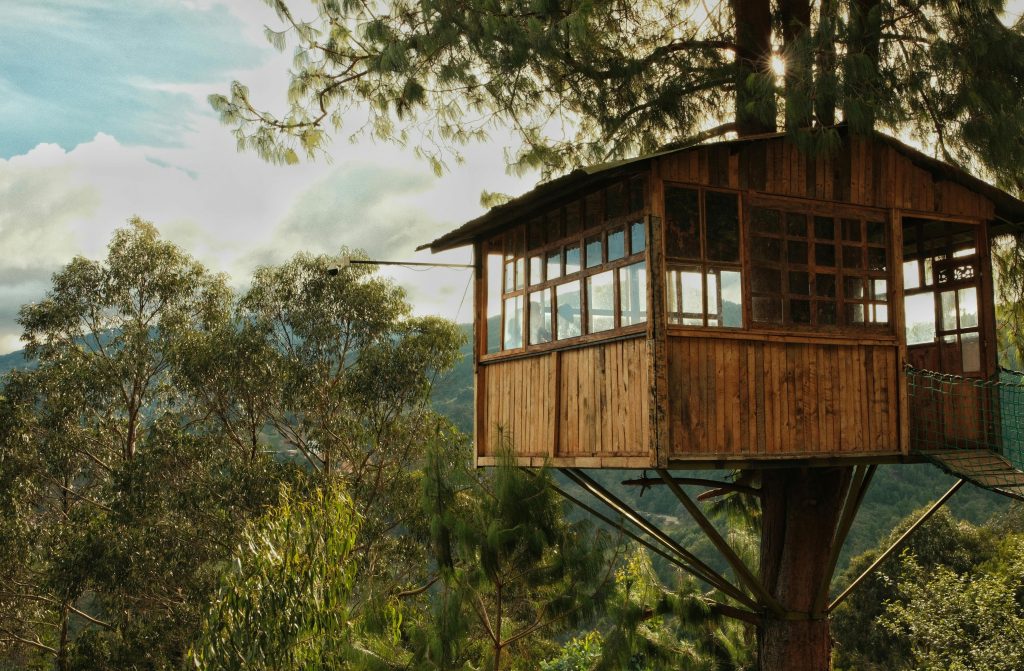
Safety Features You Should Never Skip
This is the unglamorous part, but honestly, it is the part that lets you relax.
Nationwide Children’s says tree houses higher than 10 feet are too high for kids, recommends a protective surface such as wood mulch below the structure, and advises at least 9 inches of surfacing in a 72-inch zone around it. The same guidance says barrier walls should be at least 38 inches high, and children under 6 should not use a tree house without adult supervision.
So yes, please keep the magical vibe. But also add:
- sturdy barrier walls
- rounded edges where possible
- secure handholds
- soft landing zone below
- routine checks for loose hardware, splinters, and wear
The best backyard builds are the ones that still feel safe after the fifth muddy afternoon and the seventh sibling argument.
Best Materials for a Backyard Tree Fort
If you want your tree fort kit build to last, skip flimsy materials that look tired after one rainy season.
Wood is still the favorite for good reason. It feels natural, blends with the yard, and is easier to repair over time. Powder-coated metal hardware is useful for brackets, handles, and support pieces because it holds up better outdoors than bargain-bin parts.
For accessories, look for:
- weather-resistant rope
- treated or naturally durable wood
- stainless or coated fasteners
- UV-resistant plastic parts only where needed
Cheap materials have a way of charging interest later.
How to Plan for Weather and Year-Round Use
Backyard forts get tested by weather, not by your weekend mood board.
Rain, heat, wind, and seasonal tree movement all matter. That is why you want drainage, decent sealing, and a simple maintenance habit. Even a small roof over one corner can make a big difference.
And if you are thinking ahead for colder months, this guide on how to winter-proof your treehouse is a smart internal resource to weave into your planning.
A weather-ready tree fort kit build usually includes:
- sloped roof or partial cover
- drainage gaps where needed
- non-slip steps
- a quick seasonal check after storms
- removable fabric pieces instead of permanent soggy ones
How Much a Tree Fort Kit Project Really Costs
This part catches people off guard.
The “cheap backyard fort” in your head can turn into a bigger project once you add safety pieces, access hardware, surfacing, and weatherproofing. Even simple Amazon add-ons can stack up fast, while professional-grade treehouse hardware gets expensive quickly. Amazon results for products like Slackers swing systems, rope ladders, and structural treehouse hardware show a pretty wide spread in cost, from small accessory buys to serious hardware investments.
A realistic budget usually has three layers:
- Base build: platform, lumber, main fasteners
- Safety layer: handles, barriers, surfacing, stable access
- Fun layer: ladder, net, swings, play upgrades
That order matters. Fun should never come before safe.
5 Finds That Can Upgrade Your Build
These are not magic buttons. They are useful building companions.
Nelson Treehouse Hardware Kit – Tree Fort System for 3 Trees
This is the serious option for people building a true tree-supported structure. It is designed for multi-tree support, so it makes more sense for larger, carefully planned builds than casual weekend improvising. Best for experienced DIYers or anyone working from a real plan.
Swing N Slide WS 4481 Climbing Cargo Net for Kids Outdoor Play Sets
This cargo net gives you a built-in climbing feature without making the whole fort overly complicated. Amazon lists it for outdoor play sets and obstacle-style use, with a rope-and-wood design and an extended length of 96 inches. Great for families who want a more active play entry or side challenge.
Trailblaze Wooden Rope Ladder for Kids – 6ft Outdoor Climbing Ladder
This one works well when you want access that feels adventurous but still manageable. Amazon describes real wood rungs, heavy-duty rope, and two carabiners, which makes it a nice fit for a lower platform, swing set, or backyard fort entrance. Best for kids who are past toddler stage and love to climb.
SELEWARE Green Playground Safety Grab Handles, 2 Pack
Not flashy, but honestly one of the smartest small buys. These non-slip grab handles are marketed for treehouses, playhouses, jungle gyms, and swing sets. Use them near ladders, steps, and platform entrances where kids need that extra steady hand.
Slackers Ninjaline – 36′ Intro Kit
This is less about the fort itself and more about expanding the play zone around it. Amazon lists seven hanging attachments and rates it for ages 5+, which makes it a fun add-on if your backyard fort is the “base camp” and the obstacle line is the next mission.
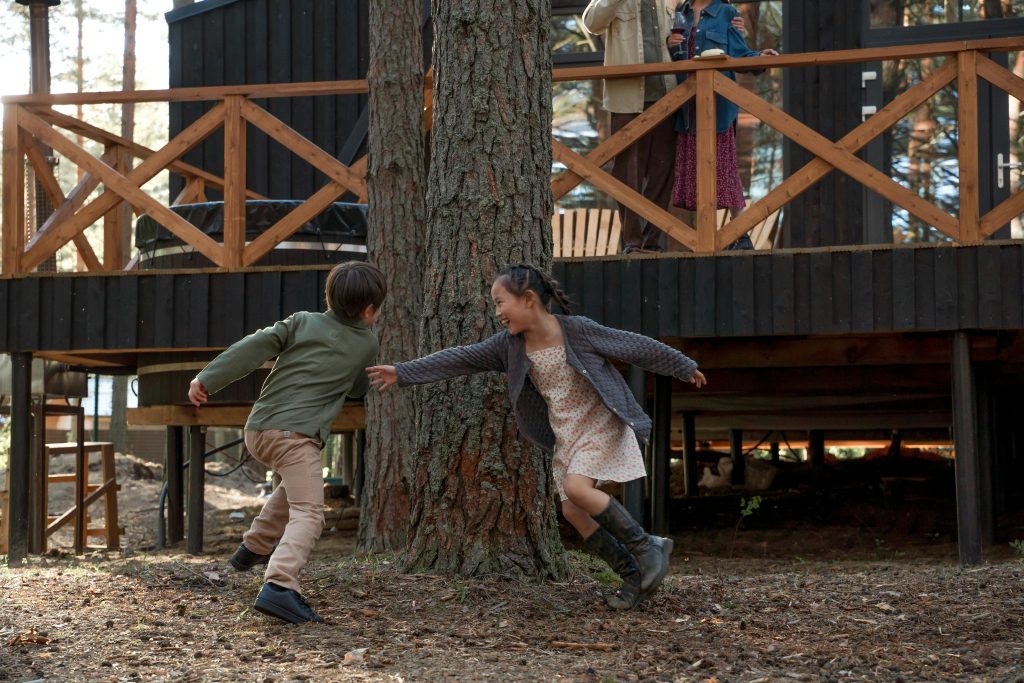
What Research Says About Outdoor Play and Tree Forts
This is where a backyard fort starts to feel like more than a nice extra. It can become a space that supports real growth, not just weekend entertainment.
A 2024 systematic review in Health & Place found that physical activity was the most common outcome studied in outdoor play environments. The researchers also suggested that play spaces should be designed around what children are encouraged to do, not just what adults want to prevent. That is a helpful way to think about a tree fort kit. It is not only about boards and brackets. It is about creating a space that invites climbing, movement, curiosity, and imaginative play.
A 2024 Canadian Paediatric Society review on outdoor risky play also found strong evidence that outdoor play supports children’s physical, mental, and social-emotional development. It noted that some outdoor play interventions helped increase moderate-to-vigorous physical activity while reducing sedentary time. In other words, active outdoor spaces can do more than keep kids busy. They can help kids build confidence, judgment, and healthy movement habits.
Common Questions About Tree Fort Kit Builds
Is a tree fort kit worth it for beginners?
Yes, especially if you want a clearer starting point. A tree fort kit can simplify decisions around access, hardware, and add-ons so you are not inventing the whole process from scratch.
What age is best for a backyard tree fort?
That depends on the design. Younger kids need lower platforms, safer access, and close supervision. Nationwide Children’s says children younger than 6 should never play in a tree house unless an adult is present.
Can I build a tree fort without using the tree for support?
Absolutely. You can create a freestanding backyard fort near a tree and still get the same cozy treehouse feel. That is often the better option if the tree is too young, weak, or awkwardly placed.
What is the safest way to get into a tree fort?
Built steps or a stable ladder are usually better than hanging ropes. Nationwide Children’s specifically advises avoiding ropes or chains as primary access because of strangulation risk.
Do tree forts need maintenance?
Yes, and that is a good thing. Check hardware, wood condition, barriers, surfacing, and tree health regularly, especially after storms or long wet spells.