8 Benefits of Forest Bathing & Staying Among Trees
We may earn a commission for purchases made using our links. Please see our disclosure to learn more.
You know that feeling when your brain has 27 tabs open and at least 9 of them are playing music? That is exactly why Forest Bathing feels so refreshing.
Not because it is trendy. Not because it looks good on Instagram. But because many of us are overstimulated, under-rested, and weirdly disconnected from the very thing that calms us down: the natural world.
Forest Bathing, also called shinrin-yoku, gives you a gentler way back. It is less about hiking hard and more about noticing deeply. In this guide, you will learn what Forest Bathing actually is, why it helps, how to do it without overthinking it, what the research says, and which Amazon essentials can make the experience easier.
What Is Forest Bathing, Really?
Forest Bathing does not mean taking a bath in the woods, which is honestly good news for everyone involved.
It comes from Japan, where the practice was developed in 1982 as shinrin-yoku, meaning taking in the forest atmosphere through your senses. It was designed as a way to reconnect people with forests and offer relief from fast, high-pressure living.
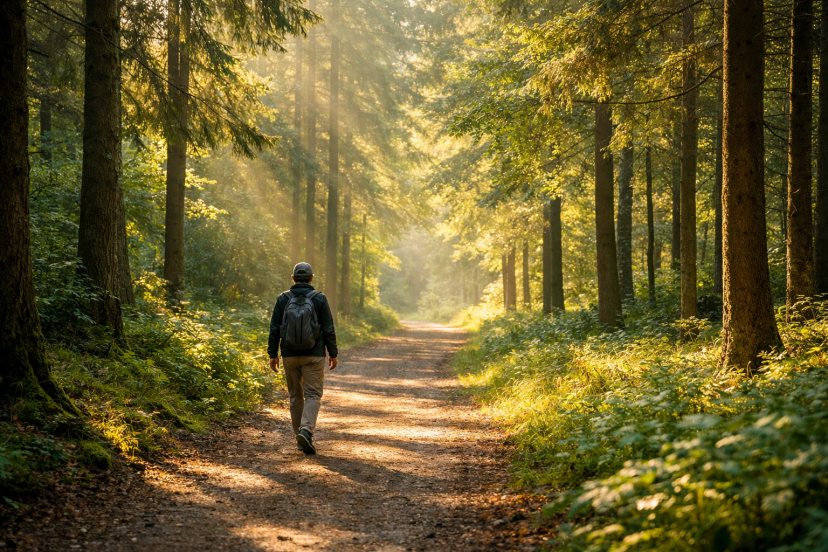
In simple terms, Forest Bathing means slowing down enough to notice the smell of bark, the shape of light through leaves, the sound of wind, and the way your shoulders drop when nobody needs anything from you for five whole minutes.
Why It Feels So Good in a Wired-Up World
A 2023 review noted that around 55% of the global population lives in fast-paced urban settings, where stress can pile up fast and stay longer than welcome.
That matters because Forest Bathing is not just “going outside.” It is a form of nature immersion. You are stepping out of constant input and into a setting that asks less from your brain.
No notifications.
No performance.
No need to optimize your walk like it is a side hustle.
Benefit #1: It Helps Your Nervous System Settle
One of the biggest reasons people love Forest Bathing is simple: it helps the body soften.
A review of field experiments found that time in forest settings, compared with urban environments, was associated with lower cortisol, lower heart rate, lower blood pressure, and greater parasympathetic activity, which points to a calmer stress response.
That is a fancy way of saying your system gets a chance to exhale.
Benefit #2: It Can Ease Anxiety and Lift Mood
This is where Forest Bathing starts to feel less like a nice idea and more like a genuinely useful practice.
A 2023 systematic review and meta-analysis included 36 articles with 3,554 participants and found that forest bathing significantly reduced symptoms of depression and anxiety.
So if you have been feeling mentally frayed, emotionally flat, or just a little crispy around the edges, a mindful walk among trees may help more than another hour of doom-scrolling.
Benefit #3: It May Support Stress and Heart Markers
Forest Bathing is not a replacement for medical care, but it does seem to support important stress-related markers.
Research reviews have linked forest exposure with relaxation in both psychological and physiological measures, including systolic blood pressure and tension-anxiety.
That does not mean one walk turns you into a Zen monk. It does mean repeated time in green spaces may become part of a healthier stress routine.
Benefit #4: It Sharpens Attention Without Draining You
There is a huge difference between forced focus and restored attention.
Forest Bathing gives your mind something soft to rest on: patterns, sound, light, motion. It keeps you engaged without making demands. That is why many people come back from a forest therapy walk feeling mentally clearer, not mentally spent.
Think of it like putting your brain on airplane mode, but emotionally.
Benefit #5: It Brings You Back Into Your Body
A lot of us live from the neck up.
Forest Bathing nudges you back into physical awareness in a gentle, non-preachy way. You notice your feet on soil. Your breath slows. Your jaw unclenches. You remember you are a body, not just a floating to-do list.
That is one reason outdoor mindfulness works so well. It gives you a physical anchor.
Benefit #6: It Opens Space for Reflection
Some thoughts only show up when things get quiet.
Forest Bathing creates that quiet. Not silence, exactly. More like spaciousness. Birds, leaves, and breeze take up just enough room that your mind stops yelling over itself.
This is why bringing a notebook can help. A few lines written after a nature immersion session often feel more honest than pages forced at a desk.
Benefit #7: It Makes Movement Feel Easier
If formal exercise feels intimidating, Forest Bathing can be a beautiful middle ground.
You are still moving. You are still outdoors. But the goal is not speed, calories, or crushing a route. It is presence.
For many people, that makes movement feel kinder and far more sustainable.
Benefit #8: It Can Deepen Family Time
Forest Bathing does not have to be a solo ritual.
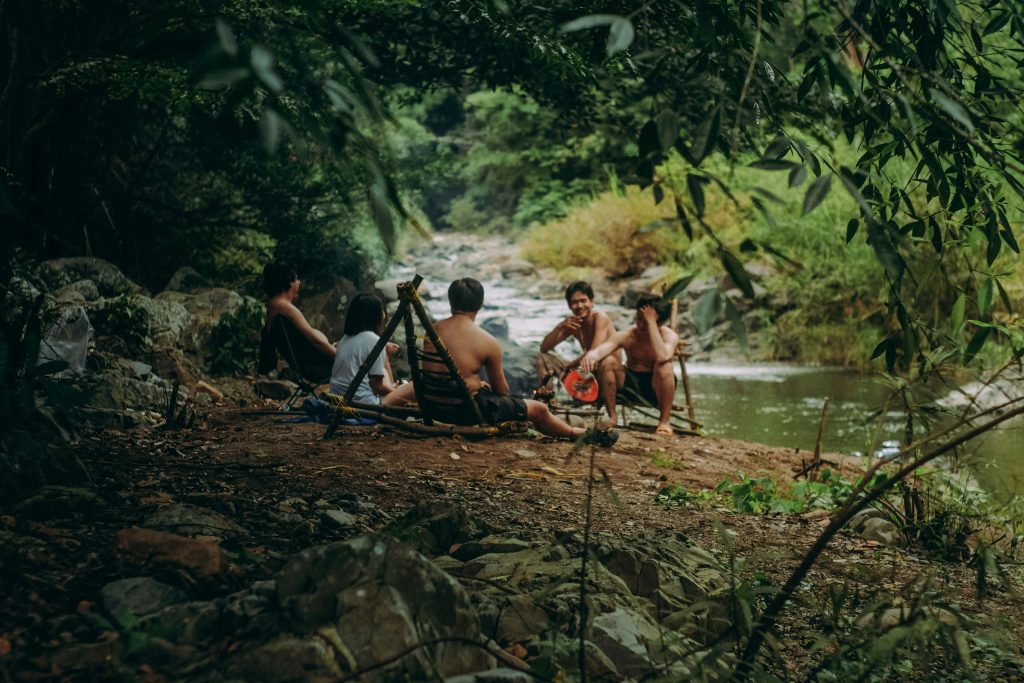
You can do it with a partner, a child, a parent, or a friend who also needs a break from being a human browser tab. The key is shared noticing, not constant talking.
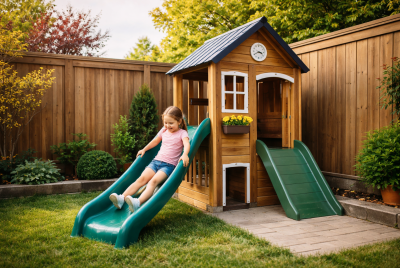
And if you want to encourage more outdoor curiosity at home, something like this playhouse with slide for imaginative outdoor time can help kids build that early connection with fresh air, textures, weather, and unstructured play.
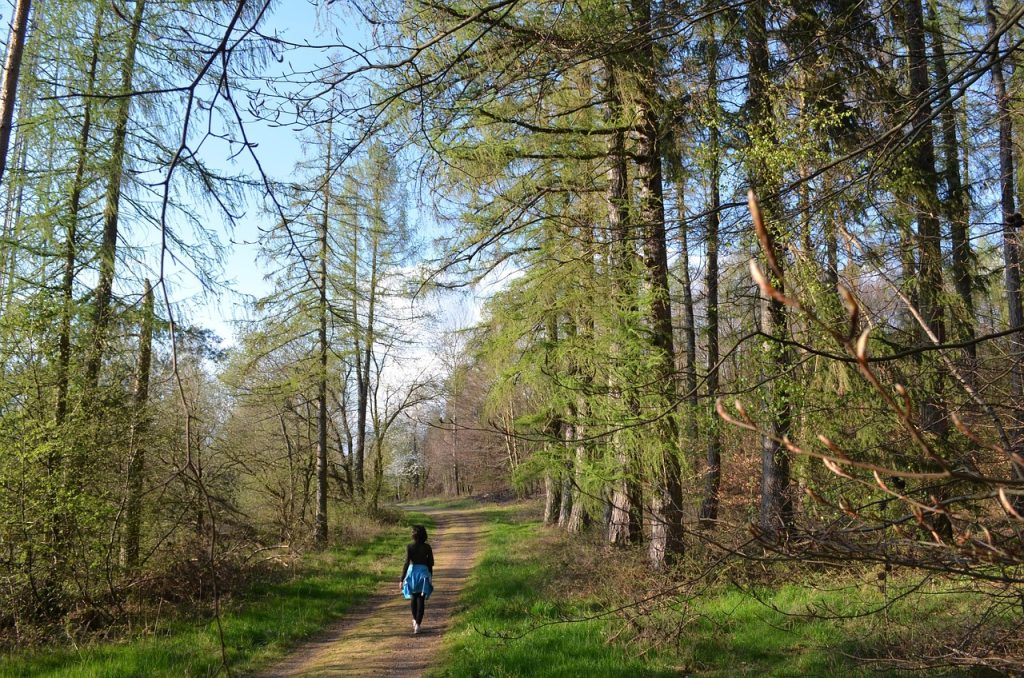
How to Practice Forest Bathing Without Overthinking It
You do not need special training. You do not need a remote mountain. You do not even need perfect weather.
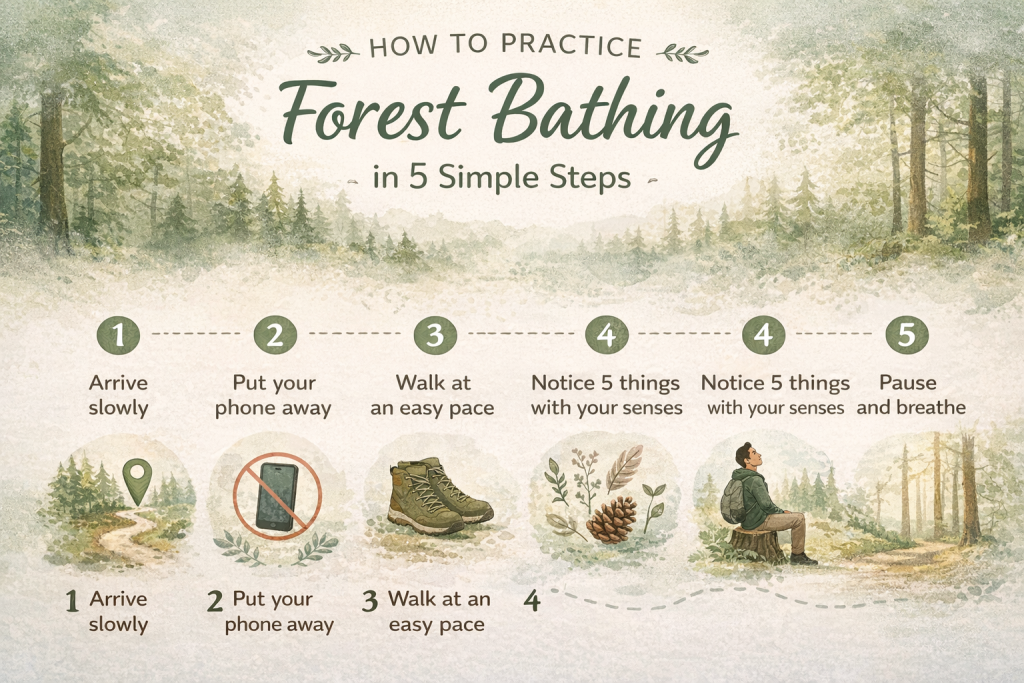
Here is the basic idea:
- Go somewhere green
- Walk slowly
- Use your senses
- Pause often
- Let go of the need to “achieve” anything
That is it.
If you are wondering whether you are doing it right, that probably means you are trying too hard. Forest Bathing works best when you stop performing wellness and simply pay attention.
A Simple 20-Minute Forest Bathing Routine
Step 1: Arrive
Stand still for one minute. Notice what you hear first.
Step 2: Slow your pace
Walk more slowly than usual. Yes, slower than that.
Step 3: Pick one sense
Focus on scent, sound, color, or texture for a few minutes.
Step 4: Sit or stand quietly
Find one spot and stay there for five minutes.
Step 5: Reflect
Ask yourself: What feels different now than when I arrived?
This short Forest Bathing routine works well for beginners, busy parents, and people who feel allergic to complicated self-care.
What to Bring for a More Comfortable Session
You do not need much, but a few things can make Forest Bathing easier:
- Water
- A small backpack
- A blanket or place to sit
- Bug protection
- A notebook if reflection helps you
- Comfortable layers
The goal is comfort, not gear overload. You are going to the woods, not filming a survival show.
Best Amazon Essentials for Forest Bathing
These Amazon US picks make Forest Bathing more comfortable without turning it into a shopping project.
1. Wise Owl Outfitters Camping Hammock – 500lbs Portable Hammock with Tree Straps
\A simple hammock can turn a mindful walk into a deeper rest session. This one uses breathable nylon, measures 10 feet by 6.5 feet, and supports up to 500 pounds. Great for solo loungers, couples, or anyone who wants a quiet place to sit under trees.
2. ZOMAKE Lightweight Packable Backpack 35L
This is useful if you want something light and low-fuss for water, layers, and a journal. It folds down small, weighs about 0.73 lb, and has a 35L capacity with multiple pockets. Good for casual walkers, park visitors, and beginner nature lovers.
3. ZAZE Extra Large Picnic Outdoor Blanket, 80”x80” Waterproof Foldable Blanket
If sitting on damp grass sounds romantic only in theory, this helps. It is oversized, waterproof, machine washable, and built with layered fabric for comfort. Great for Forest Bathing sessions with kids, couples, or anyone who likes to stay a while.
4. Owala FreeSip Insulated Stainless Steel Water Bottle with Straw, 32 Oz
Hydration matters, especially on warm or longer walks. This bottle has a dual-use spout, locking lid, carry loop, and insulation that keeps drinks cold up to 24 hours. Best for people who want something durable and easy to carry.
5. Thermacell E55 E-Series Rechargeable Mosquito Repeller
Nothing ruins outdoor mindfulness quite like becoming a snack. This rechargeable repeller creates a 20-foot protection zone, reaches max protection in about 15 minutes, and avoids sticky spray. Best for buggy trails, humid parks, and longer sit-still sessions.
What the Research Says About Forest Bathing
Two pieces of research are especially worth knowing.
A 2023 systematic review and meta-analysis on forest bathing and psychological well-being reviewed 36 articles involving 3,554 participants and found significant reductions in depression and anxiety after forest bathing. That is a strong sign that this practice can support emotional well-being, especially in stressful urban life.
A 2019 review of field experiments on forest bathing and stress physiology found lower cortisol, lower pulse rate, lower blood pressure, and improved parasympathetic activity in forest settings compared with urban ones. In plain English, the body often looks calmer in the woods than in the city.
At the same time, newer evidence says we should treat Forest Bathing as a helpful complementary practice, not a cure-all or replacement for proper care.
Can You Do Forest Bathing in a City Park or Backyard?
Absolutely.
A huge, remote forest is lovely, but it is not required. A quiet park, botanical garden, tree-lined trail, or even a leafy backyard can work. What matters most is the quality of your attention.
If you can smell leaves, hear birds, notice shifting light, and slow your body down, you can practice Forest Bathing.
Forest Bathing vs. Hiking, Meditation, and Grounding
They overlap, but they are not the same.
Hiking often focuses on distance or destination.
Meditation often happens still and inwardly.
Grounding often emphasizes contact with the earth.
Forest Bathing blends slow movement, sensory awareness, and nature connection. It is less structured than meditation and less goal-focused than hiking. That is exactly why many people stick with it.
Common Mistakes That Make It Feel Like a Chore
A few things can accidentally drain the magic:
- Treating it like a fitness challenge
- Listening to podcasts the whole time
- Taking too many photos
- Rushing
- Expecting a dramatic emotional breakthrough every time
Sometimes Forest Bathing feels profound. Sometimes it just feels peaceful. Both count.
FAQs About Forest Bathing
What is the main purpose of Forest Bathing?
The main purpose of Forest Bathing is to help you reconnect with nature through your senses and support calm, presence, and stress relief.
How long should a Forest Bathing session last?
Even 20 minutes can help. Longer sessions can feel richer, but you do not need an all-day trip to benefit.
Do you need a real forest to practice Forest Bathing?
No. A park, garden, or tree-lined trail can work well if it helps you slow down and notice your surroundings.
Is Forest Bathing the same as hiking?
Not really. Hiking usually focuses on movement and destination, while Forest Bathing focuses on sensory awareness and being present.
Can Forest Bathing help with anxiety?
Research suggests it may help reduce anxiety and improve mood, but it should be seen as supportive, not as a replacement for professional care.
Final Thoughts on Forest Bathing
Forest Bathing is one of those rare practices that is both simple and powerful. You do not need fancy gear, perfect weather, or a brand-new personality. You just need a little green space, a little time, and permission to slow down.
So start small. Take one quiet walk. Notice one birdsong. Sit under one tree a little longer than usual.
Your nervous system might thank you before your mind even catches up.