Pest Proof Treehouse: 5 Tips to Keep Rodents & Insects Out

We may earn a commission for purchases made using our links. Please see our disclosure to learn more.
You built (or inherited) a treehouse for joy. For play. For quiet reading. For the kind of childhood memories that smell like wood and sunshine.
And then… you opened the door and found tiny mystery droppings, a trail of ants like they pay rent, or a spider that definitely looked like it had a mailing address in the corner.
If your dream is to keep your treehouse Pest Proof—without turning it into a chemical war zone—you’re in the right place. I’ll walk you through what actually works (and what’s a waste of time), using simple, realistic steps that feel doable even if you’re not a “handy person.”
Heads up: This article includes affiliate-style product recommendations (Amazon picks) so you can easily find the tools/materials mentioned.
What “Pest Proof” really means (and what it doesn’t)
Let’s get honest: Pest Proof doesn’t mean “a bug never enters again.” You’re outdoors. Nature is bold.
What it does mean is this:
- You remove easy access (no free entry through gaps and holes).
- You remove easy reasons to stay (food, water, cozy nesting spots).
- You make the space boring for pests (and cozy for humans).
Think of it like putting a lid on a snack. You’re not angry at the snack. You’re just not inviting ants to a party.
Why treehouses attract pests (and why it’s not your fault)
Treehouses are basically “cute cabins” to rodents and insects:
- Warmth + shelter: shaded, protected, dry-ish.
- Height + safety: fewer predators than ground-level.
- Food smells: even a single forgotten chip bag is a five-star restaurant.
- Wood + moisture: which can attract certain insects if water sneaks in.
Also, rodents are ridiculously good at squeezing into tiny spaces. The National Park Service notes mice can fit through openings around ¼ inch (6 mm).
So if your door gap looks “small,” a mouse may call it “a welcome mat.”
Your 10-minute Pest Proof inspection (flashlight + curiosity)
Before buying anything, do a quick scan. Grab a flashlight and check:
Look for entry points
- Under the door (classic problem)
- Around window frames and screens
- Where wires or ropes enter
- Corners of the floor and underside edges
- Any vents or small openings
Look for “pest clues”
- Droppings, shredded leaves/paper, chewed edges
- Ant trails (they’re basically tiny GPS lines)
- Spider webs clustered in the same spots
- Damp wood, musty smell, or soft areas (moisture alert)
If you find one gap, assume there are two more. Not because you’re failing—because pests are persistent little weirdos.
Tip #1 — Seal the door gap (door sweeps + thresholds)
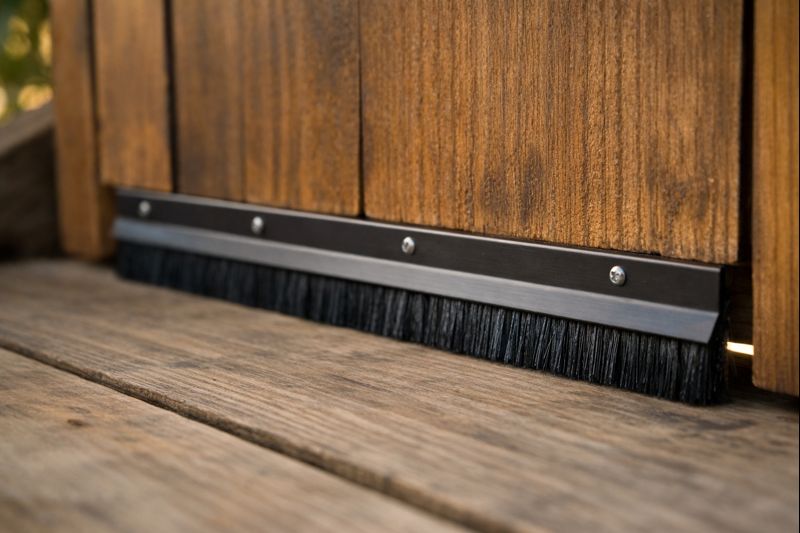
If you do only one thing: fix the door situation. It’s similar like locking your home’s front door.
What to do
- Install a door sweep to seal the opening at the bottom.
- Tighten the door so it closes cleanly (no wobbly latch).
- If there’s a big uneven gap, consider a threshold strip or adjust the door.
A door sweep is one of those “boring” upgrades that feels strangely satisfying—like finally finding the matching lid to a container set.
Quick reality check
There’s even a commonly cited IPM study note that adding door sweeps reduced mouse complaints by 65%.
Tip #2 — Lock down windows, hatches, and screens
Windows and hatches are sneaky. They look closed, but pests don’t need “open.” They need “not sealed.”
Tighten the frame
- Add weatherstripping around loose edges.
- Repair warped wood so it sits flush.
Don’t ignore screen damage
A tear the size of a coin can be a full doorway for mosquitoes and flies.
Fast fix: screen patch tape for small holes.
Better fix: replace the screen panel if it’s torn in multiple spots.
Tip #3 — Cover vents and pipe openings the smart way
Treehouses need airflow. But vents without protection are basically “Welcome, everyone.”
Best practice
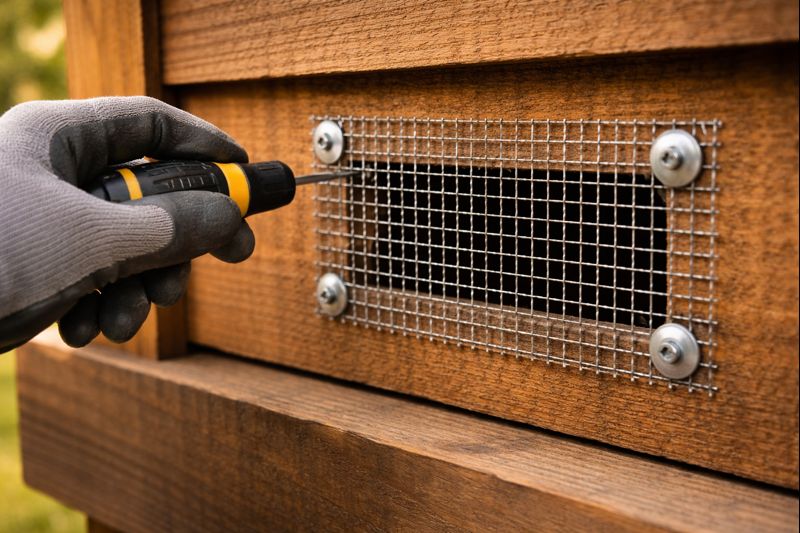
- Cover vents with metal mesh (not plastic).
- Aim for mesh small enough to block rodents and larger insects.
- Secure it firmly—staples alone can be a “challenge accepted” for determined critters.
The CDC specifically recommends using materials like hardware cloth/metal for larger holes, and pairing steel wool with caulk/foam for small ones.
Tip #4 — Use hardware cloth under floors and around weak spots
If your treehouse has any exposed underside edges, gaps near joists, or open corners… hardware cloth is your best friend.
Hardware cloth = strong wire mesh that blocks entry and resists chewing.
Where it helps most
- Under-floor edges
- Around support beams where gaps exist
- Any “I can see daylight through this” spots
Pro tip (learned the hard way)
Use washers with screws so the mesh can’t tear loose over time.
This is the treehouse version of “double-knot your shoelaces.”
Tip #5 — Break the ant highway on posts, stairs, and ropes
Ants don’t “wander.” They build highways.
If your stairs, rope ladder, or posts connect to branches or nearby structures, ants can treat it like a bridge.
How to interrupt the route
- Trim branches so they don’t touch the treehouse.
- Keep grass/plants from brushing the stairs.
- Seal cracks where ants disappear into wood seams.
When ants keep coming back
That usually means they’ve found something: moisture, crumbs, or a hidden nest route. (We’ll fix those next.)
Moisture control: fewer bugs, less wood damage
Moisture is the quiet troublemaker. Even if you don’t see standing water, dampness can invite insects and weaken wood over time.
Your moisture checklist
- Check roof seams and flashing
- Look for soft spots or peeling paint
- Make sure water drains away (not pooling near supports)
- Ventilation should reduce damp smells, not create open entry points
The Building America Solution Center recommends sealing utility penetrations and gaps as part of reducing pest intrusion (especially where gaps are small and insects move through).
Food, trash, and “snack confetti” rules (kid-friendly)
If kids use the treehouse, you already know: snacks happen. Crumbs happen. Juice boxes appear like magic.
Make it easy to succeed
- Keep a lidded container up there for trash.
- Do a “two-minute reset” before leaving:
- Pick up wrappers
- Sweep crumbs
- Close containers
The “sleepover rule”
If you store blankets or pillows up there, keep them in a sealed bin. Soft fabric + quiet corners = “nesting luxury suite.”
This isn’t about being strict. It’s about not feeding uninvited guests.
Light without the bug party
Bright white lights at night can turn your treehouse into a bug nightclub.
Easy improvements
- Use warm or yellow-toned bulbs (less attractive to many flying insects)
- Point lights downward instead of outward
- Place lights a bit away from the door so bugs gather there, not at the entry
Also: a simple fan inside can discourage mosquitoes (they’re not great flyers). No drama, just vibes.
Safe, low-tox IPM: deterrents, traps, and when to call a pro
If you’re aiming for Pest Proof without turning the space into “toxic fumes and stress,” think Integrated Pest Management (IPM):
- Exclude (seal entry points)
- Remove food/water
- Monitor (check occasionally)
- Target (minimal, specific solutions if needed)
Kid- and pet-safer mindset
- Avoid “spray everything” approaches.
- Use bait/traps only if you understand placement and risk.
- If you suspect termites, carpenter ants, or a serious rodent issue: call a pro. Treehouses are special structures—don’t gamble with safety.
Landscaping tweaks that make pest proofing easier
This part feels almost too simple, but it matters:
- Trim branches so nothing touches the treehouse
- Keep the area underneath clear (less cover for rodents)
- Don’t store firewood or scrap lumber nearby
- Keep vegetation from climbing up supports
In many cultures and climates, outdoor living spaces are used year-round—whether it’s a backyard treehouse, a raised nipa-style platform, or a small cabin. The principle is the same: distance + dryness + cleanliness = fewer pests.
Seasonal maintenance checklist (so it stays Pest Proof)
Pest proofing isn’t a one-time “set it and forget it.” It’s more like brushing your teeth: small habits prevent big pain.
Every month (5 minutes)
- Check door sweep and latch
- Look for new gaps/cracks
- Confirm screens are intact
Every season
- Re-caulk problem seams
- Check roof/water runoff
- Inspect underside mesh/hardware cloth attachments
- Do a deep clean (crumbs + corners)
If you do this consistently, your treehouse stays “boring” to pests—and cozy for you.
5 Products for a Pest Proof treehouse
1) M-D Building Products 05744 All-Season Door Sweep (36”)
Short description: A simple barrier that blocks the classic “door gap entry.”
Features: Double-fin vinyl seal; easy install; designed to reduce gaps.
Best for: Anyone whose treehouse door has daylight showing underneath.
2) Hardware Cloth 1/4 Inch Galvanized Wire Mesh Roll (8” x 20 ft, 23GA)
Short description: Wire mesh for covering gaps/edges rodents can chew through.
Features: 1/4-inch openings; galvanized; sturdy for outdoor use; listing shows strong ratings volume.
Best for: Under-floor edges, vents, and “I can’t believe that hole exists” spots.
3) TERRO Ant Killer Bait Stations (T300B)
Short description: Targeted ant control when you’re seeing consistent trails.
Features: Pre-filled bait stations; widely reviewed; high overall rating volume.
Best for: Treehouses with recurring ant highways (especially near stairs/posts).
4) Ratwire Steel Wool Mice Control (16 pack)
Short description: Stuff small holes so rodents can’t squeeze through.
Features: Steel wool resists chewing; good for tiny gaps around corners and penetrations.
Best for: Small openings where caulk/foam alone won’t hold up.
5) Screen Patch Repair Tape (fiberglass mesh, adhesive)
Short description: Quick patch for small screen tears that let mosquitoes and flies in.
Features: Fiberglass mesh; adhesive; common pick for fast screen fixes.
Best for: Busy families who need “fixed in 5 minutes” more than “perfect.”
Once your space is more Pest Proof, you can actually enjoy it—like adding a cozy reading nook with a hanging egg chair with stand that works beautifully in a treehouse corner.
Research-backed proof, FAQs, and a simple wrap-up
Research-backed: why exclusion wins
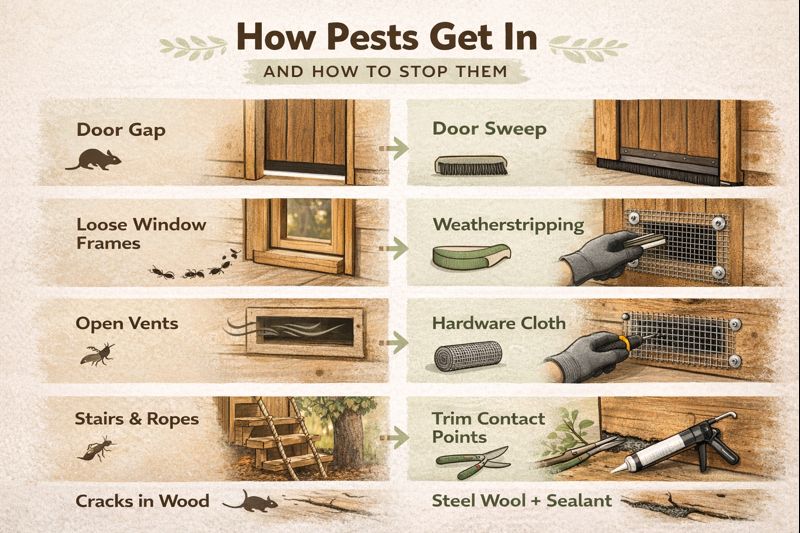
If you only remember one theme: seal entry points first. It’s the highest impact, lowest drama strategy.
- The CDC emphasizes sealing openings and using materials like steel wool + caulk/foam for small holes and metal/hardware cloth for larger ones—because stopping entry is the foundation of control. (rodent seal-up guidance)
- The National Park Service rodent exclusion manual highlights how easily mice squeeze through very small openings (around ¼ inch / 6 mm), which is exactly why tiny gaps matter. (Rodent Exclusion Manual)
Translation: it’s not “extra.” It’s literally the playbook.
FAQs
How do I Pest Proof a treehouse without using harsh chemicals?
Focus on exclusion + cleanliness: door sweeps, mesh/screens, sealing gaps, and removing food/water sources. Chemicals become a last resort, not the strategy.
What’s the most common entry point for mice in a treehouse?
The door gap is the usual #1, followed by tiny cracks around corners, vents, and where materials meet. Mice can fit through very small openings (about ¼ inch).
Will hardware cloth really stop rodents?
It’s one of the best options because it’s tough and chew-resistant. Use screws + washers and keep edges tight so it doesn’t loosen over time.
How can I prevent termites from returning?
Break their routes (trim contact points, keep stairs/posts clear), remove crumbs, and use targeted bait stations when trails persist—don’t just spray and hope.
How often should I re-check my Pest Proof work?
Do a 5-minute check monthly and a deeper inspection each season. Tiny gaps reopen as wood expands/contracts with weather.
Conclusion (soft pep talk):
You don’t need perfection—you need a plan. Start with the door, close the easy gaps, add mesh where it counts, and keep the space clean and dry. Do that, and your treehouse becomes your retreat again… not an all-inclusive resort for rodents and insects.
If you want, tell me your treehouse setup (door type, any windows/vents, and whether it’s used mostly for play or lounging), and I’ll suggest a simple “weekend checklist” tailored to it.