Playhouse With Slide: Small Backyard Planning Tips
We may earn a commission for purchases made using our links. Please see our disclosure to learn more.
You want your kid to get outside more… but your yard is the size of a postage stamp. And somehow, every “cute little playhouse” you see online looks like it needs its own zip code.
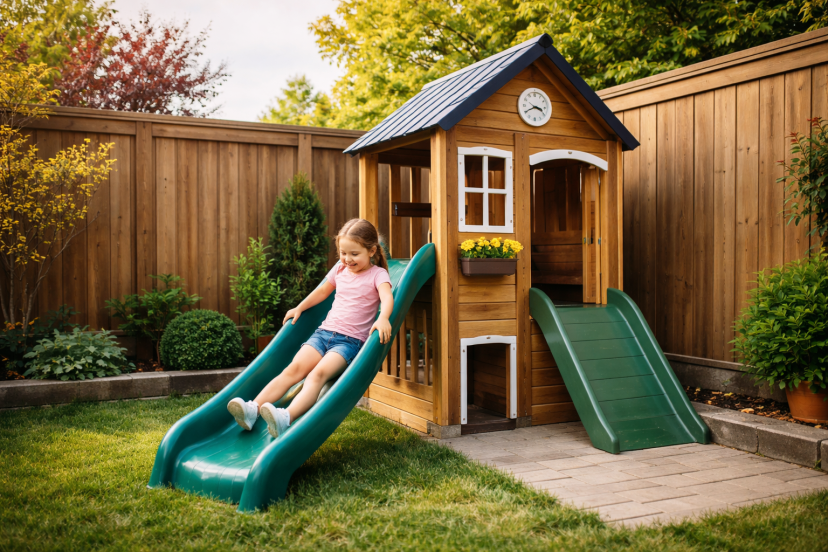
That’s exactly why a playhouse with slide is such a sweet spot: it packs pretend play and movement into one tidy little footprint. And when you plan it right, it feels like you “added a whole playground” without turning your backyard into an obstacle course.
Affiliate note: This article contains affiliate links. If you buy through them, we may earn a small commission at no extra cost to you.
Why a playhouse with slide is the small-yard MVP
A good playhouse slide combo works like a studio apartment: one small space, multiple “rooms.”
- The playhouse handles imagination (kitchen, store, pirate ship, “this is my office, please knock”).
- The slide handles energy (climb → slide → repeat → nap… hopefully).
And in a small yard, that matters because kids don’t need more square footage. They need more reasons to stay engaged.
The bonus you don’t expect
A kids playhouse is also a social magnet. Even shy kids tend to pop out of their shell when there’s a “home base” to invite someone into.
Start with the “use zone” (not just the footprint)
Here’s the trap: you measure the base of the structure… and forget the space kids need to actually play.
Think of the use zone like the “personal bubble” around the equipment:
- Space to climb
- Space to slide
- Space to run around without face-planting into a fence
Quick measuring trick (the “tape outline” method)
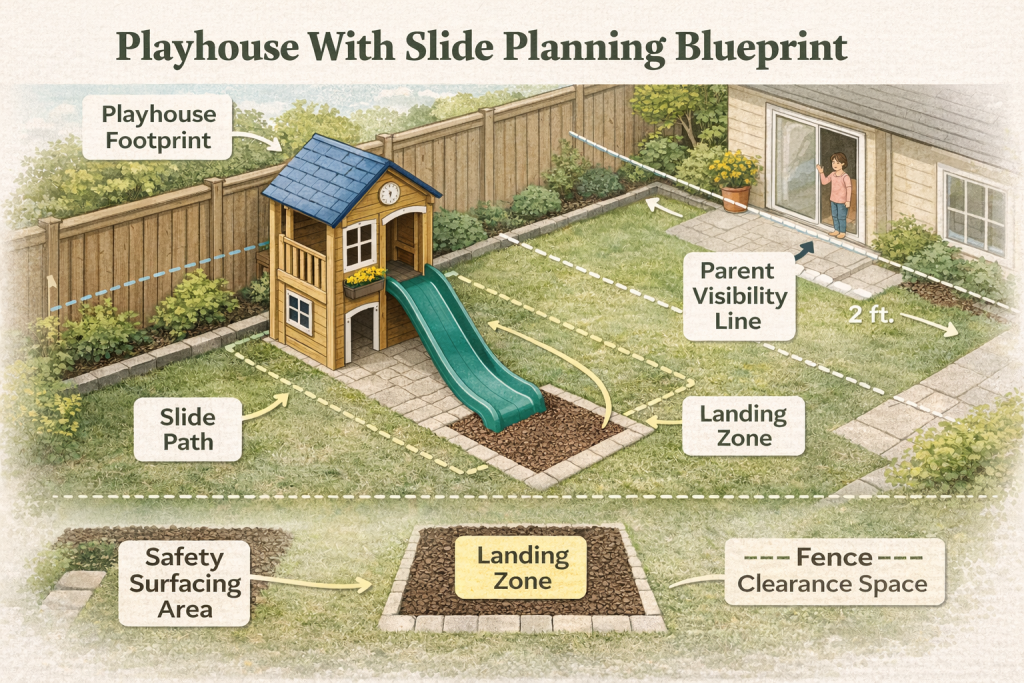
Grab painter’s tape (or a garden hose) and outline:
- the playhouse footprint
- the slide path
- the landing zone at the bottom
Then walk through it like a kid would. If you’re bumping into things as an adult moving slowly, a child moving at full goblin-speed will definitely bump into things.
Age range matters more than the label
A lot of “toddler playhouse with slide” options look adorable… until your kid grows two inches and suddenly it’s cramped.
So instead of shopping by the marketing label, shop by:
- Slide height
- Step spacing / ladder type
- Handholds and rails
- Max weight per child
- How many kids can use it at once
Future-proof without oversizing
If your child is 2–3, you can still choose a slightly older age range if:
- the climb is gentle (steps, not a steep ladder)
- rails feel secure
- the slide exit is smooth and not too fast

Slide specifics: height, rails, and the landing zone
Slides are where most parents get that tiny stomach drop. Totally normal.
Here’s what to look for on any outdoor playhouse with slide:
Handrails and sides
You want sides high enough that a wiggly kid doesn’t roll out mid-slide. Bonus points if the entrance has good grip spots.
A sane landing area
The bottom of the slide needs a clear “run-out” zone—no flower pots, no stepping stones, no surprise garden gnomes.
The U.S. Consumer Product Safety Commission’s playground guidance also talks about slide exit zones and spacing as part of safer layout planning.
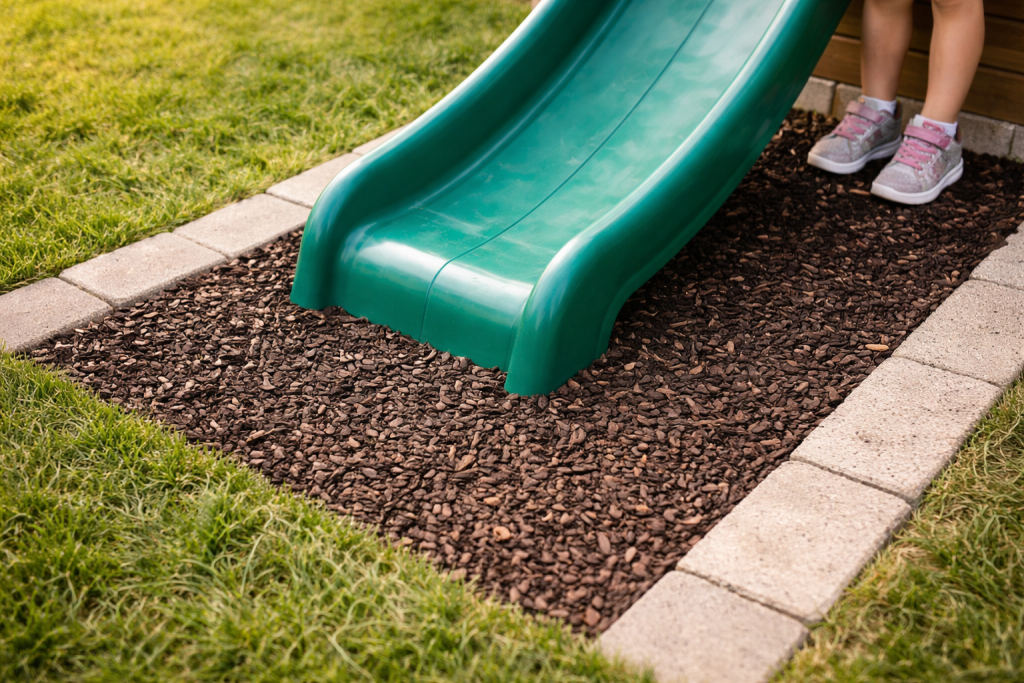
Surfacing that actually cushions falls
Hard truth: grass looks soft, but it doesn’t always behave soft—especially if it’s dry, packed down, or hiding roots.
If you want to reduce the “bonk factor,” think in layers:
- Top layer: something forgiving (mulch, rubber mulch, mats)
- Base: level ground so nothing wobbles or tilts
The CPSC’s safety handbook emphasizes protective surfacing and planning play areas with accessibility, age separation, and supervision in mind.
Easy, parent-friendly options
- Rubber mulch (low maintenance, doesn’t splinter)
- A slide landing mat right where kids hit the ground most often
- Interlocking outdoor tiles (great if you hate “mulch everywhere”)
Sun and heat: the “hot slide” test
A slide in direct sun can turn into a tiny plastic skillet.
Here’s the simple test: put your palm on the slide for 5 seconds.
If you want to yank your hand away, your child’s legs will feel it too.
Shade fixes that don’t require remodeling your yard
- Place the slide so it faces away from afternoon sun
- Use a shade sail over the play zone
- Add a canopy (if the model supports it)
Placement tricks: sightlines, fences, and traffic flow
The best location is usually:
- visible from a kitchen window (or wherever you actually exist)
- away from high-traffic paths (so kids don’t crash into people carrying groceries)
- not right next to the fence (because kids will try to climb it like a ladder)
Tiny-yard “pro tip”
Leave one side open as the “parent approach lane.” You’ll thank yourself when you’re walking over with water, snacks, or the missing shoe.
Wood vs plastic: what to pick for your climate and patience
Choosing between a wooden playhouse with slide and a plastic playhouse with slide is basically choosing your lifestyle.
Plastic: the low-maintenance friend
- Easy to wipe down
- Usually faster to assemble
- Handles rain well
- Can fade over time in intense sun
Wood: the charming commitment
- Looks amazing
- Often feels sturdier and more “real”
- Needs sealing / upkeep depending on weather
The CPSC handbook includes notes on selecting wood and finishes for playground environments (and what to avoid).
Stability and anchoring: wobble is a deal-breaker
If it wiggles, kids lose confidence—and parents lose peace.
Before you even think about “extras,” make sure:
- ground is level
- joints are tight
- anchors (if included) are installed correctly
The CPSC safety handbook also flags secure anchoring as an important factor for stable installation.
Assembly without losing your mind (or the hex key)
Assembly is where many playhouse dreams go to die.
Here’s the calm approach:
- Sort hardware into cups (yes, like a cooking show)
- Don’t fully tighten bolts until the frame is aligned
- Assemble with two adults if possible (it’s faster and safer)
- Expect it to take longer than the box implies (because life)
My favorite “save your Saturday” tip
Build it in stages: base + walls one day, slide + finishing pieces the next. Kids don’t mind waiting. They’ll “play construction site” in the meantime.
Make it feel bigger with small add-ons
You don’t need a bigger structure. You need better play value.
Add-on ideas that don’t hog space:
- a small bin of outdoor toys inside (buckets, mini brooms, chalk)
- a “mailbox” (kids love delivering nonsense)
- a clip-on steering wheel (instant spaceship vibes)
- a little bell or door chime (yes it’s loud, yes they’ll love it)
Inclusive play: siblings, sensory needs, and confidence builders
A backyard playset is more magical when everyone can use it.
A few easy inclusive tweaks:
- add a quiet “cozy corner” inside (pillow + book basket)
- keep entry steps grippy and uncluttered
- set simple turn-taking rules (“2 trips down the slide, then switch”)
And if you’re parenting kids with different comfort levels (shy, sensory-sensitive, or just cautious), a playhouse helps because it offers a safe “pause button.”
Budget planning: where to spend and where to save
If money is tight, spend on:
- stability
- surfacing
- shade (if your yard gets intense sun)
Save on:
- fancy accessories
- themed stickers
- anything that exists purely to look cute in photos (kids will ignore it)
Product picks: 5 Amazon add-ons and playsets we like
Below are 5 practical Amazon options that pair really well with a playhouse with slide setup—especially in smaller backyards.
1) Step2 Woodland Climber II Kids Playset
Why it fits: Compact “clubhouse” feel with active climbing + sliding—great when you want that playhouse vibe without a giant structure.
Features: Slide + climbing wall; designed for ages 2–6; strong ratings (4.7 out of 5 with 1,177 ratings).
Best for: Toddlers/preschoolers, small yards, families who want lots of movement.
2) Playsafer Playground Safety Rubber Wearmat (2-Pack)
Why it fits: This goes right where the “impact zone” happens—under the slide exit.
Features: 1″ thick; sized for swings/slide run-outs; 4.4 out of 5 stars with 531 reviews.
Best for: Parents who want a cleaner option than piles of mulch.
3) Playsafer Rubber Mulch Nuggets (Black, 40 lb)
Why it fits: A forgiving surface layer that’s easier to maintain than wood chips.
Features: “Nugget” style rubber mulch; listed at 4.5 out of 5 stars with 1,484 ratings in Amazon results.
Best for: Backyard play zones where you want cushioning without constant topping-off.
4) ColourTree Customized Rectangle Sun Shade Sail
Why it fits: Shade makes slides safer and way more usable (and saves you from the hot-slide surprise).
Features: Custom sizing; 4.6 out of 5 stars (1,764 ratings).
Best for: Sunny yards, warm climates, kids who play outside midday.
5) SELEWARE Tree Swing Ropes / Hanging Straps Kit
Why it fits: Great for adding a swing element if your structure supports it (always check manufacturer guidance + weight limits).
Features: Adjustable hanging kit; 4.6 out of 5 stars (1,395 ratings).
Best for: Families who want variety without buying a bigger playset.
Want easy seasonal play ideas once it’s set up? Here are some fun fall activities you can do with kids that pair perfectly with a backyard play zone (think leaf “restaurants,” pretend pumpkin stands, and cozy outdoor play days).
Research-backed safety + benefits (plus FAQs + a quick wrap-up)
Let’s keep this grounded in what experts say—without turning your backyard into a law school exam.
Two solid, parent-relevant sources
- The AAP (American Academy of Pediatrics) explains how play supports healthy child development, including brain function and executive skills (2018).
- The U.S. CPSC offers practical guidance for play area layout, fall height thinking, and slide use zones (2025).
And yes—falls are a big reason surfacing matters. One study reviewing injured children found falls were the most common playground injury mechanism (2011).
FAQs
What size playhouse with slide works for a small backyard?
Pick one that fits the use zone, not just the base. Give the slide a clear landing area and leave walking space for adults.
What should I put under a playhouse slide?
Use a soft, impact-friendly surface like rubber mulch or a dedicated slide landing mat. Grass alone can be uneven and hard when packed down.
How do I keep the slide from getting too hot?
Aim the slide away from afternoon sun, add shade (like a sail), and do the 5-second hand test before playtime.
Can a toddler use a playhouse with slide safely?
Yes—if the slide is low, the steps are easy, rails feel secure, and you add good surfacing. Always match the setup to your child’s comfort level.
How far should a playhouse with slide be from a fence?
Leave enough room so kids don’t collide with the fence and so you can supervise easily. More space at the slide exit is especially important.
Quick wrap-up (your calm, doable plan)
If you remember nothing else, remember this: a playhouse with slide doesn’t need a huge yard—just smart placement, stable setup, and a safe landing zone.
Start with space planning, prioritize surfacing and shade, and then add little play upgrades over time. You’re not building a theme park. You’re building a place where your kid feels free, brave, and busy—in the best way.