5 Treehouse Plans For A Fun Family Project
We may earn a commission for purchases made using our links. Please see our disclosure to learn more.
You know that feeling when you look at your backyard and think, “This could be more than grass and a sad patio chair”? That’s where Treehouse Plans come in.
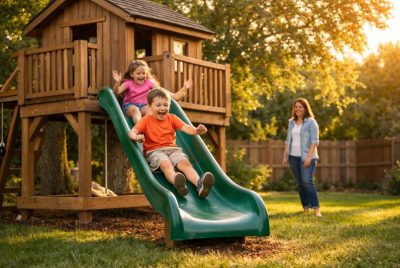
Maybe you want a kid-approved hideout. Maybe you want a quiet “coffee and a book” perch. Or maybe you just want a project that feels like real life—the kind where you build something with your hands, laugh at your mistakes, and end the day proud (and a little dusty).
In this guide, I’ll walk you through five buildable treehouse plans, plus the planning steps that keep things safe, sturdy, and actually fun to build. You’ll also get material tips, a safety checklist, and a small toolkit shortlist.
Affiliate disclosure: As an Amazon Associate, I may earn from qualifying purchases.
Treehouse Plans: Start With the Story You Want This Treehouse to Tell
Before lumber, screws, or a single heroic trip to the hardware store—pick the vibe.
Ask yourself:
- Is this a kids’ play treehouse (more play, less polish)?
- A backyard hangout (more comfort, fewer splinters)?
- A DIY treehouse that’s mostly a family memory machine?
Here’s a quick way to choose:
If you want quick wins: go small and simple.
If you want a “wow” moment: add one feature (a bridge, porch, or A-frame roof).
If you want it to last for years: spend your energy on the platform, fasteners, and weatherproofing.
Think of Treehouse Plans like a recipe. You can improvise the toppings later—but the base has to be solid.
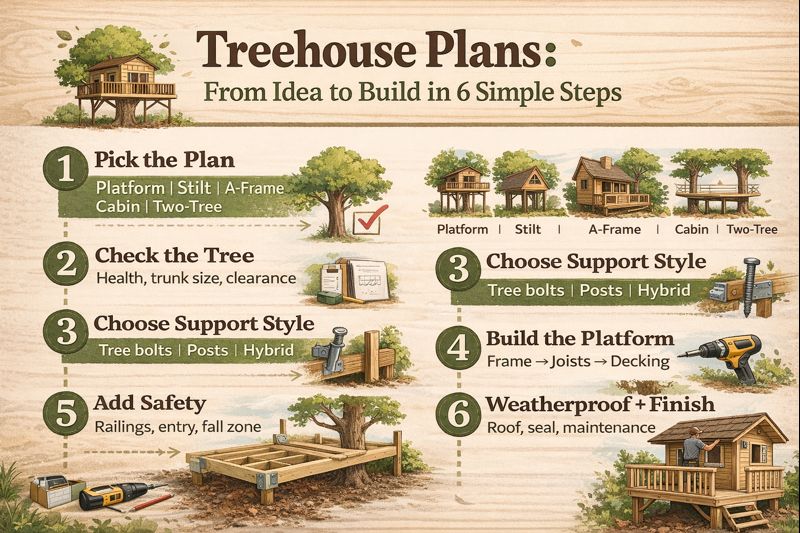
Plan #1 — The Classic Platform Treehouse (Beginner-Friendly)
This is the “first pancake” of treehouse building plans—in a good way. It’s simple, forgiving, and wildly satisfying.
Best for
- First-time builders
- One strong tree
- Smaller yards and budgets
What you’re building
A square or rectangle platform attached to a tree (or supported partly by posts), with railings and a simple roof option.
Build notes that matter
- Keep it lower than your ego wants. Low feels safer and still feels magical.
- Add a little overhang so rain doesn’t wreck your entrance.
Quick steps
- Set height and mark level points
- Build the platform frame
- Add joists + deck boards
- Install railings
- Add a ladder or stairs
Friendly tip: If your platform is level and rigid, you’ve already won half the battle. Everything else is decoration.
Plan #2 — The Two-Tree Bridge Treehouse (Adventure Mode)
If your yard has two trees that are close enough to be friends (but not so close they’re fighting for space), this is the crowd-pleaser.
Best for
- Families who want a “WOW” feature
- Older kids or mixed ages (with safety upgrades)
- A yard with two sturdy trees
What you’re building
Two small platforms connected by a short bridge (rope bridge or fixed walkway).
Bridge reality check
A bridge adds movement. Movement adds fun… and it also adds engineering.
Use a fixed walkway if you want calmer vibes. Save the rope bridge for when you’re confident and ready to add extra safety.
Quick steps
- Build two smaller platforms (don’t go huge)
- Add railings first (always first)
- Connect with a walkway or bridge
- Finish with walls/roof on one side for shelter
Tiny analogy: A bridge is like adding a second story to a conversation—more exciting, but you need stronger support to keep it from going sideways.
Plan #3 — The Stilt Treehouse (When Trees Are Young or Tricky)
Not every yard has the perfect “storybook oak.” And honestly? That’s fine.
A stilt build gives you the treehouse feeling even if your trees aren’t ready to carry a structure.
Best for
- Smaller trees
- A more predictable build
- People who love control (no judgment)
What you’re building
A raised platform on posts, with optional tree attachment for stability (not full support).
Why it’s underrated
- Easier to level
- Easier to inspect later
- Often easier to permit (depends on your area)
Quick steps
- Set posts (and braces!)
- Build platform frame
- Decking + railings
- Add walls/roof if you want a mini cabin feel
Pro move: Add wide stairs and a handrail—suddenly your treehouse feels inclusive for kids, grandparents, and anyone who doesn’t want to do ladder gymnastics.
Plan #4 — The A-Frame Hideout (Fast Build, Cozy Look)
A-frames are the “cute but practical” friend of Treehouse Plans. The roofline is simple, water sheds easily, and it looks charming even if your paint job is… enthusiastic.
Best for
- A weekend-style build
- Rainy climates
- People who want a finished look
What you’re building
A small platform plus an A-frame roof structure (like a tiny tent-house).
Quick steps
- Platform first
- Build two A-frame wall panels on the ground
- Lift and secure
- Add roof sheathing + roofing
- Add a doorway and railing
Gentle humor alert: The A-frame is the one design that makes even a slightly crooked cut look “rustic.” You’re welcome.
Plan #5 — The Mini Cabin With a Porch (Weekend-Lodge Energy)
If you want the treehouse to feel like a destination, add a porch. It turns “play structure” into “hangout spot.”
Best for
- Families who want longevity
- Older kids and adults
- Anyone who wants shade + seating
What you’re building
A more enclosed cabin-style treehouse with a small porch area and roof.
Porch features that pay off
- Shade and rain cover
- A safe “transition zone” (shoes off, snacks down)
- A spot for seating, lanterns, and calm moments
Design idea: Keep the inside simple, then make the porch cozy. That’s where people naturally gather.
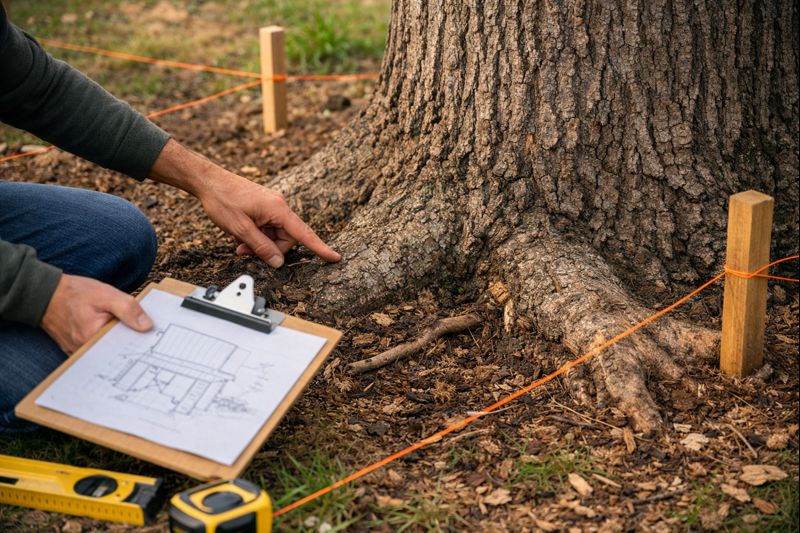
Choose the Right Tree (Or Choose Posts Instead)
Let’s keep it real: the tree is the boss.
A tree is a good candidate if it has:
- A strong, healthy trunk (no major cracks or hollow spots)
- Stable roots and no obvious leaning
- Plenty of clearance around the build area
Don’t build in a tree if:
- It’s visibly unhealthy
- It’s too small for the load
- You’re in an area with frequent extreme wind events and the tree is exposed
Smart compromise: Use a hybrid approach—some tree attachment for stability, plus posts for reliable support. Many safe treehouse plans do exactly this.
Sketching and Sizing: Make Your Treehouse Plans Feel Real
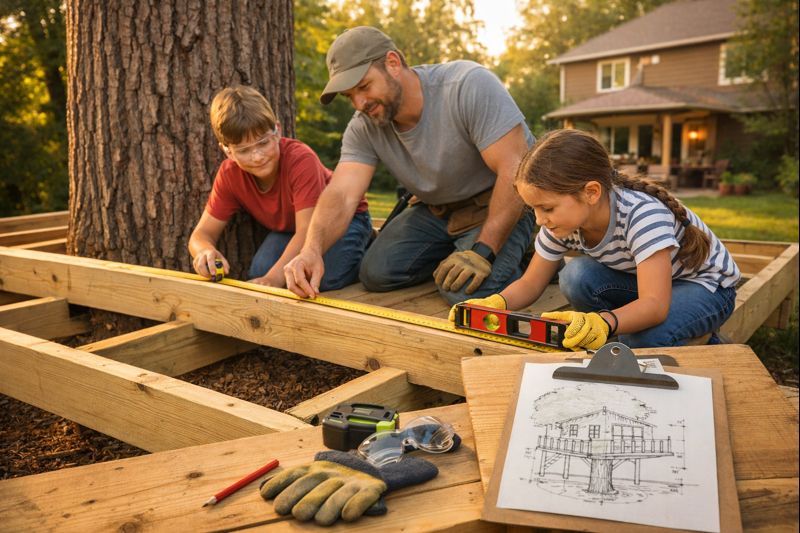
This is where Treehouse Plans stop being a daydream and start being a build.
Three sizing rules that save you
- Bigger isn’t better. Bigger is heavier, pricier, and harder to keep rigid.
- Measure your “people.” If adults might use it, plan a little extra headroom.
- Pick one “feature.” Porch or bridge or A-frame roof—don’t try to collect them all on your first build.
Quick sketch checklist
- Platform size
- Access (ladder vs stairs)
- Railing height
- Roof pitch
- Door placement (avoid awkward head bonks)
Think of your sketch like a map for future-you—the tired you, the “why did I start this” you, the you who needs clarity.
Permits, Property Lines, and “Neighbor Peacekeeping”
I know, I know. This part isn’t cute. But it’s better than tearing down a half-finished masterpiece.
What to check
- Local permitting rules (especially for height and foundations)
- Setbacks from fences/property lines
- HOA guidelines if you have them
Neighbor tip: Even if you don’t have to ask, it’s worth giving a friendly heads-up. A simple “We’re building a small treehouse for the kids” can prevent drama later.
Safety First: Railings, Fall Zones, and Smart Height Choices
A treehouse should feel magical—not like a stress test.
Simple safety upgrades that matter a lot
- Railings on all open sides
- No big gaps kids can slip through
- Non-slip treads on ladders/stairs
- A soft landing zone below (mulch/rubber/grass beats patio)
Height advice (friend-to-friend)
If you’re torn between “epic” and “safe,” go lower. A lower treehouse still feels like a fortress, and it’s easier to supervise and maintain.
Materials and Hardware: What Holds Up Outdoors
Treehouse Plans succeed or fail on two things: structure and weather resistance.
Wood that behaves outside
- Pressure-treated lumber for structural framing (common choice)
- Naturally durable wood where it makes sense (budget permitting)
Hardware that holds up
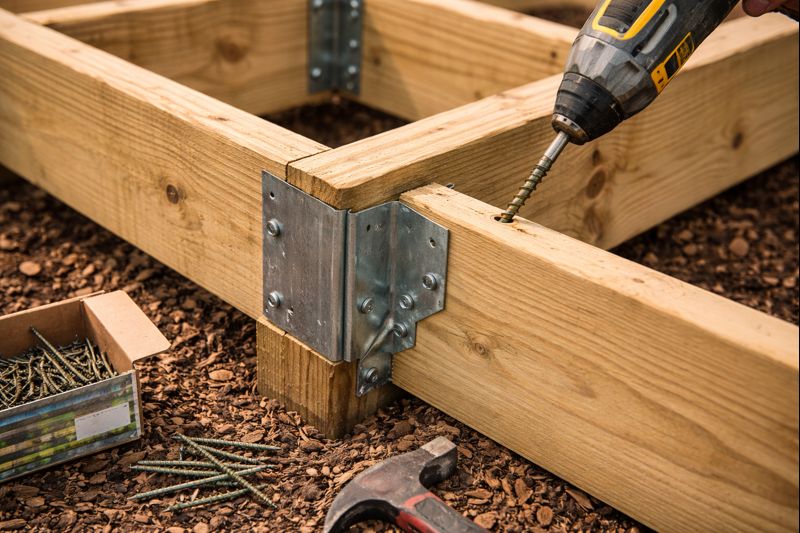
- Exterior-rated screws/fasteners (not indoor drywall screws—ever)
- Corrosion-resistant connectors if you’re in wet/humid climates
- Proper brackets and ties where loads concentrate
Tiny rule: If it’s “good enough” for a deck, it’s usually a good starting point for treehouse materials and hardware.
Building the Platform and Frame: A Simple, Repeatable Order
This is the part where you want to be methodical, not heroic.
Build order that keeps you sane
- Establish level reference points
- Frame the platform perimeter
- Add joists + blocking
- Deck boards
- Railings (early—before you get confident and careless)
- Walls/roof (if you’re enclosing)
Common mistake
People rush the platform and then fight every step after. If you take your time here, the rest of your treehouse building plans feel smoother.
Roof, Siding, and Weatherproofing: Keep the Fun, Ditch the Rot
A roof is not just aesthetic. It’s basically a long-term relationship with your future maintenance schedule.
Weatherproofing basics
- Use proper flashing where roof meets walls
- Add drip edges
- Seal or stain exposed wood
- Create airflow so moisture doesn’t get trapped
Maintenance rhythm
Do a quick inspection seasonally:
- Tighten what loosened
- Reseal what dried out
- Replace what looks sketchy
That’s it. Think “little upkeep often” instead of “big repair panic later.”
Tools & Supplies: 5 Product Picks That Earn Their Spot
These are practical, low-drama helpers that make Treehouse Plans easier to execute. (Before purchasing, always confirm the current rating/review count and compatibility—Amazon listings change.)
1) DEWALT 20V MAX Cordless Drill/Driver Kit (DCD771C2)
Short description: A reliable drill/driver kit for drilling holes and driving screws all day without hating your wrists.
Features:
- Cordless convenience for ladder/stair work
- Enough power for most framing and decking tasks
- Common battery platform (easy to expand later)
Use cases: First-time builders, weekend DIYers, anyone assembling framing + deck boards.
2) Kreg Pocket-Hole Jig System (K4 / K5 Series)
Short description: Helps you create strong, clean joints—especially useful for railings, benches, and trim.
Features:
- Guides consistent pocket holes
- Makes railing and interior add-ons sturdier
- Great for “I want it to look nice” builds
Use cases: Porch seating, railing panels, small interior shelves.
3) Bosch Laser Measure (BLAZE Series)
Short description: For fast measurements when you’re working alone or measuring awkward spans.
Features:
- Quick distance reads for layout planning
- Helps keep platform dimensions consistent
- Handy for checking diagonal measurements (squareness)
Use cases: Solo builders, anyone doing a bridge or porch layout.
4) FastenMaster Structural Wood Screws (Ledger/Framing)
Short description: Heavy-duty structural screws designed for serious load areas.
Features:
- Built for structural connections
- Faster than some bolt-heavy approaches
- Helpful for framing connections where strength matters
Use cases: Platform framing, ledger-style connections, reinforcement points.
5) 3M Hearing Protection (Worksite Earmuffs)
Short description: Because hearing protection is one of those “wish I did this earlier” things.
Features:
- Reduces fatigue during long tool sessions
- Useful for saw work and drilling
- Helps kids nearby if they’re “helping” at a safe distance
Use cases: Any cutting/drilling day, especially with circular saws or miter saws.
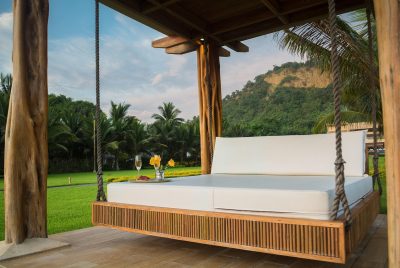
Bonus comfort idea: If you want your treehouse to feel like an actual hangout spot, adding a cozy swing seat changes everything—this daybed swing idea for a treehouse-style retreat is the kind of upgrade that makes kids linger and adults secretly claim it as “their spot.”
Research-Backed Benefits + FAQs About Treehouse Plans
What research says (and why it matters for your build)
If you’re doing Treehouse Plans as a family project, you’re not “just building a structure.” You’re building a setting for play, connection, and time outside.
- The American Academy of Pediatrics has emphasized how play supports children’s development—social-emotional skills, self-regulation, and stronger caregiver relationships—highlighted in their discussion of Treehouse-style play and the AAP “Power of Play” guidance (AAP guidance summarized on HealthyChildren.org, 2018).
- A large study in Scientific Reports found that people reporting 120+ minutes per week in nature were more likely to report good health and well-being, suggesting a meaningful “threshold” for benefits (White et al., 2019). That’s not a treehouse study—but it supports the bigger point: building a reason to go outside can be a real-life health nudge.
In other words: your treehouse isn’t just wood and screws. It’s an invitation.
FAQs About Treehouse Plans
How do I choose the safest height for Treehouse Plans?
If kids are the main users, stay lower than you think—low still feels exciting, and it reduces risk. Add railings early, and build a soft landing zone underneath.
Can I use Treehouse Plans if I don’t have a “perfect” tree?
Yes. Choose a stilt plan (posts) or a hybrid plan (tree + posts). You’ll get the treehouse feel with a more predictable structure.
What’s the biggest beginner mistake with DIY Treehouse Plans?
Rushing the platform. If the platform isn’t level and rigid, everything after becomes a struggle. Take your time there and the rest feels doable.
How much do Treehouse Plans usually cost?
It depends on size, height, and roof complexity. A small platform build can be relatively affordable, while a cabin-style treehouse with a porch, roof, and finishes costs more—often because weatherproofing and hardware add up fast.
How do I make a treehouse more inclusive for different ages?
Add stairs instead of a ladder, include a handrail, keep doorways wider, and create one “rest zone” (a bench or swing) so it isn’t all climbing and jumping.
Conclusion
If you’ve been waiting for the “right time” to start Treehouse Plans, here’s your gentle push: start small, build safely, and let it be imperfect in a charming way. The goal isn’t a magazine-cover treehouse. The goal is a sturdy backyard place where your family makes memories—loud ones, quiet ones, and everything in between.