The Best Treehouse Slides For Kids
We may earn a commission for purchases made using our links. Please see our disclosure to learn more.
Imagine your kids racing up a ladder, laughing with their friends, and whooshing down a slide straight from their own little hideout in the trees. That’s the magic of treehouse slides—they turn “just a play structure” into a full-on backyard adventure.
In this guide, we’ll walk through everything you need to know: types of slides, safety basics, age-appropriate choices, layout ideas, research-backed benefits, and some solid product picks to get you started.
This post may contain affiliate links. If you buy through them, I may earn a small commission at no extra cost to you.
Why Treehouse Slides Feel Like Pure Childhood Magic
If you think back to your own childhood, chances are a slide shows up in there somewhere. Treehouse slides turbo-charge that memory.
You’re not just adding a way down from a platform. You’re adding:
- A “secret escape route” from the fort
- A quick way to turn solo play into group play
- A built-in reason for your kids to go outside instead of asking for screen time
A simple treehouse becomes a backyard treehouse slide zone where kids can pretend they’re pirates, explorers, astronauts, or superheroes on a mission. It’s the kind of play that sticks in their memory long after they’ve outgrown the shoes they wore up that ladder.
Types of Treehouse Slides You Can Choose From
Before you shop, it helps to know the basic types of treehouse slides:
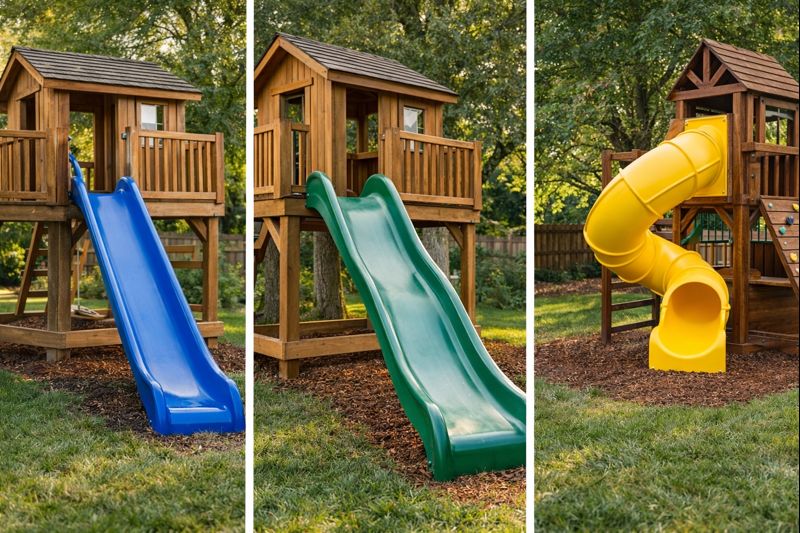
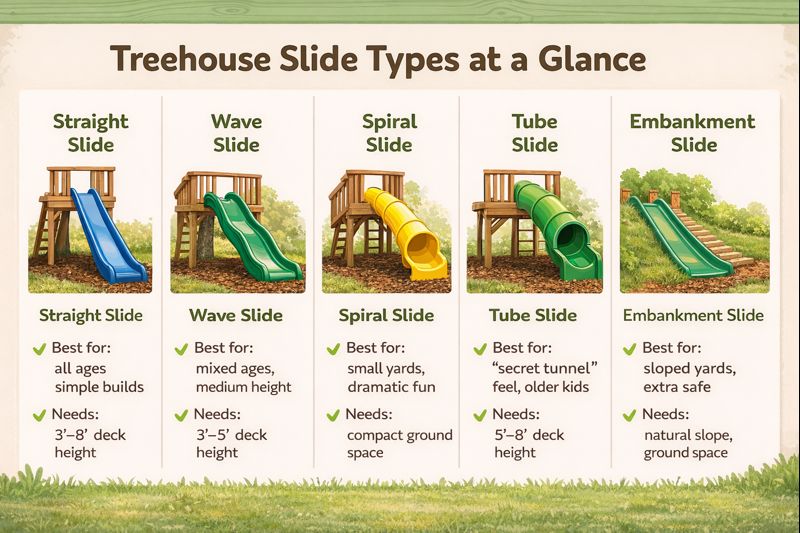
- Straight slides – Traditional, fast, and easy to install
- Wave slides – Gentle bumps for a bit more fun
- Spiral slides – Compact and dramatic, great when the yard footprint is small
- Tube slides – Fully enclosed and super “secret-tunnel” vibes
- Embankment slides – Follow the slope of a hill, low to the ground and very safe
Think of this as your “menu” of treehouse slide ideas. Once you figure out the age range, height of the deck, and the space you have, one or two types will naturally stand out.
Straight and Wave Slides: Classic and Versatile
Straight and wave slides are the “little black dress” of the playground world: they go with almost everything.
Why families love them:
- Easy to match with most wooden treehouse or tree fort designs
- Work well for a range of ages, especially when paired with the right deck height
- Usually simpler to install than tube or spiral options
Wave slides give you that up-down-up shape, which slows kids a touch and adds a fun, bouncy feel. If you’re planning a tree fort slide for mixed ages, a wave slide for a 4’–5′ deck is often a sweet spot.
Ask yourself: Do I want simple and reliable, or do I want something that becomes the “wow” feature? If you lean toward simple, straight or wave slides are your best friends.
Spiral and Tube Slides: Maximum Fun in Small Spaces
If you want a “whoa, that’s so cool” reaction, spiral and tube slides deliver.
Spiral slides:
- Curl around the treehouse, saving ground space
- Feel like a mini amusement-park ride
- Work well if you don’t have room for a long straight slide
Tube slides:
- Fully or mostly enclosed
- Add a “secret tunnel” feel kids love
- Help contain kids a bit more if you’re nervous about edges
Because spiral and tube slides are more complex, they’re often sold as part of a kids treehouse with slide kit or as a dedicated add-on for specific deck heights. They’re perfect when you want a compact footprint but big drama.
How Tall Should Your Treehouse Slide Be?
Slide height is where “fun” and “safety” have to shake hands.
Most playground guidance says:
- Shorter slides (under about 4 ft) are better suited to toddlers and young preschoolers
- Preschool and school-age kids can handle taller platforms, as long as the slide angle is controlled and the landing area has impact-absorbing surfacing
For a backyard treehouse:
- A 4’–5′ deck height with a wave or straight slide feels exciting but manageable
- Taller structures (8 ft and above) are best for older kids and usually mimic full playground setups
If you’re unsure, lean slightly on the shorter side. You can add challenge in other ways: climbing walls, monkey bars, rope ladders, or a second, steeper playset slide for older kids in a different zone.
Safety First: Simple Rules for Happy Sliding
Treehouse slides can be thrilling and safe when you follow a few basics:
- Guardrails and barriers
Make sure the treehouse platform has proper rails so kids can’t accidentally step off the edge. - Clear landing zone
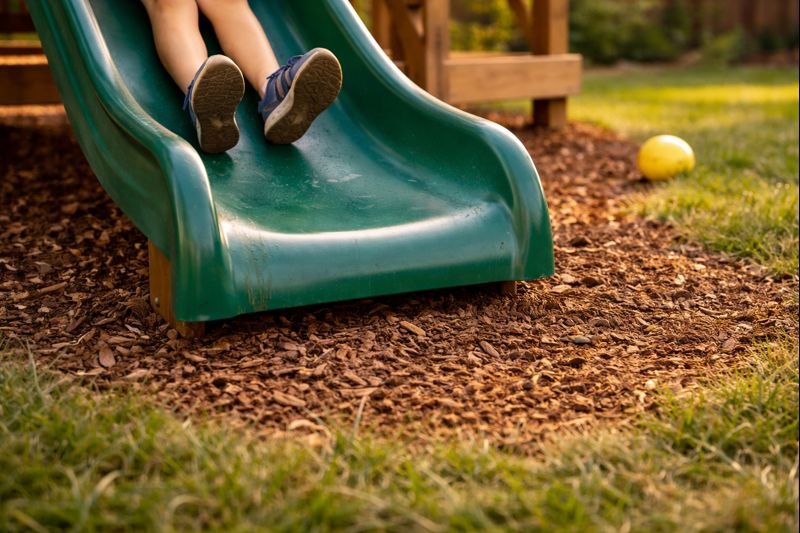
Keep the bottom of the slide free of rocks, pavers, or garden edging. Use grass, mulch, rubber tiles, or other impact-absorbing material. - One at a time
Teach kids the “wait until the slide is clear” rule. It sounds obvious, but reminders matter when everyone is excited. - Weather checks
Slides can get hot in direct sun and slippery when wet. A quick hand check before sending kids down can prevent tears. - Routine inspections
Look for cracks, warping, loose bolts, or splinters (on wooden sides) and fix issues before they become problems.
Safety isn’t about killing the fun. It’s about making sure your kids can keep enjoying their outdoor play slide for years.
Choosing the Right Slide Material for Your Yard
Most backyard treehouse slides are made from:
- Molded plastic – Common for straight, wave, and shorter tube slides
- Fiberglass – More often found in commercial settings, though some specialty residential slides use it
- Metal – Less common now for residential use because it heats up quickly and can be slippery
For most families, modern plastic slides are the sweet spot: they’re durable, reasonably priced, and pretty forgiving in different weather conditions.
Think about:
- Sun exposure – In very hot climates, lighter colors can stay cooler
- Rain and humidity – Plastic won’t rot, but you still want drainage and airflow around the structure
- Aesthetics – Green or brown slides blend into a natural yard; bright colors pop for a playful look
Treehouse Slides for Different Ages and Stages
A toddler’s ideal slide looks very different from a 10-year-old’s dream setup.
For toddlers (1–3):
- Gentle slopes
- Very low deck heights or freestanding slides next to the treehouse
- Wide steps and sturdy handrails
For preschoolers (3–5):
- Medium deck height with a wave slide
- Easy-grip ladder rungs or stairs
- Optional small climbing wall or rope ladder
For school-age kids (5–10+):
- Taller deck with longer straight, wave, or spiral slide
- More challenging access (rope ladders, rock walls)
- Multiple “routes” down: slide, fireman’s pole, maybe even a second shorter slide
You can absolutely design a treehouse slide setup that grows with your kids. Start smaller and add elements later as their confidence (and legs!) get longer.
Planning Your Treehouse Around the Slide
Instead of treating the slide as an afterthought, plan the whole structure around it.
Think about:
- Where the slide exits
You don’t want kids landing in front of a gate, steps, or driveway. - Traffic flow
Can kids climb up one side and slide down another without colliding? - Sun and shade
A west-facing slide may get extra hot in the afternoon.
If you’re early in the design phase, consider using detailed tree fort plans for your backyard so you can position the slide, ladder, and deck height in a way that works with your actual trees and yard layout.
DIY Treehouse Slides vs Ready-Made Playsets
You’ve basically got two routes:
DIY Treehouse Slide Setup
Great if you:
- Love building and already have some tools
- Want a truly custom design around your trees
- Don’t mind sourcing a separate slide, hardware, and lumber
This approach lets you buy a standalone treehouse slide (like a wave or spiral slide) and attach it to your own structure. It’s flexible but requires careful measuring and adherence to safety guidelines.
Ready-Made Treehouse or Playset
Perfect if you:
- Want clear instructions and a tested design
- Prefer something that arrives as a kit
- Like the idea of matched pieces: slide, swings, climbing wall, and fort
Many wooden sets come with a tree fort slide, swings, rock wall, and sometimes a tube or spiral slide. You still need to assemble and anchor them, but most of the engineering work is done for you.
What Experts Say About Treehouse Slides and Outdoor Play
You’re not just “adding a slide.” You’re creating a mini play zone that’s genuinely good for your kids.
A key AAP statement on the importance of play explains that active, free play helps kids build physical skills, confidence, creativity, and stress-coping skills. Climbing up to the treehouse and zooming down the slide again and again is exactly the kind of movement that supports healthy development.
On the safety side, the CPSC playground safety handbook highlights how proper slide height, clear “use zones,” and softer surfacing under and around the slide dramatically reduce injury risk. Translation for your backyard: keep hard surfaces away from the landing area, match the slide to the deck height it’s designed for, and give kids plenty of room to exit safely.
Put simply: a thoughtfully planned treehouse slide setup = more outdoor play, healthier movement, and fewer “why did we build this?” worries.
Treehouse Slide Ideas: Creative Ways to Play
Once the slide is installed, you can keep the fun going with simple add-ons:
- Treasure deliveries
Send stuffed animals, dolls, or “supplies” down the slide in a soft bag. - Color-themed days
Everything that goes down the slide has to be green, or round, or soft. - Obstacle courses
“Climb the rock wall, slide down, crawl under the rope, touch the fence, and back up the ladder!” - Story prompts
Turn the treehouse into a castle, spaceship, jungle base, or secret library. The slide is the escape chute.
These small twists keep your treehouse slide ideas fresh without you needing new equipment every season.
Best Treehouse Slides and Playsets on Amazon
Here are some Amazon US picks that fit nicely into different yard sizes, ages, and budgets. Always double-check current ratings and reviews before you buy, since those can change over time.
1. Step2 Naturally Playful Lookout Treehouse
Step2 Naturally Playful Lookout Treehouse is a compact plastic treehouse-style climber with a built-in slide, perfect for toddlers and younger preschoolers.
Features: Easy-climb steps with handrails, short slide, periscope, and a cozy platform.
Best for: Smaller yards, first slide experiences, and families who want an all-in-one starter “mini treehouse” without building from scratch.
2. Gorilla Playsets Mountaineer Treehouse Wooden Swing Set
If you want the full “backyard adventure park” vibe, Gorilla Playsets Mountaineer Treehouse Wooden Swing Set with Tube Slide packs in a lot.
Features: Wooden fort with roof, wave slide, enclosed tube slide, rock wall, rope ladder, swings, and sandbox area.
Best for: Families with enough space and kids of different ages who want multiple ways up and down from the treehouse.
3. Swing-N-Slide Cool Wave Slide for 4′ Deck
Already have a wooden fort or DIY structure and just need a solid slide? The Swing-N-Slide Cool Wave Slide mounts to a 42″–48″ deck height and is designed as a replacement or add-on slide.
Features: One-piece molded plastic construction, gentle wave shape, supports growing kids.
Best for: Turning an existing treehouse or play deck into a proper treehouse slide setup without replacing the whole structure.
4. Little Tikes Easy Store Large Slide
The Little Tikes Easy Store Large Slide is technically freestanding, but many families place it next to a low platform or mini playhouse to act as a starter slide.
Features: Folds for storage, gentle slope, wide base for stability.
Best for: Toddlers and early preschoolers, or as a temporary solution while you plan a bigger treehouse.
5. Little Tikes Easy Store Climb & Explore Slide & Tunnel Playset
For a “treehouse-lite” experience with lots of play options, Little Tikes Easy Store Climb & Explore includes a slide, crawl tunnel, and interactive features.
Features: Slide, climbing steps, collapsible tunnel, telescope, steering wheel, and sensory details.
Best for: Younger kids who love climbing and crawling but aren’t ready for a tall treehouse slide yet.
Caring for Your Treehouse Slide All Year Long (Plus a Quick Wrap-Up)
A little maintenance keeps your slide safe, smooth, and fun.
Easy care checklist:
- Rinse dirt, pollen, and leaves off the slide every so often
- Check bolts and hardware at least once a season
- Sand and seal nearby wood if it’s rough or splintering
- Trim branches so nothing scrapes kids on the way down
Think of it like caring for a car: small, regular tune-ups are easier than one huge repair later.
And big picture? Adding a well-chosen treehouse slide is about more than equipment. It’s about:
- Giving your kids a reason to run outside
- Creating a little “world of their own” up in the trees
- Building family memories around snacks, games, and late-afternoon sliding races
You don’t need the biggest yard or the fanciest setup. Even a simple backyard treehouse slide can become the place your kids remember when they think about growing up.
Treehouse Slide FAQs
How high should a treehouse slide be for younger kids?
For toddlers and preschoolers, aim for lower deck heights—around 3’–4′ with a gentle straight or wave slide. Taller decks can feel scary and increase fall risk. As kids get older and more confident, you can introduce higher platforms and longer slides.
What is the safest type of treehouse slide?
For most families, a wave or straight slide with moderate height and a soft landing surface is the safest. Embankment slides built into a hill are even lower risk because the slide follows the ground. Whatever you choose, good surfacing, solid guardrails, and clear rules matter more than the exact shape.
Can I add a slide to an existing treehouse?
Usually, yes. You’ll need to:
- Confirm the deck height matches the slide’s recommended range
- Add proper framing to support the slide
- Make sure the exit area is clear and safe
If you’re not comfortable with structural work, it’s worth having a contractor or handy friend double-check your plan.
Are spiral or tube slides worth the extra cost?
If you have limited yard space or want a big “wow” factor, a spiral or tube treehouse slide can absolutely be worth it. They feel more like a ride and take up less ground length. Just make sure they’re rated for your deck height and that you’re okay with the extra assembly effort.
How do I keep a treehouse slide from getting too hot?
You can:
- Position the slide so it’s not in full afternoon sun
- Choose lighter colors that reflect more heat
- Add a shade sail or nearby tree canopy
- Do a quick “hand test” before letting kids slide
If it’s blazing summer weather, treat the slide like a car seat: check first, cool if needed, then play.