Top 10 Treehouse Suspension Brackets
We may earn a commission for purchases made using our links. Please see our disclosure to learn more.
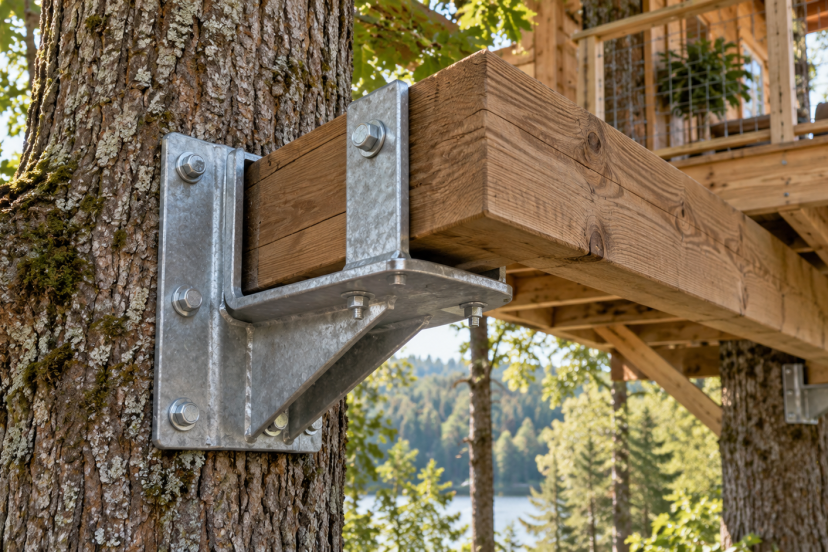
Treehouse Suspension Brackets connect tree-supported framing while accommodating movement, growth, and imperfect spacing. This guide is for DIY builders comparing purpose-built static, floating, knee-brace, yoke, and multi-tree hardware. I evaluated Amazon.com options by intended configuration, included parts, compatibility, movement strategy, installation demands, and limitations. Always match hardware to a sound plan, healthy trees, and qualified structural guidance; no bracket can make an unsuitable design safe.
Quick Comparison
| Product | Best for | Key feature | Main limitation | Price category | Overall recommendation |
| Nelson 2-Tree System | Overall | Coordinated set | Backups separate | Variable | Complete choice |
| Nelson 3-Tree System | Three trees | Multi-tree layout | Design-specific | Variable | Planned system |
| Nelson 4-Tree Kit | Four trees | Four supports | Complex layout | Variable | Specialized |
| Nelson Double Yoke | Wide two-tree build | Double yoke | Advanced setup | Variable | Premium option |
| TyCa Double Knee Brace | Paired braces | Pipe bracket | Pipe required | Variable | Brace option |
| TyCa Single Knee Brace | One brace | Compact bracket | Component only | Variable | Focused value |
| TyCa Floating Bracket | Movement | UHMW bearing | TAB/lag separate | Variable | Dynamic choice |
| TyCa Static Bracket | Fixed point | Formed steel | Fasteners separate | Variable | Static choice |
| Nelson Static Yoke + TABs | Wider footprint | Yoke + TABs | Geometry-specific | Variable | Convenient |
| Nelson Dynamic Yoke + TABs | Dynamic yoke | Yoke + TABs | Specialized | Variable | Dynamic yoke |
1. Nelson Treehouse Hardware Kit – Tree Fort System for 2 Trees — Best for Complete Two-Tree Builds
Overview: This kit packages the core attachment hardware for a small two-tree platform, making it the clearest complete system here.
Key Features: Four Tree Fort TABs; two dynamic uplift arrestors; two static uplift arrestors; four hex nuts; TAB install bit.
Pros: Coordinated components; clear two-tree purpose.
Cons: Cable or strut backups are separate.
Best For: Builders following a verified two-tree plan.
Verdict: Its matched hardware and defined configuration make it the strongest overall Treehouse Suspension Brackets package.

2. Nelson Treehouse Hardware Kit – Tree Fort System for 3 Trees — Best for Three-Tree Platforms
Overview: This version targets platforms spanning three trees, where trunk positions and independent movement make layout essential.
Key Features: Four Tree Fort TABs; two dynamic uplift arrestors; two static uplift arrestors; four hex nuts; install bit.
Pros: Purpose-built three-tree system; compatible hardware family.
Cons: Backup hardware is separate.
Best For: Backyard platforms designed around three suitable trees.
Verdict: Choose it when your plan specifically calls for Nelson’s three-tree Tree Fort arrangement rather than mixed connectors.
3. Nelson Treehouse Tree Fort Hardware Kit – 4 Tree Attachment Bolts, 3 Dynamic Uplift Arrestors, 1 Static Uplift Arrestor, 4 Hex Nuts, 1 Installation Kit — Best for Four-Tree Layouts
Overview: This package is aimed at small platforms supported across four trees with bundled dynamic and static hardware.
Key Features: Four TABs; three dynamic uplift arrestors; one static uplift arrestor; four hex nuts; installation kit.
Pros: Distinct four-tree configuration; bundled sourcing.
Cons: Four attachment points demand careful alignment.
Best For: Experienced DIYers using a four-tree plan.
Verdict: It belongs here for projects that genuinely require four-tree support rather than extra hardware.

4. Nelson Treehouse Hardware Kit – Tree Fort System for 2 Trees with Double Yoke — Best for Wider Two-Tree Platforms
Overview: The double-yoke system serves two-tree projects needing a wider framing footprint than simpler connections provide.
Key Features: Two-tree format; double-yoke geometry; coordinated Nelson Tree Fort hardware.
Pros: Addresses difficult spacing; avoids improvised yoke parts.
Cons: More specialized than the standard system.
Best For: Wide two-tree platforms designed around double yokes.
Verdict: This is the premium-style pick when the verified plan benefits from wider yoke-based support.

5. TyCa Industries Treehouse Mounting Brackets (Double Knee Brace – 1.25″ Pipe) — Best for Paired Knee Braces
Overview: TyCa’s double bracket supports two 1.25-inch pipe knee braces for planned diagonal reinforcement below framing.
Key Features: Quarter-inch steel plates; pipe-surrounding design; textured powder coat; four galvanized carriage bolts with washers and nuts.
Pros: Paired-brace geometry; fastening hardware included.
Cons: Compatible pipe is still required.
Best For: Two knee braces meeting one support area.
Verdict: It is a focused option when paired diagonal bracing is specified.

6. TyCa Industries Treehouse Brackets & Hardware (Single Knee Brace – 1.25″ Pipe) — Best for One-Brace Support
Overview: This smaller TyCa bracket handles one 1.25-inch pipe knee brace for diagonal reinforcement.
Key Features: Quarter-inch steel plates; textured powder coat; two galvanized carriage bolts; 1.37-inch inside-diameter opening.
Pros: Compact setup; included carriage hardware.
Cons: Only one component of the full brace assembly.
Best For: Plans specifying a single knee brace.
Verdict: It is the best budget-oriented component here because it solves one brace need without a full system.

7. Treehouse Brackets & Hardware (Floating Bracket – 1.25″) — Best for Allowing Movement
Overview: This TyCa floating bracket pairs with 1.25-inch TABs or 1.25-by-15-inch lag bolts with a movement-friendly bearing interface.
Key Features: 1.25-inch attachment compatibility; half-inch UHMW bearing surface; textured powder-coated finish; TyCa fabrication.
Pros: Dynamic support design; low-friction bearing.
Cons: TAB or lag is separate.
Best For: Designs combining fixed and movement-accommodating supports.
Verdict: It is the clearest standalone movement-focused choice.

8. Treehouse Brackets & Hardware (Static Bracket for 1.25″ Diameter Lags or TABs) — Best for Fixed Support Points
Overview: TyCa’s static bracket holds framing at a support point where restrained movement is required.
Key Features: Quarter-inch formed steel; contacts the lag or TAB at two points; textured powder coat; 1.5-inch hole spacing.
Pros: Fixed-support geometry; works with 1.25-inch lags or TABs.
Cons: Attachment hardware and mounting screws are separate.
Best For: A planned fixed connection paired with movement hardware elsewhere.
Verdict: It is a practical static choice when the layout requires restraint.

9. Nelson Treehouse Hardware Kit – Tree Fort Static Yoke with 2 TABs — Best for Bundled Static Yoke Support
Overview: This package combines Nelson’s static yoke with two Tree Fort TABs, for wider beam spacing around one tree.
Key Features: Static yoke; two included TABs; intended for yoke layouts used in two- and three-tree designs.
Pros: TABs included; expands beam spacing.
Cons: Useful only for suitable geometry.
Best For: Plans specifically calling for a static yoke.
Verdict: Included TABs reduce separate sourcing.

10. Nelson Treehouse Hardware Kit – Tree Fort Dynamic Yoke with 2 TABs — Best for Specialized Dynamic Yoke Layouts
Overview: This kit combines a dynamic-yoke arrangement with two Tree Fort TABs for expanded beam spacing plus planned movement.
Key Features: Dynamic yoke configuration; two TABs; intended for two- or three-tree yoke layouts.
Pros: Major attachments bundled; alternative to static framing.
Cons: Specialized geometry demands accurate installation.
Best For: Advanced builders following a dynamic-yoke plan.
Verdict: It suits plans combining movement management with wider beam spacing.

How to Choose the Best Treehouse Suspension Brackets
Before choosing Treehouse Suspension Brackets, map your support points and movement strategy with this step-by-step treehouse platform guide, then match each bracket and bolt to your actual design.
Static versus dynamic support: Trees sway independently. Multi-tree platforms commonly need planned movement, so do not assume every beam should be rigidly locked.
Compatibility: Check TAB or lag diameter, pipe diameter, beam arrangement, hole spacing, and every included fastener. Fit alone does not prove suitability.
Included parts: Compare the Amazon package against your drawing before checkout. Some products are standalone brackets, while others bundle TABs, arrestors, nuts, or installation tools. Missing one required component can stop the build. Also confirm whether backups, structural screws, pipe, or lumber must be purchased separately for your exact configuration and plan.
Tree and layout suitability: Tree health, species, trunk size, spacing, span, and expected loads affect the design. Assess questionable trees before construction.
Installation: TAB systems may require specialized bits, precise pilot holes, and alignment. Resolve yoke and knee-brace geometry on the plan before drilling.
Inspection: Check periodically for corrosion, loose hardware, damaged wood, changing clearances, unusual movement, and changes in tree condition.
Frequently Asked Questions About Treehouse Suspension Brackets
1. What is the difference between static and floating brackets?
A static bracket restrains movement at its support point; a floating bracket permits controlled relative movement. The correct combination depends on the design.
2. Can I use ordinary deck brackets?
Do not substitute generic brackets because dimensions look similar. Treehouse connections must account for sway, growth, loads, and specified hardware.
3. Do Treehouse Suspension Brackets include TABs?
Sometimes. Nelson’s yoke-with-TAB kits include bolts, while TyCa standalone brackets require compatible attachments separately.
4. Are floating brackets always better?
No. Floating hardware solves a movement requirement; it is not a universal upgrade. Many designs combine restrained and moving points.
5. How often should hardware be checked?
Inspect regularly and after severe weather for looseness, corrosion, wood damage, clearance changes, unusual movement, or tree changes.
Final Verdict
The Nelson Tree Fort System for 2 Trees is best overall for its coordinated small-platform hardware. The TyCa Single Knee Brace is the best budget-oriented component for a focused brace need. The Nelson 2-Tree System with Double Yoke is the premium configuration when wider two-tree geometry is needed. For beginners, the standard Nelson 2-Tree System has the clearest defined use, while the Nelson Dynamic Yoke with 2 TABs is the best specialized option for dynamic-yoke plans.
Compare specifications, confirm tree and beam compatibility, verify dimensions and included parts, review current warranty details, and check Amazon.com before purchasing because offers, contents, and availability can change.