5 Modern Treehouse Roof Ideas
We may earn a commission for purchases made using our links. Please see our disclosure to learn more.
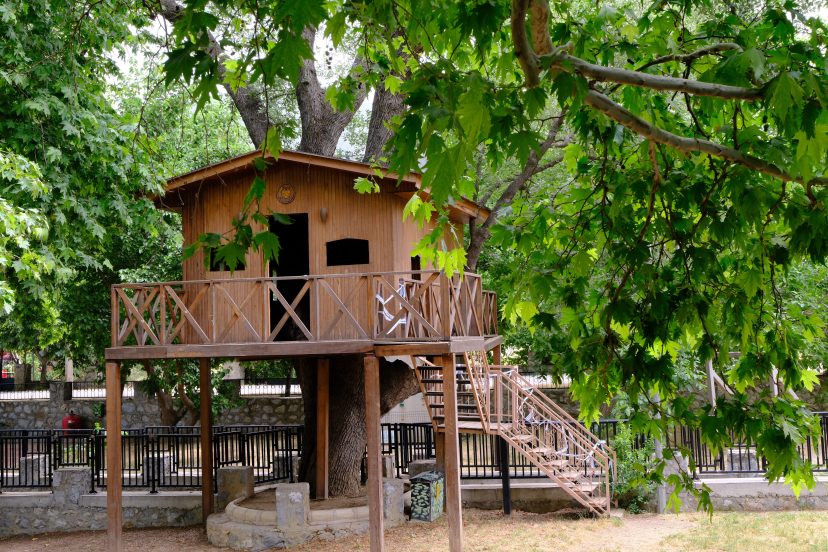
Building a treehouse is exciting until you reach the roof and think, “Wait… how do I keep this thing dry without making it look like a garden shed wearing a hat?” That’s where smart Treehouse Roof Ideas make all the difference.
A good roof protects the platform, keeps kids comfortable, helps the structure last longer, and gives the whole treehouse its personality. In this guide, you’ll learn five modern roof styles, the best materials to consider, waterproofing tips, safety reminders, Amazon product ideas, and practical design details that make your treehouse feel finished.
Affiliate note: This article includes Amazon product mentions that may earn a commission if you buy through affiliate links.
Why the Roof Matters More Than You Think
The roof is not just decoration. It is your treehouse’s umbrella, sunhat, and bodyguard all at once.
Without a strong roof, rain can soak the deck, warp the wood, loosen fasteners, and turn your cozy hideout into a damp little mushroom farm. Cute? Maybe in a fairy tale. Not great for real life.
The best Treehouse Roof Ideas balance three things:
- Weather protection
- Weight control
- Style
Because treehouses sit above ground, lighter roofing materials are often better than heavy options. You want protection without overloading the platform.
Start With Safety Before Style
Before choosing colors or roof shapes, check the basics. Is the tree healthy? Is the platform level? Can the framing handle the added roof load?
A treehouse roof should be simple, secure, and easy to maintain. Avoid heavy tile, complicated dormers, or anything that turns a weekend project into a tiny airborne mansion.
If children will use the space, think about the whole access system too. A safe roof pairs well with a safe entry point, such as a sturdy ladder, steps, or a properly installed treehouse rope ladder setup that suits the child’s age and comfort level.
1. Modern Shed Roof for a Clean Look
A shed roof slopes in one direction. It is one of the easiest DIY treehouse roof styles because it uses a simple frame and naturally moves rainwater away.
It also has a contemporary appearance without overdoing it. Think cozy backyard studio, not crooked pirate lookout.
Best For
- Small treehouses
- Beginner builders
- Modern backyard designs
- Easy rain runoff
Practical Tip
Place the higher side of the roof toward the direction where wind and rain usually come from. This helps push water away from the entry side and keeps the inside drier.
2. Classic Gable Roof With a Storybook Feel
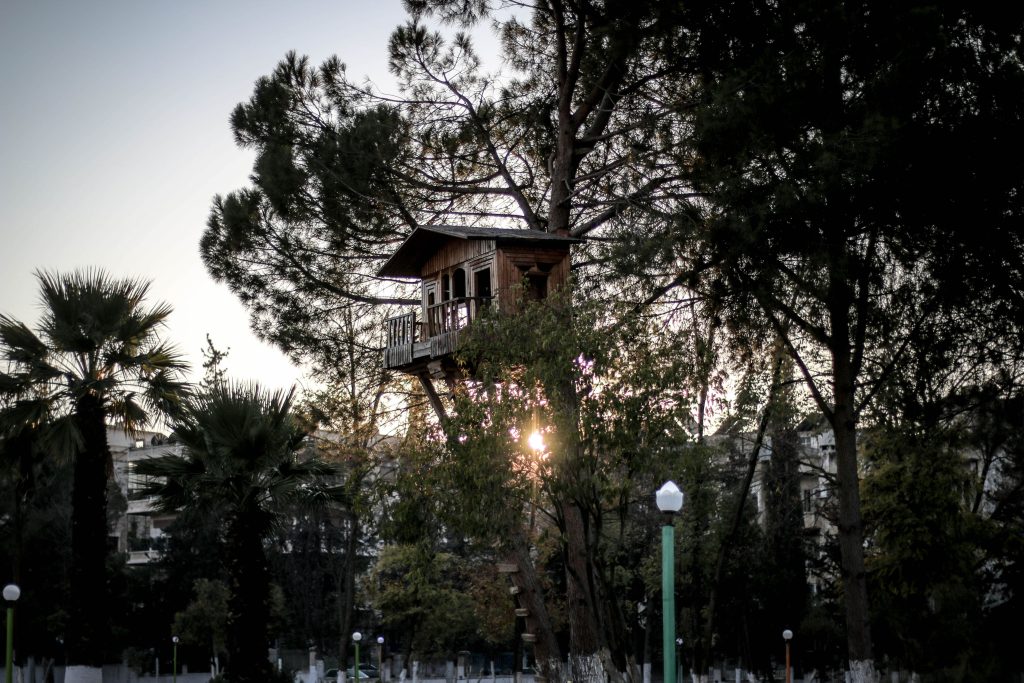
The two sloping sides of a gable roof come together at a peak. If you picture a child drawing a house, that little triangle roof is probably a gable.
It works beautifully for a treehouse because it gives the space a cozy, cabin-like feel. It also sheds rain well when built with the right pitch.
Best For
- Traditional treehouse designs
- Playhouses with walls
- Families who want a “mini cabin” look
- Areas with regular rain
Design Note
A gable roof needs more framing than a shed roof, but the payoff is charm. Add a small roof overhang, and suddenly the whole treehouse feels intentional.
3. Metal Roof for Long-Lasting Protection
Metal roofing is a strong choice if you want a waterproof treehouse roof that can handle rain, leaves, and sun. Corrugated metal panels are lightweight compared with many traditional roofing materials and can give the treehouse a rustic-modern look.
The sound of rain on a metal roof can also feel magical. A little noisy, yes, but in a “camping with hot cocoa” kind of way.
Best For
- Rainy climates
- Rustic or farmhouse-style treehouses
- Long-term backyard builds
- Low-maintenance roofing
Practical Tip
Use roofing screws with rubber washers. Those washers help seal the screw holes so water does not sneak in through the fasteners.
4. Clear Polycarbonate Roof for Natural Light
If your treehouse feels dark under heavy shade, polycarbonate roofing panels can be a fantastic choice. They let light in while still blocking rain.
This is one of the brightest Treehouse Roof Ideas for reading nooks, art spaces, or tiny backyard retreats. It feels like a skylight without needing a complicated roof system.
Best For
- Shaded yards
- Art or reading treehouses
- Greenhouse-inspired designs
- Small spaces that need more daylight
Watch-Out
Clear panels can make the space warmer in direct sun. If your backyard gets intense afternoon heat, consider smoke-tinted or translucent panels instead.
5. Living Roof for an Eco-Friendly Treehouse
A living roof uses plants, soil, and waterproof layers to create a green surface. It looks beautiful and blends naturally with the trees.
That said, it is the most advanced option on this list. Soil gets heavy, especially after rain. So before choosing this design, talk to a qualified builder or engineer.
Best For
- Decorative treehouses
- Eco-inspired backyard designs
- Strong, professionally built structures
- Adults who want a garden-like retreat
Practical Tip
Use shallow-rooted plants and keep the roof small. A living roof should feel like a soft green blanket, not a full vegetable farm in the sky.
Choosing the Best Treehouse Roofing Materials
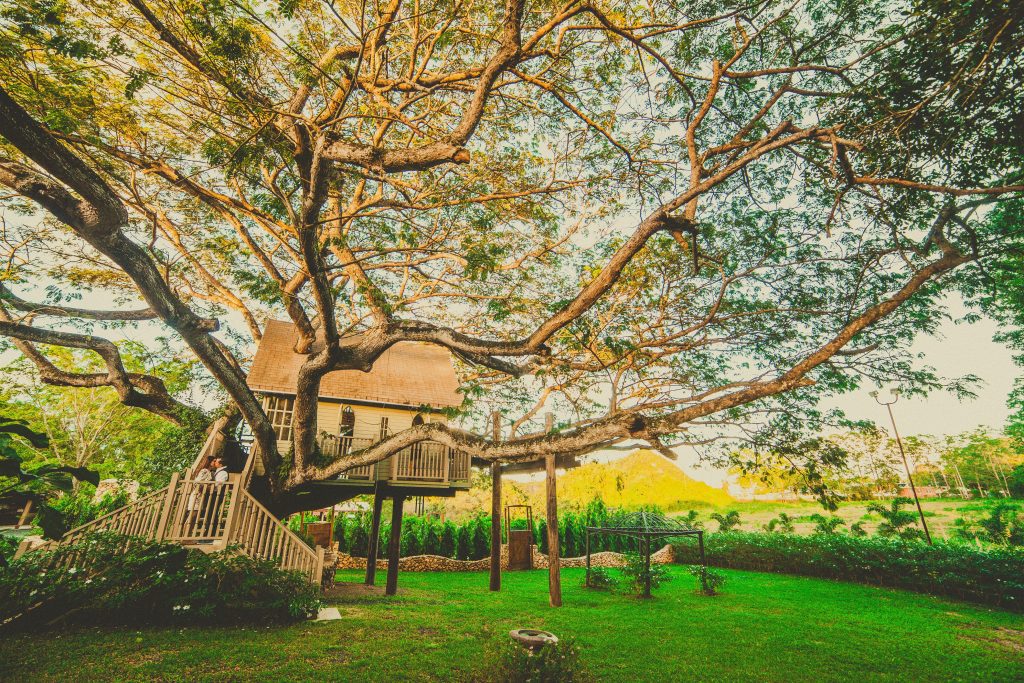
The right material depends on your climate, budget, roof slope, and treehouse size.
Here are common treehouse roofing materials to consider:
- Corrugated metal: durable, rain-friendly, rustic
- Polycarbonate panels: lightweight and bright
- Asphalt shingles: familiar and affordable
- Cedar shingles: natural and charming
- Waterproof membrane: useful under other roofing layers
For most family backyard builds, metal or polycarbonate panels are the easiest balance of durability and weight.
How Roof Pitch Affects Rain Protection
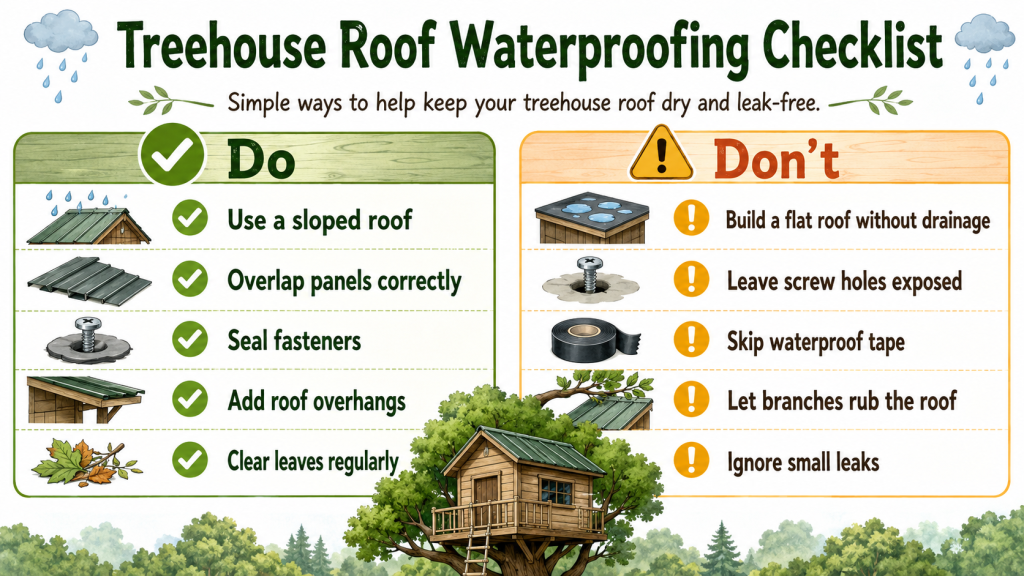
Roof pitch simply means how steep the roof is. A flat roof may look sleek, but it can collect water if it is not designed correctly.
For treehouses, a sloped roof design is usually smarter. It helps rain slide off instead of sitting there like an unwanted guest.
A gentle slope can work for panels, while shingles usually need more pitch. Always follow the roofing material’s installation guidance.
Add Overhangs for Better Treehouse Rain Protection
A roof overhang is the part of the roof that extends beyond the wall. Even a small overhang can help protect windows, doors, railings, and the deck edge.
It is like giving your treehouse a little brimmed hat.
Good Overhang Ideas
- Add extra coverage above the entrance
- Extend the roof slightly over windows
- Keep water from dripping directly onto the ladder
- Protect exposed trim and siding
Just do not make the overhang too large unless the framing can support it.
Waterproofing Details That Prevent Future Headaches
Water always looks for the easiest path in. Your job is to make that path impossible, or at least very annoying.
Focus on:
- Sealed fasteners
- Proper panel overlap
- Drip edges
- Waterproof underlayment
- Butyl tape around seams
- Exterior-grade caulk where needed
Small details matter. One loose screw can become one annoying drip, and one annoying drip can become weekend repair drama.
Ventilation Keeps the Roof Healthier
A treehouse may not have a full attic, but airflow still matters. Trapped moisture can make wood swell, smell musty, or age faster.
Leave small protected gaps where air can move without letting rain blow in. This is especially helpful under metal or shingle roofs.
Good ventilation is boring in the best way. You may not notice it working, but you will notice if it is missing.
Match the Roof Style to Your Backyard
A roof should feel like it belongs in the space.
For a wooded yard, cedar shingles or dark metal can blend beautifully. For a modern backyard, a clean shed roof with black or gray panels looks sharp. For a playful children’s treehouse, a bright roof color can make the whole structure feel cheerful.
Ask yourself: Do you want the treehouse to disappear into the trees or become the backyard’s main character?
Best Amazon Products for Treehouse Roof Projects
Here are five relevant Amazon US product ideas to consider for a DIY treehouse roof. Always confirm sizing, compatibility, and local building guidance before purchasing.
Clear Roof Sheet, Polycarbonate Roofing Panel Flame Retardant Sunshine Greenhouse Construction
This clear polycarbonate roofing panel is a good option if you want a bright, modern treehouse roof that lets in natural light while still helping block rain.
Features:
- Clear polycarbonate-style roof sheet
- Weather-resistant outdoor use
- Lightweight compared with heavier roofing materials
- Useful for greenhouse, shed, patio, and small roof projects
Use Cases:
Best for shaded treehouses, reading nooks, playhouses, and backyard builds where you want daylight without leaving the roof open.
Flex Seal Liquid Rubber Coating Sealant, Waterproof, 32 oz
Flex Seal Liquid is a brushable rubber coating that can help seal small gaps, seams, and vulnerable spots around a treehouse roof.
Features:
- Dries into a flexible rubberized coating
- Waterproof finish
- Can be brushed, rolled, dipped, or poured
- Works on many outdoor repair surfaces
Use Cases:
Best for small leak repairs, seam touch-ups, roof edge protection, and extra waterproofing around tricky spots.
3M All Weather Flashing Tape 8067, 2 in. x 75 ft.
This all-weather flashing tape is a practical choice for sealing vulnerable roof edges, seams, and small openings where moisture could sneak into a treehouse roof. It is especially useful when you want a cleaner, more construction-focused option instead of basic repair tape.
Features:
- Waterproof flashing tape
- Adhesive-backed split liner
- Helps prevent moisture intrusion
- Designed for wood-frame construction openings
- Works for windows, doors, roof edges, and weather-exposed gaps
Use Cases:
Best for treehouse roof edges, flashing details, small seam protection, and DIY builders who want a neater waterproofing product for outdoor wood structures.
LIONMAX 1000-PCS Metal Roofing Screws #10 x 1-1/2 in. with Rubber Washers
These metal roofing screws are made for fastening corrugated roofing panels and include rubber washers to help seal the screw holes.
Features:
- #10 x 1-1/2 inch roofing screws
- Rubber washers for water resistance
- Rustproof coating
- Hex head design for easier driving
- Made for corrugated roofing panels
Use Cases:
Best for metal roof panels, corrugated roof sheets, small shed roofs, and treehouse roofs that need secure outdoor fasteners.
ZLRBN Corrugated Roofing Sheets 1mm Glassfiber Panel
These corrugated roofing sheets are another option for covering a small treehouse roof, shed-style roof, or backyard playhouse.
Features:
- Corrugated sheet design
- 1mm glassfiber-style panel
- Lightweight roof coverage
- Useful for outdoor roof, awning, shed, or garden structure projects
Use Cases:
Best for simple sloped treehouse roofs, small backyard structures, and budget-friendly rain protection.
Research-Backed Tips for a Better Roof
The USDA Forest Products Laboratory explains in its 2021 Wood Handbook on wood moisture and performance that moisture content affects wood’s physical properties and long-term behavior. For a treehouse, that means roof protection is not optional. It directly helps preserve the framing, deck boards, and siding.
The 2021 International Residential Code also gives useful guidance on roof assemblies, including slope requirements for materials such as asphalt shingles. Its roof assembly slope guidance notes that asphalt shingles require a minimum slope of 2:12. Even if your treehouse is not a full house, this reminds you to match roofing materials to the correct pitch.
Common Treehouse Roof Mistakes to Avoid
A few mistakes show up again and again.
Avoid these:
- Choosing roofing that is too heavy
- Making the roof too flat
- Forgetting overhangs
- Skipping sealed fasteners
- Ignoring tree movement
- Using indoor wood or untreated materials outside
- Letting branches rub against the roof
Branches may look charming brushing the roof, but they can scrape panels, trap leaves, and invite moisture. Give the roof a little breathing room.
Maintenance Tips to Make the Roof Last
Check the roof at least twice a year, especially after storms.
Look for:
- Loose screws
- Cracked sealant
- Leaf buildup
- Rust spots
- Sagging panels
- Soft wood near edges
- Water stains inside
A five-minute check can prevent a much bigger repair later. Treehouses are a bit like pets: ignore them too long, and they will find creative ways to cause trouble.
FAQs About Treehouse Roof Ideas
What is the best roof for a treehouse?
The best roof for most treehouses is a lightweight sloped roof made from corrugated metal or polycarbonate panels. These materials shed rain well, are easier to install than many traditional options, and do not add excessive weight to the structure.
What is the cheapest way to roof a treehouse?
The cheapest option is usually corrugated roofing panels or basic asphalt shingles, depending on your local prices. However, the lowest-cost roof is not always the best value. Choose a material that handles your climate and does not require constant repairs.
How do you waterproof a treehouse roof?
Use a sloped design, overlap roofing panels correctly, seal fasteners, install drip edges, and apply butyl tape or waterproof sealant at vulnerable seams. Good waterproofing starts with roof shape, not just sealant.
Can I use shingles on a treehouse roof?
Yes, you can use shingles if the roof has enough slope and strong enough framing. Asphalt shingles are familiar and attractive, but they can be heavier and more time-consuming to install than corrugated panels.
Should a treehouse roof be attached to the tree?
In most cases, the roof should attach to the treehouse structure, not directly to moving branches. Trees move in wind, and that movement can stress the roof. Leave clearance around branches and design the roof so the tree can keep growing naturally.