Best Rope Ladder for Treehouses: Top Picks
We may earn a commission for purchases made using our links. Please see our disclosure to learn more.
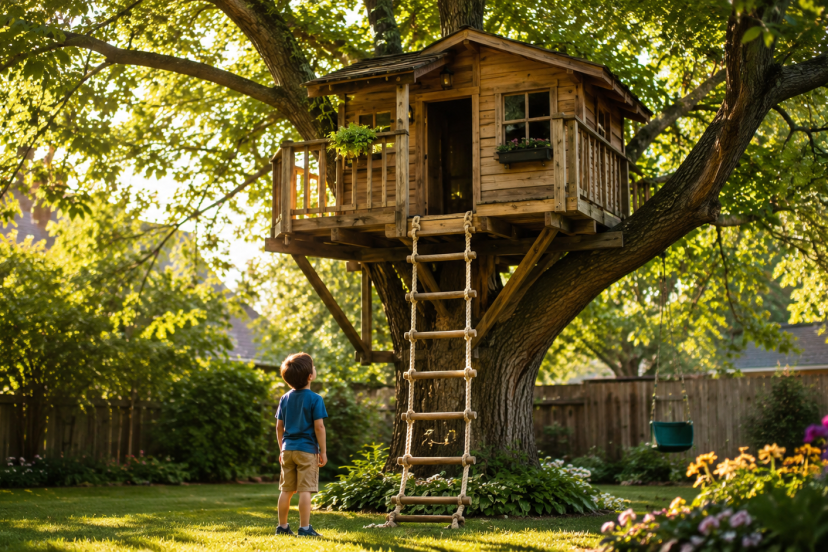
You know that moment when a backyard treehouse starts feeling less like a “project” and more like a real childhood memory in the making? That is where a rope ladder comes in. It adds adventure, movement, and that classic “secret hideout in the trees” feeling kids love.
But here is the honest part: not every ladder is right for every treehouse. Some are too wobbly for younger kids. Some are too short. Some look cute online but feel flimsy once they are hanging from a branch or platform.
In this guide, you’ll learn how to choose the best rope ladder for a treehouse, what safety features matter, which Amazon options are worth considering, and how to make climbing fun without turning your backyard into a tiny stunt show.
Why a Rope Ladder Belongs in a Treehouse
A treehouse already feels magical, but a rope ladder makes the entrance feel like part of the adventure. It is not just a way up. It is the first challenge, the welcome mat, and the “you have entered the fun zone” sign all in one.
Unlike standard stairs, a treehouse ladder made with rope moves a little. That movement helps kids slow down, focus, grip, balance, and climb with intention. It turns the simple act of getting inside into a mini confidence-building moment.
For many families, it also saves space. A fixed wooden staircase can take over a small yard. A hanging ladder keeps things light, flexible, and easy to remove when needed.
What Makes a Rope Ladder Different from Regular Stairs
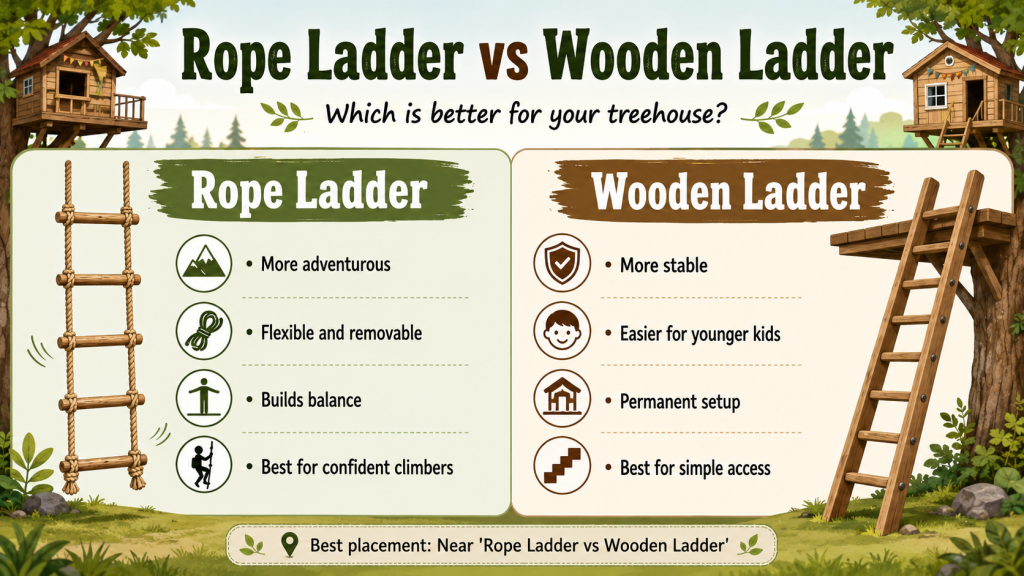
A wooden ladder feels stable. A rope ladder feels adventurous.
That is the big difference.
A regular ladder is easier for very young kids or nervous climbers. A rope ladder asks for more balance, grip strength, and coordination. It sways, so the climber needs to move with it instead of fighting it.
Think of it like riding a bike with training wheels versus learning to balance on two wheels. Both are useful. One is simply more active.
A rope ladder works best when you want:
- A more playful treehouse entrance
- A compact backyard playset ladder
- A removable treehouse accessory
- A climbing challenge for older kids
- A fun addition to a ninja line or swing set
Best Types of Rope Ladder for Treehouse Setups
Not all climbing ladders are built the same. Before you buy, match the style to your treehouse and your child’s comfort level.
Wooden Rung Rope Ladder
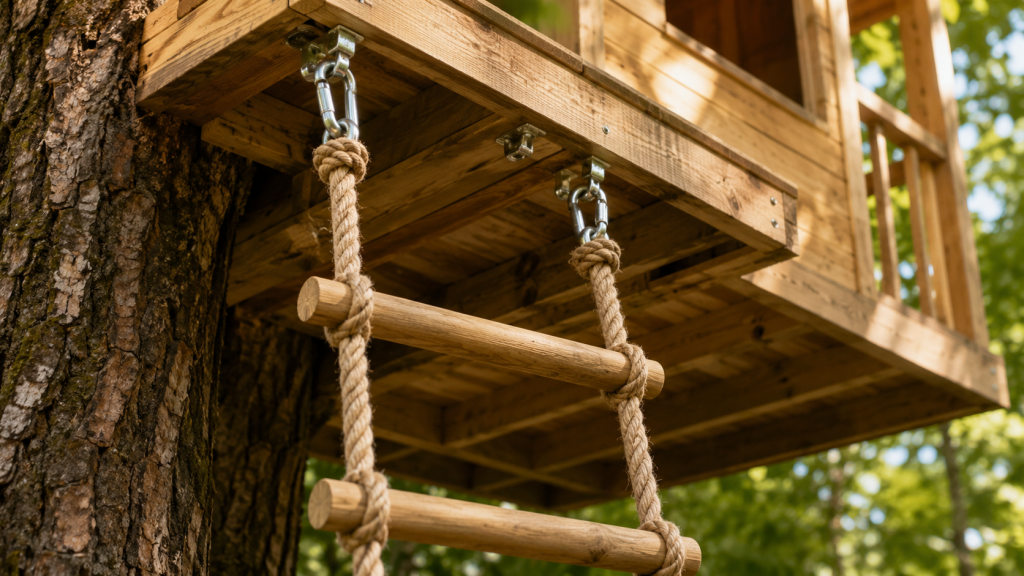
This is the classic choice. It usually has wood steps and rope sides. It feels natural, looks great with a backyard treehouse, and gives feet a firmer surface.
Plastic Rung Rope Ladder
Plastic rungs are often lighter and colorful. They work well for swing sets, ninja courses, and outdoor play areas where bright colors help kids see each step clearly.
Knotted Rope Ladder
This style uses knots instead of solid rungs. It is usually harder to climb and better for older kids or confident climbers.
Anchored Rope Ladder
Some ladders include ground anchoring. That helps reduce swinging and makes climbing easier for younger children.
Key Features to Check Before Buying
A good rope ladder should feel sturdy before anyone climbs it. Cute is nice, but safety and durability matter more.
Look for these features:
- Strong rope, such as polyester, nylon, or polypropylene
- Solid wooden or reinforced plastic rungs
- Clear weight capacity
- Secure hanging hardware
- Smooth edges and splinter-free finishes
- Weather-resistant materials
- Proper rung spacing
- Easy installation
Also, think about who will use it most. A 4-year-old and a 10-year-old need different levels of challenge. The best ladder is not always the “toughest” one. It is the one your child can use with confidence and supervision.
Best Materials for Outdoor Rope Ladders
Outdoor use changes everything. Sun, rain, humidity, dirt, and temperature shifts can wear down weak materials fast.
For the rope, nylon and polyester are popular because they resist wear and handle outdoor play better than basic cotton rope. Polypropylene is also common in colorful climbing ladders because it is lightweight and weather-friendly.
For the rungs, hardwood feels more natural and sturdy. Plastic or resin rungs can be easier to clean and may suit kids who like colorful backyard play equipment.
A wooden rope ladder looks charming beside a treehouse. A plastic rung ladder may be better for a ninja course or swing set where bright colors and lighter weight matter.
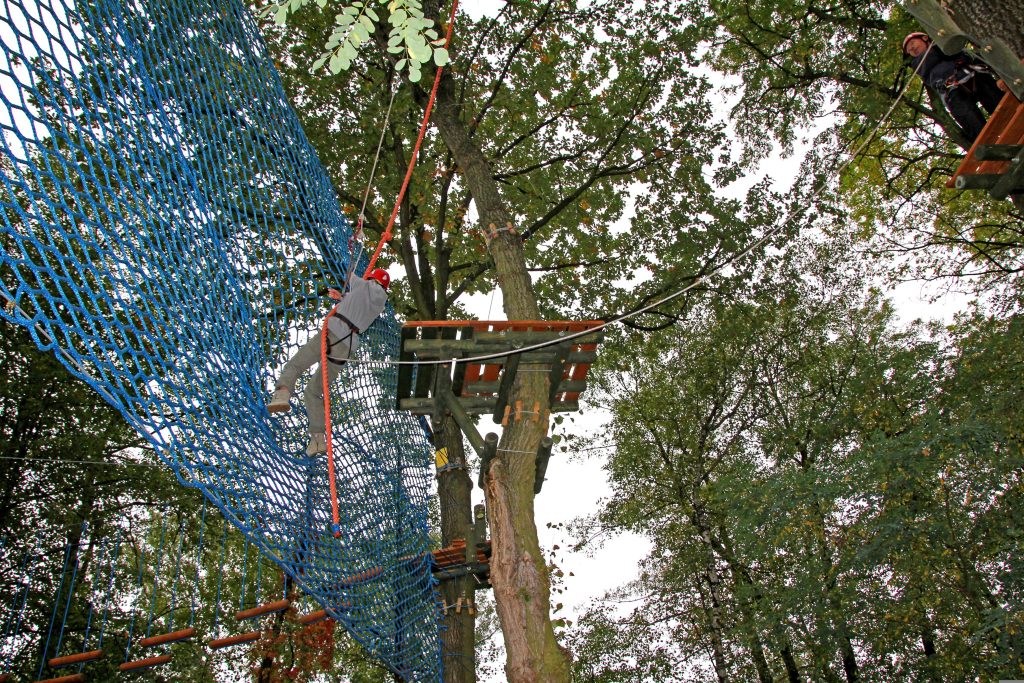
Safety Tips Before You Install a Rope Ladder
Before you hang anything, inspect the treehouse platform, branch, beam, or swing set frame. The ladder is only as safe as the structure holding it.
Keep these tips in mind:
- Attach the ladder to a strong, stable support point
- Follow the manufacturer’s weight limit
- Use rated carabiners, straps, or hardware
- Keep the landing area soft and clear
- Avoid installing over concrete, rocks, or hard-packed dirt
- Check knots, rungs, and rope before each play session
- Supervise kids while they climb
The U.S. Consumer Product Safety Commission notes that falls are a common playground hazard pattern and that protective surfacing under and around equipment is crucial for reducing serious head injury risk. The same logic is helpful for backyard treehouse setups, even though public playground guidance is not a direct substitute for home playset instructions.
Best Rope Ladder Products on Amazon
Here are five Amazon rope ladder options that fit treehouse, swing set, ninja course, and backyard play needs.
Trailblaze Wooden Rope Ladder for Kids
The Trailblaze Wooden Rope Ladder for Kids is a 6-foot outdoor climbing ladder with real wood rungs, heavy-duty rope, and two carabiners. Amazon lists it with beechwood rungs, polyester rope, a 220-pound capacity, and tool-free setup.
Features:
- Real wood rungs
- Heavy-duty rope
- Includes carabiners
- Designed for treehouses, swing sets, and ninja courses
Best for: Families who want a classic wood-style ladder that looks great on a backyard treehouse.
Cateam Wooden Rope Ladder for Kids with Ground Anchoring
The Cateam ladder stands out because it includes ground anchoring. Amazon lists it as a 6.5-foot ladder with 16-inch-wide hardwood dowels, double knots, and fixing ground nails to help stabilize the climb.
Features:
- Hardwood rungs
- Ground anchoring included
- 16-inch width
- Designed for ninja slacklines, playgrounds, and treehouses
Best for: Younger or less confident climbers who need a steadier ladder.
MUXHEL 6.5 Ft Climbing Rope Ladder for Kids
The MUXHEL climbing ladder is a simple wooden hanging ladder for treehouses, indoor play areas, and outdoor swing set accessories. Amazon describes it as made with wood, PE, stainless steel, and polyester rope.
Features:
- 6.5-foot length
- Wooden rungs
- Indoor or outdoor use
- Works with tree houses, backyards, monkey bars, and cargo nets
Best for: Budget-conscious families who want a basic rope ladder for light backyard play.
TOPNEW 6.6 Ft Climbing Rope Ladder for Kids
The TOPNEW ladder uses multicolor resin rungs and nylon rope. Amazon lists it with slip-resistant rung indentations, a stainless-steel clasp, and a 230-pound weight capacity.
Features:
- Colorful resin rungs
- Nylon rope
- Slip-resistant surface
- Can attach to a tree house, swing set, playset, or ninja slackline
Best for: Kids who enjoy colorful outdoor play equipment and a slightly more playful look.
Rainbow Craft 6.6FT Climbing Rope Ninja Ladder
The Rainbow Craft ladder is a colorful climbing ladder made for ninja courses, swing sets, and treehouse entrances. Amazon lists it with polypropylene construction, stainless-steel hooks, and portable roll-up storage.
Features:
- Bright multicolor design
- Portable and easy to store
- Stainless steel hooks
- Works vertically or horizontally for climbing play
Best for: Active kids who love obstacle-course-style backyard play.
Rope Ladder vs Wooden Ladder
A wooden ladder is easier to climb. A rope ladder is more exciting.
So, which one should you choose?
Choose a wooden ladder if your child is younger, nervous with heights, or needs a steady entrance. Choose a rope ladder if your child enjoys climbing, balancing, and active play.
You can also use both. A fixed wooden ladder can be the main entrance, while a rope ladder becomes the “adventure entrance.” Kids love options. Honestly, adults do too.
Best Age Range and Supervision Tips
Most rope ladders are better for kids who already have basic climbing confidence. Many product listings suggest use for children around 3 years and up, but age alone is not enough. Strength, coordination, maturity, and supervision matter more.
A cautious 7-year-old may need more help than a fearless 5-year-old. And yes, fearless kids are adorable until they start treating the ladder like a pirate ship escape route.
Always supervise. Set simple rules: one climber at a time, two hands on the ladder, no jumping from the top, and no climbing when the ladder is wet or twisted.
How to Choose the Right Length and Width
Measure from the treehouse entrance to the ground before buying. Do not guess. A ladder that is too short creates an awkward step at the bottom. A ladder that is too long can bunch up and become a tripping hazard.
For most backyard treehouses, 6 to 7 feet works well. Taller platforms may need a longer ladder or a custom setup.
Width matters too. Wider rungs feel more stable. Around 12 to 16 inches is common for kids’ climbing ladders. If your child wears bigger shoes or feels unsure, choose a wider option.
Weatherproofing and Maintenance Tips
Even outdoor-rated ladders need care. Weather has a sneaky way of turning “durable” into “why is this rope crunchy?”
Check your ladder weekly during heavy-use seasons. Look for:
- Frayed rope
- Loose knots
- Cracked rungs
- Rusty hooks
- Splinters
- Mold or mildew
- Stretching or sagging
Bring the ladder indoors during storms or winter if possible. If it stays outside, make sure it dries properly after rain. A few minutes of maintenance can add months, maybe years, to its life.
Research-Backed Safety Notes
A rope ladder should feel adventurous, but it still needs a safe setup. The U.S. Consumer Product Safety Commission recommends soft landing surfaces, regular equipment checks, and close supervision around climbing equipment. Their guide on creating a safer landing zone for backyard climbing is a helpful reference.
The CDC also reports that playground injuries are often linked to falls, which is why age-appropriate equipment and shock-absorbing surfaces matter. Their research on why sturdy setup matters for young climbers supports choosing the right ladder height, spacing, and ground cover.
Creative Treehouse Add-Ons That Pair Well
A rope ladder is just the start. You can turn a simple treehouse into a full backyard adventure zone with a few thoughtful extras.
Consider adding:
- A rope bridge
- Climbing holds
- A cargo net
- A pulley bucket
- A small lookout deck
- A sensory swing
- A shaded reading nook
For a bigger adventure upgrade, check out this guide to building a treehouse rope bridge. A bridge pairs beautifully with a ladder because it keeps the whole setup feeling imaginative, active, and just a tiny bit magical.
Quick Buying Checklist
Before you choose a rope ladder, ask yourself:
- How old are the kids using it?
- Is the treehouse high or low?
- Do I want wood or plastic rungs?
- Does it include hanging hardware?
- Does it need ground anchors?
- Is the landing area soft?
- Can I remove it during bad weather?
- Does the weight limit fit my family’s needs?
You are already ahead of the majority of consumers if you can provide straightforward answers to those inquiries.
FAQs About Rope Ladders for Treehouses
What is the best rope ladder for a treehouse?
The best rope ladder for a treehouse is sturdy, weather-resistant, properly sized, and easy for your child to climb. Wooden rungs are great for a natural treehouse look, while plastic rungs work well for colorful playsets and ninja courses.
Are rope ladders safe for kids?
Rope ladders can be safe when installed correctly, used with supervision, and placed over a soft landing surface. Always follow the manufacturer’s weight limit and inspect the rope, rungs, and hardware often.
How do you attach a rope ladder to a treehouse?
Attach it to a strong beam, platform support, or rated anchor point using secure hardware such as carabiners, straps, or quick links. Avoid weak branches or temporary knots unless the product instructions specifically allow that setup.
Should a rope ladder be anchored to the ground?
Ground anchoring can make a rope ladder easier to climb because it reduces swinging. It is especially helpful for younger kids, beginners, or ladders attached to ninja lines and flexible play structures.
What length rope ladder do I need?
Measure from the treehouse entrance to the ground. Most backyard setups use a 6- to 7-foot ladder, but taller platforms may need a longer option. The bottom should reach comfortably without bunching up.