5 Charming Rustic Treehouse Design Ideas
We may earn a commission for purchases made using our links. Please see our disclosure to learn more.
You know that feeling when you see a treehouse photo and your brain instantly goes, “Yep. I could heal in there.” That’s the magic of Rustic Treehouse Design—it’s not just “wood + nails.” It’s a cozy little escape that feels handmade, grounded, and a tiny bit storybook.
In this guide, I’ll walk you through what makes a rustic treehouse actually feel rustic (without looking like a messy shed in a tree), the key safety choices that keep your build solid, and 5 design ideas you can borrow and make your own—whether you’re building for kids, guests, or your own quiet “don’t talk to me, I’m reading” nook.
Quick note: This post includes affiliate links in the product section—if you buy through them, you may earn a small commission at no extra cost to you.
What Rustic Treehouse Design Really Means (and why it feels so calming)
Rustic isn’t “rough.” Rustic is warm, natural, and a little imperfect on purpose—like the design version of a deep exhale.
The 3-part rustic formula
- Natural texture: visible grain, knots, bark edges, stone, rope, wool, linen
- Honest materials: wood that looks like wood (not glossy “plastic wood”)
- Cozy contrast: rugged outside, soft inside (blankets, warm lighting, cushions)
Think of rustic style like a campfire meal: it’s not fancy plating, but it tastes like comfort.
Rustic can look different in different cultures (and that’s the fun part)
- A Scandinavian cabin vibe leans clean and simple—light woods, minimal clutter.
- A Japanese wabi-sabi vibe celebrates imperfection—weathered timber, quiet simplicity.
- A Filipino “bahay kubo” inspiration can bring breezy openings, woven textures, and a light, airy feel.
So if your rustic treehouse plans don’t match Pinterest’s “one true rustic,” you’re still doing it right.
Start with the tree (and the unglamorous safety checklist)
I know, I know—safety feels like broccoli. But it’s the broccoli that lets you actually enjoy the treehouse without side-eyeing every creak.
Quick tree + site checklist
- Tree health: no major rot, large dead limbs, or mushrooms at the base
- Trunk diameter: bigger is generally better (ask a local arborist if you’re unsure)
- Wind + storms: avoid exposed hilltops if your area gets heavy winds
- Access: can you reach it safely in wet weather, at night, and with supplies?
Also: permits and neighbors
Some areas treat treehouses like structures (because… they are). A quick check with local building rules can save you a painful redo later.
Rustic materials that age beautifully (not tragically)
The goal is “charming weathered cabin,” not “splintery regret.”
Best wood choices for a rustic treehouse
- Cedar or redwood: naturally resistant to rot and insects
- Pressure-treated lumber: practical for structural parts (then dress it up with rustic finishes)
- Reclaimed wood: gorgeous for siding, trim, interior walls (just inspect it well)
Rustic finishes that don’t scream “brand new”
- Matte stains in warm tones (honey, walnut, chestnut)
- Soft “smoke” grays for that driftwood feel
- Clear or lightly tinted sealers that let grain do the talking
If you want the rustic look fast, mix new lumber (structure) with reclaimed touches (walls, trim, built-in benches). It’s like wearing a crisp outfit with worn-in boots—instant character.
Tree-friendly structure: attachment bolts, posts, and “let the tree grow”
One of the biggest mistakes in treehouse building is treating a tree like a static pole. Trees move. Trees grow. Trees are… dramatic living beings.
The main structural options
- Tree-attached: uses specialized hardware, allows movement, reduces ground posts
- Post-supported: treehouse sits on posts near the tree (often easier for big builds)
- Hybrid: some load on the tree, some on posts (common and practical)
A good builder plans for:
- Sway (wind + movement)
- Growth (leave space—your tree isn’t done getting bigger)
- Drainage (water is sneaky; it will find your weakest detail)
If you’re going large, bringing in a structural pro for a quick consult is money well spent.
Layout basics: make your rustic treehouse feel like a tiny cabin
A rustic treehouse design feels best when it has “tiny home logic.”
Think in zones (even if it’s small)
- Entry zone: hooks, a little shelf, a spot for shoes
- Hangout zone: seating, window view, reading nook
- Snack zone (optional but elite): a small counter, cooler spot, or picnic shelf
- Deck zone: fresh air + the “wow” moment
Tiny layout trick that always works
Put the best view where you naturally pause—by a window seat, at the top of the ladder, or on a small deck landing. That first “ohhh” is part of the charm.
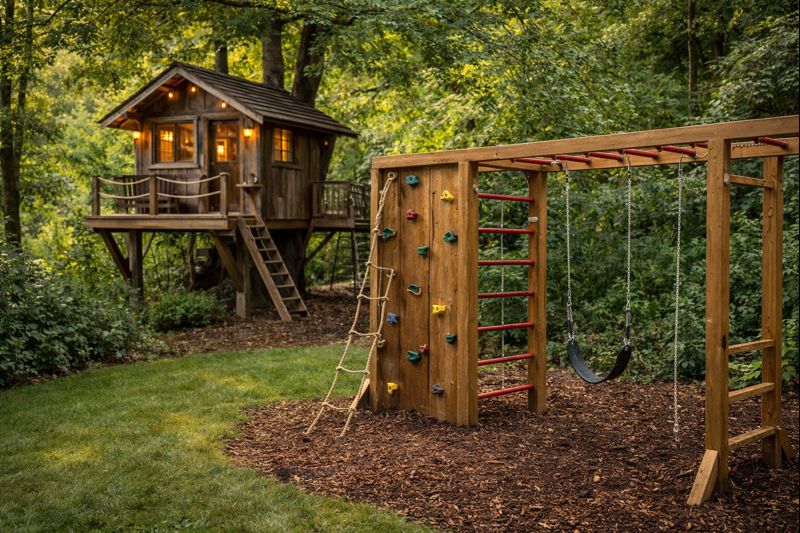
Add-ons that make it unforgettable: ladders, swings, bridges, and monkey bars
This is where rustic treehouse design goes from “cute” to “core memory.”
Easy add-ons with big payoff
- Rope bridge to a second platform
- Climbing wall with natural-toned holds
- Pulley bucket for snacks (kids love it, adults pretend they don’t)
- Swing zone nearby to create a full backyard play space
If you’re building for kids (or playful adults), pair the treehouse with a ground-level play area. This guide on choosing a swing set with monkey bars is a helpful way to match size, safety, and age range without getting overwhelmed.
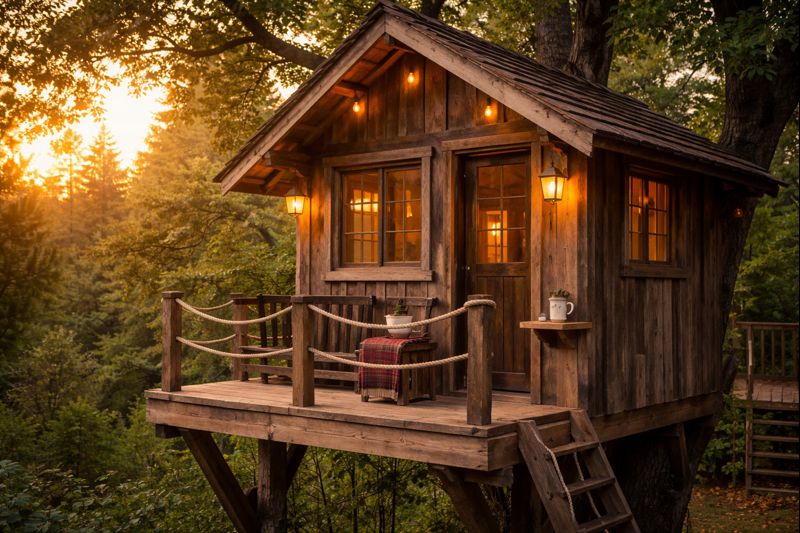
Rustic idea #1: The cabin-in-the-branches treehouse
This is the classic. The one that looks like it belongs in a children’s book… or a romantic weekend rental.
Key design details
- Simple A-frame or shed roof
- Reclaimed wood accent wall or trim
- Small porch with railing and lantern-style lighting
Make it feel “cabin,” not “box”
Add one standout detail:
- a chunky wood beam over the door
- a window box with herbs
- a built-in bench with storage under it
Rustic idea #2: The wraparound lookout deck
If you’re a “coffee outside, even when it’s chilly” type, this one’s for you.
What makes it work
- A wide deck that wraps one or two sides
- Railings with wire mesh or simple wood slats
- A corner bench for stargazing
Cozy upgrade
A small roof over part of the deck gives you that “covered porch” vibe—like a tiny mountain lodge in the trees.
Rustic idea #3: The storybook cottage treehouse
This design leans whimsical—curves, charm, and “I might meet a friendly squirrel named Kevin.”
Signature rustic-cottage touches
- Shutters or trim in a muted color (forest green, clay, soft black)
- A rounded doorway or arched window
- A tiny “front step” area with potted plants
Keep it from getting too “theme park”
Use natural textures—real wood grain, simple hardware, and warm lighting. Let charm come from craft, not plastic decorations.
Rustic idea #4: The wabi-sabi hideaway
This is rustic for the person who wants calm, not clutter. Minimal, warm, a little weathered—in the best way.
The vibe
- Soft neutrals, natural wood, simple shapes
- One or two handmade pieces (a stool, a shelf, a hook rail)
- Space to breathe
Perfect for
- a meditation nook
- a journaling hideout
- a quiet “no notifications allowed” space
If rustic treehouse design is your self-care project, this style hits deep.
Rustic idea #5: The modern-rustic mashup
Yes—you can mix rustic warmth with modern lines and still keep it cozy.
What it looks like
- Clean silhouette + warm wood
- Black metal brackets or hardware
- Larger windows (but balanced with soft interior textures)
Make it feel inviting (not cold)
Modern needs softness:
- warm bulbs (not icy white light)
- textiles (throws, cushions)
- wood tone that feels golden, not gray and sterile
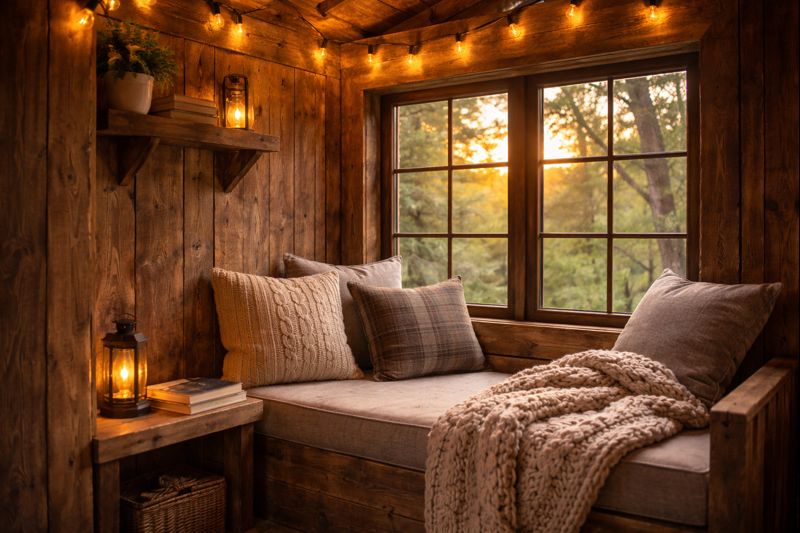
Interior styling: light, texture, and the “I could nap here” vibe
Rustic isn’t only outside. Inside is where your treehouse becomes a place.
Rustic interior “starter pack”
- String lights or lantern-style sconces
- A woven rug (or even a simple mat)
- Cushions + a throw blanket (instant cozy)
- Hooks for bags and jackets (clutter control is kindness)
The best rustic interior trick
Pick one texture to repeat 3 times:
- rope (rail detail, basket, decor)
- wool (blanket, cushion, rug)
- wood grain (bench, shelf, trim)
It makes the space feel intentional, even if it’s tiny.
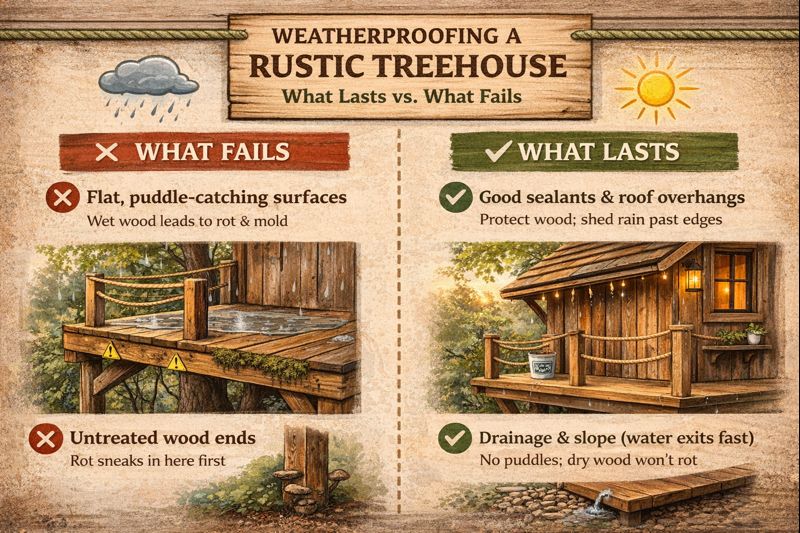
Weatherproofing + maintenance: keep it rustic, not wrecked
Rustic treehouse design should look charming in year three—not like it’s losing a fight with rain.
Quick maintenance rhythm (simple, realistic)
- Monthly (in heavy season): check railings, steps, and fasteners
- Seasonally: look for water pooling, mold, soft spots in wood
- Annually: refresh sealer/stain where sun and rain hit hardest
Water is the real villain
Most “treehouse problems” are actually water problems:
- poor drip edges
- flat surfaces that hold puddles
- untreated end grain
Seal and protect like you’re building a mini cabin—because you are.
Product picks: 5 treehouse helpers worth it
1) DEWALT 20V MAX Cordless Drill/Driver Kit (DCD771C2)
A reliable drill/driver makes your build faster, cleaner, and way less exhausting. This kit is a classic for DIY structure work, pilot holes, and driving fasteners. Recent listings commonly show strong ratings and a high volume of reviews.
Features
- Cordless convenience for ladder/deck work
- Two-speed control for drilling vs driving
- Solid all-around power for wood builds
Best for
- First-time builders who want one “do most things” tool
- Anyone assembling framing, decking, railings, and trim
2) Brightech Ambience Pro LED Outdoor String Lights
Rustic treehouses love warm light. These add instant “forest cabin at dusk” energy without turning your space into a spotlight.
Features
- Outdoor-rated, weather-friendly build
- Warm ambiance that feels cozy, not harsh
- Great for decks, railings, and entry paths
Best for
- Families who use the treehouse after sunset
- Anyone chasing that cozy rustic glow for photos and real life
3) LIONMAX Deck Screws (Exterior, coated)
The unsexy hero of any treehouse build: good screws. Exterior-coated deck screws help reduce corrosion and keep connections tight.
Features
- Coated for outdoor use
- Bulk quantity for big builds
- Good for decking, rails, and general assembly
Best for
- DIY builders who don’t want to run out mid-build
- Decking + railing-heavy rustic designs
4) LIONMAX Structural Lag Screws (Heavy-duty wood fasteners)
When you need strong connections for beams, brackets, and load-bearing joins, structural lag screws are a practical option (always match fasteners to your engineering plan).
Features
- Heavy-duty fastening for wood-to-wood connections
- Useful for structural framing points
- Helps reduce wobble when installed correctly
Best for
- Builders working on larger platforms or heavier framing
- Anyone prioritizing a solid “no wiggle” feel
5) SEAL-ONCE MARINE Penetrating Wood Sealer, Waterproofer & Stain (1 Gallon)
This is the kind of product you reach for when you want weather resistance without a fussy process—especially for high-moisture areas.
Features
- Designed for moisture-heavy environments
- Penetrating protection to help resist water damage
- Useful for decks, steps, and exposed wood
Best for
- Rainy/humid climates
- Builders who want a practical, protective finish for exterior surfaces
Research-backed credibility + FAQs + final encouragement
Rustic treehouse design isn’t just about looking charming in photos—nature-centered spaces can genuinely support wellbeing, especially when they make it easier to spend time outside without overthinking it.
What research suggests (the helpful, not preachy version)
- A large Scientific Reports (2019) study found that people who spent at least 120 minutes per week in nature were more likely to report better health and higher wellbeing. A treehouse won’t “fix your life,” but it can make choosing nature time feel effortless—like stepping into your own calm corner of the world. (See the nature exposure and wellbeing study.)
- A Buildings (2015) review on biophilic design (design that connects people with nature through materials, light, and views) links nature-forward spaces with benefits often discussed in the research—like lower stress and improved wellbeing. In plain words: your brain tends to relax more around wood grain, daylight, and greenery than around sterile, boxy spaces. (Here’s the biophilic design benefits review.)
FAQs
How do I plan a rustic treehouse design on a small budget?
Start with a simple platform + small enclosed nook, then add rustic charm through inexpensive details: reclaimed trim, warm string lights, and a basic stain. Splurge on structure, save on decor.
What’s the safest way to build a treehouse without hurting the tree?
Avoid “tight hugs” around the trunk and plan for growth and movement. Use tree-friendly methods (or post supports) and consult an arborist if the tree’s health is uncertain.
Which wood looks best for a cabin-style rustic treehouse?
Cedar and redwood are popular because they’re naturally resistant to rot and look gorgeous with minimal finishing. Pressure-treated lumber is practical structurally—then dress it up with rustic finishes.
How do I make a rustic treehouse feel cozy inside?
Warm lighting + soft textures. Add a bench cushion, a throw, hooks for gear, and one repeating material (like rope or woven baskets) to make it feel intentional.
How often should I seal or stain a rustic treehouse?
Most outdoor builds benefit from an annual check and touch-ups in high-exposure zones (sun-facing walls, steps, rail tops). If your climate is wet or humid, you may need to refresh more often.
Conclusion: your rustic treehouse design starts with one brave step
If you take nothing else from this guide, take this: build for the feeling. Rustic treehouse design isn’t about perfection—it’s about warmth, texture, and creating a place that invites people to slow down. Start small, stay safe, let the wood be wood, and give yourself permission to make it yours.
When you’re ready, pick one idea above and sketch a simple version of it today. That tiny first step is how “someday” turns into sawdust and a real little hideaway in the trees.