Tiny House Loft Ideas for Small Space Living
We may earn a commission for purchases made using our links. Please see our disclosure to learn more.
A tiny house loft sounds dreamy until you bump your head, lose your phone in the bedding, and realize your “cozy sleeping nook” feels more like an overhead storage bin with a blanket.
That is the real tiny house loft challenge. It is not just about squeezing a bed above your kitchen. It is about making that upper space feel safe, useful, breathable, and honestly pleasant to live with.
This guide walks you through the big decisions that matter most: layout, headroom, access, storage, safety, lighting, comfort, and a few smart products that can make loft living easier. It is written for real life, not fantasy floor plans.
This article includes product suggestions for convenience. Always double-check measurements, weight limits, and local code requirements before you buy.
Why a Tiny House Loft Can Change Everything
A well-planned tiny house loft gives you back your main floor. That is the magic.
Instead of letting all your square footage sit on one level, you use vertical space the way a good backpack uses every pocket. Suddenly, your living area feels less cramped because your bed is not eating the room.
That said, a loft is not automatically the right answer for every tiny house. If you hate ladders, need full standing height, or plan to age in place, a ground-floor bed may serve you better.
Start With the Real Job of Your Loft
Before you sketch anything, ask one simple question: what is this loft actually for?
A tiny house loft can work as:
- a sleeping loft
- a reading nook
- extra guest space
- closed storage
- a kid zone
- a combo of bed plus storage
The answer changes everything. A sleeping loft needs comfort and ventilation. A storage loft needs easy reach and sturdy weight planning. A guest loft needs privacy and safer access.
Trying to make one tiny loft do every job usually creates chaos. Pick the main purpose first. Then let the design follow.
Get the Tiny House Loft Size Right
Bigger is not always better. Sometimes a huge loft just creates a bigger awkward zone with bad airflow and too many knee bumps.
What matters more is whether the space fits your body and habits. You need enough room to roll, sit up at least a bit, and get in and out without doing accidental yoga at 2 a.m.
A helpful rule of thumb: design for your least graceful moment, not your best one. You are not always entering your loft like a minimalist lifestyle influencer. Sometimes you are carrying laundry and a charger and wondering where your sock went.
If you are comparing custom elevated spaces in general, this breakdown of what a treehouse really costs is surprisingly useful because it shows how structure, materials, and access decisions can change a build budget fast.
Pick a Tiny House Loft Layout That Fits Your Floor Plan
Most lofts fall into a few common patterns.
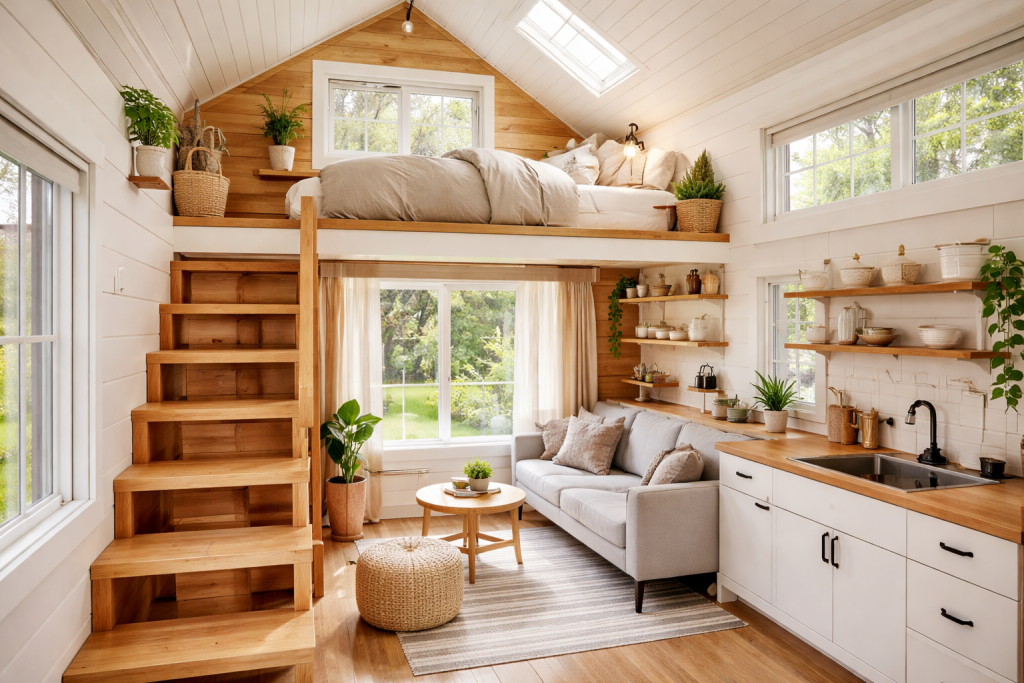
Full-width sleeping loft
This is the classic option. It stretches over the bathroom or kitchen and gives you the most sleeping surface.
Split lofts
One loft for sleep, another for storage or guests. This can make the house feel more balanced, especially in longer layouts.
Partial loft
A smaller loft leaves more volume below. This is great if you want the main living space to feel open instead of boxed in.
The best layout depends on what is happening below. A loft over a bathroom often makes sense because you are stacking lower-ceiling functions. A loft over the main living area can work too, but it can also make the house feel compressed if the proportions are off.
Make a Sleeping Loft Feel Comfortable, Not Claustrophobic
A tiny house loft gets called “cozy” a lot. Sometimes that is true. Sometimes it is just polite language for “very close to the ceiling.”
The fix is usually a mix of design moves, not one magic product.
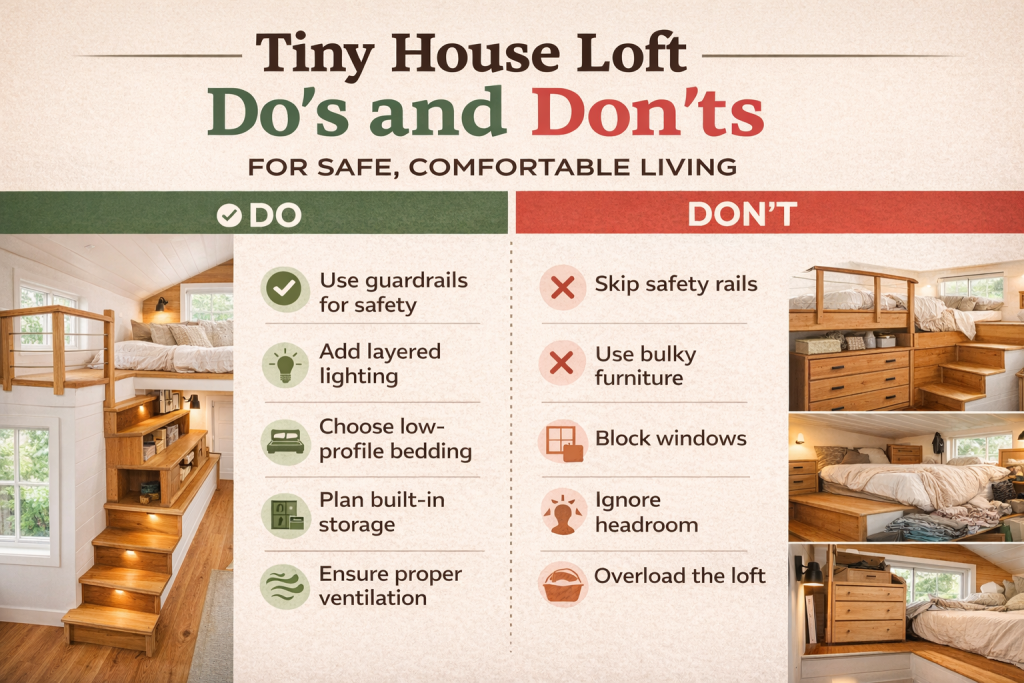
Keep bedding low-profile
A thick mattress plus thick blankets plus low ceiling height equals instant cave energy. Sometimes a slimmer mattress makes the loft feel much better.
Leave visual breathing room
You do not need to fill every wall edge with storage. Empty space matters too. It helps the loft feel intentional instead of stuffed.
Make access smooth
If getting into bed feels like boarding a cargo shelf, the loft will get old fast.
A good sleeping loft should feel like a retreat. Not a compromise you have to mentally apologize for every night.
Build Storage Into Every Awkward Corner
Tiny house loft design works best when storage is baked in, not added later like an afterthought.
Think of your loft as a place with “micro-zones”:
- one spot for bedtime items
- one spot for clothing or linens
- one spot for charging
- one spot for overflow storage
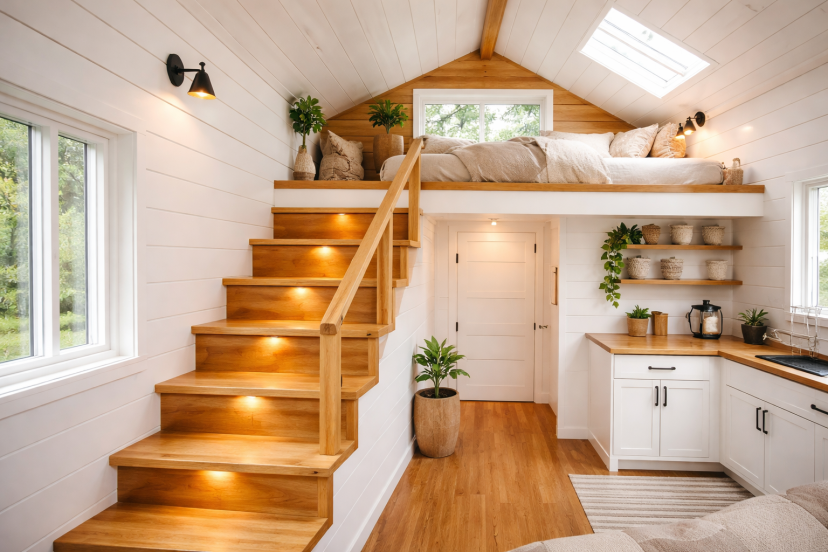
Use the dead zones well. Knee walls, stair sides, cubbies, narrow ledges, and under-step areas can do serious work.
This is also where vertical storage shines. In a tiny house, width is expensive. Height is often the better bargain.
Use Lighting to Make the Loft Feel Bigger
Layered lighting helps a small loft feel intentional.
Try this mix:
- one soft ambient light
- one task light for reading
- one low night light for safe trips down
Harsh overhead lighting makes a low loft feel flatter and tighter. Warm, targeted light does the opposite. It adds depth and calm.
If you only use one light source, the loft often ends up feeling like a top bunk in a utility closet. That may be honest, but it is not the goal.
Pick Materials and Colors That Calm the Eye
When a space is physically small, visual noise gets loud fast.
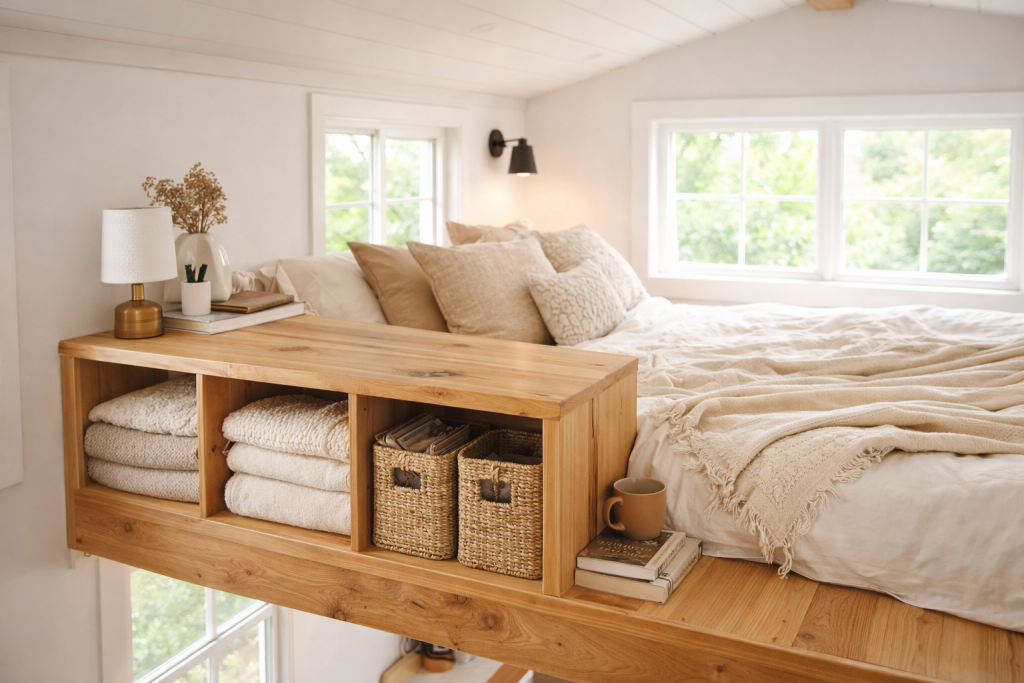
Lighter woods, soft neutrals, simple textures, and a limited palette usually help a tiny house loft feel more open. Dark finishes are not wrong, but they need more care. Too many heavy materials in a low space can make the loft feel like it is closing in.
Natural materials also help. Wood, linen, wool, cotton, and woven textures add warmth without making the loft feel busy.
Think of it like seasoning food. A little richness is lovely. Too much and suddenly the whole dish feels heavy.
Create Privacy Without Closing Everything Off
A tiny house loft rarely needs full isolation. It just needs enough softness around the edges.
You can create privacy with:
- partial slat walls
- curtains
- low shelving dividers
- strategic lighting
- careful sightline planning
This matters even more in shared homes. One person may want to sleep while another is still reading, cooking, or answering emails below.
Privacy in a tiny house is rarely about total separation. It is about lowering friction.
Put Safety Before Style
This is the part no one wants to skip and yet plenty of people do.
A loft should have guardrails that feel secure, surfaces that are not slippery, and access that you can use confidently in the dark. Good lighting matters. Handholds matter. Clear step edges matter. And clutter near loft access absolutely matters.
The stair-safety review from the British Geriatrics Society found promising support for increased lighting, handrail use, and clearer step conditions when reducing stair-related fall risk. That is a strong reminder that tiny house loft safety is not just a design detail. It is a daily habit built into the structure itself.
If a loft looks beautiful but feels even a little sketchy, trust that feeling.
Avoid Tiny House Loft Mistakes That Get Annoying Fast
Some tiny house loft mistakes do not seem like a big deal at first. Then they become the thing you complain about every day.
Common ones include:
- too little ventilation
- no place for your phone or glasses
- steep ladder placement
- poor nighttime lighting
- mattress too thick for the ceiling height
- no charging setup
- storage that is technically there but hard to use
The best lofts are rarely the fanciest. They are the ones that quietly remove irritation from daily life.
Helpful Amazon Finds for Tiny House Loft Living
KINGRACK Aluminium 3 Step Ladder, Lightweight Step Stool with Handrail
This is the practical choice for loft-adjacent living when you need safer reach for storage, upper shelves, or bedding swaps.
Features: aluminum frame, non-slip pedals, handrail, foldable design, 330-lb capacity.
Best for: anyone who wants a sturdier alternative to balancing on built-ins or stretching awkwardly toward overhead storage.
Glocusent 13 LEDs Book Light for Reading at Night
A tiny house loft benefits from flexible light that does not wake the whole home.
Features: rechargeable battery, 3 color modes, 5 stepless brightness levels, flexible clip-on design.
Best for: readers, night owls, and anyone who wants cozy loft lighting without wiring a full fixture.
Casafield Set of 6 Collapsible Fabric Cube Storage Bins
These are great for turning open cubbies into calmer-looking storage.
Features: collapsible design, fabric construction, cube-friendly shape, easy shelf organization.
Best for: loft clothing storage, extra linens, and keeping visual clutter from taking over a small sleeping zone.
HNZIGE Foldable Storage Cubes Bins for Organizing, Set of 4
These bins are a solid fit for people who want hidden storage without bulky furniture.
Features: 11x11x11 size, foldable build, leather handles, structured sides.
Best for: shelves near the loft ladder, cubbies under stairs, or sorting categories like socks, chargers, toiletries, and seasonal items.
Univivi 6-Shelf Hanging Closet Storage Organizer
Soft vertical storage is useful in a tiny home because it adds function without a big furniture footprint.
Features: 6 shelves, drawers, side pockets, hanging format.
Best for: closet zones near the loft, clothing overflow, kids’ items, or small soft goods that would otherwise drift all over the house.
What Research and Experts Say About Tiny House Loft Comfort
Two ideas show up again and again when you look at credible evidence: light matters and safe access matters.
First, the 2020 daylight study mentioned earlier found measurable benefits from better daylight and views, including longer sleep duration and stronger cognitive performance. So, if you are choosing between one more cabinet and one well-placed window, the window may do more for the quality of the space than you think.
Second, this stair safety systematic review found promising evidence around handrail use, better lighting, and step-edge visibility, while this tiny house code review of Appendix Q explains why loft access and reduced clearances need careful design rather than guesswork. Put simply: a tiny house loft should never be planned as “bed first, safety later.”
Tiny House Loft FAQs
How tall should a tiny house loft be?
There is no one perfect number, but your loft should let you sleep, shift, and get in and out comfortably. More important than a magic dimension is whether your mattress thickness, ceiling height, and access all work together.
Is a ladder or stairs better for a tiny house loft?
Stairs are usually more comfortable and safer for daily use, especially if they include storage. Ladders save space. If you use the loft every day, stairs or a hybrid design often feel better long term.
Can a tiny house loft be used for more than sleeping?
Yes. A tiny house loft can also work as storage, a guest nook, a reading area, or a kid zone. The trick is choosing one main purpose so the space does not become cluttered and awkward.
How do I keep a tiny house loft from feeling stuffy?
Prioritize ventilation and daylight. Operable windows, fans, and breathable bedding help a lot. Lofts trap heat, so airflow matters more than many people expect.
What is the biggest mistake in tiny house loft design?
Designing for looks only. A loft that photographs well but is hard to enter, too dark, too hot, or lacking storage will get frustrating very quickly.
A tiny house loft works best when it feels easy to live with. That means enough light, enough airflow, smart storage, safer access, and a layout that fits your real habits instead of some fantasy version of them.
Get those basics right, and your loft stops feeling like a compromise. It starts feeling like the smartest square footage in the whole house.