Swing Set with Monkey Bars: Best for Small Yards
We may earn a commission for purchases made using our links. Please see our disclosure to learn more.
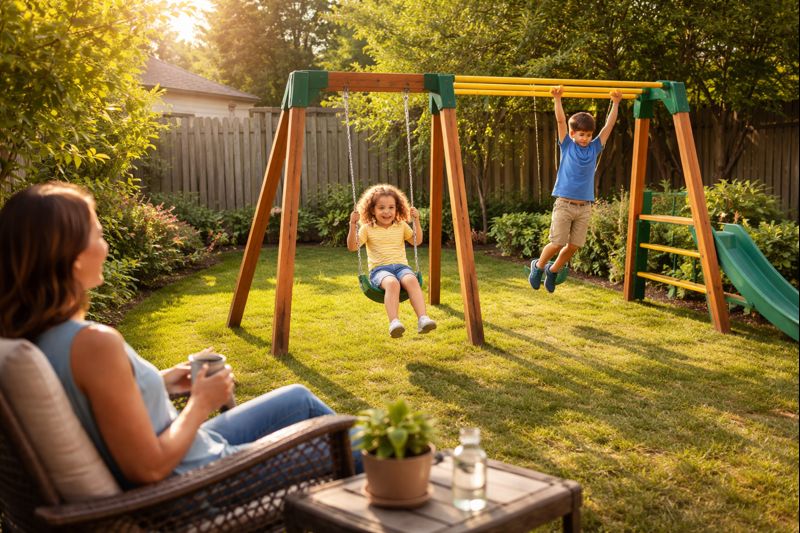
You know that feeling when your kid has big playground energy… but your backyard has “we can barely fit a grill” energy? 😅 That’s exactly why a swing set with monkey bars is such a win for small yards. It’s like the Swiss Army knife of outdoor play: swinging, climbing, hanging, confidence-building—all in one compact footprint.
In this guide, I’ll help you pick the right setup (without buyer’s remorse), plan a small-yard layout that actually works, and choose add-ons that boost fun without eating your whole lawn. I’ll also share a few solid Amazon picks if you’re ready to shop.
Affiliate disclosure: As an Amazon Associate, I may earn from qualifying purchases (at no extra cost to you).
What makes a swing set with monkey bars worth it
A small yard forces you to be picky. So here’s the real question: Will this get used every day—or become a “yard decoration”?
A great swing set with monkey bars usually checks three boxes:
- It grows with your child. Swings for the little years, monkey bars for the “watch this!” years.
- It burns real energy. Not “two minutes and I’m bored” energy—more like “I forgot my screen exists.”
- It builds bravery in small steps. One rung today, halfway across next week, full victory lap soon.
And honestly? It also gives you a breather. A safe backyard play zone is basically a tiny parenting superpower.
Measure first: small-yard sizing that prevents regrets
Before you fall in love with a set online, do this quick reality check:
Step 1: Pick the location.
Most small yards have one “best spot” (usually the flattest area with the least foot traffic).
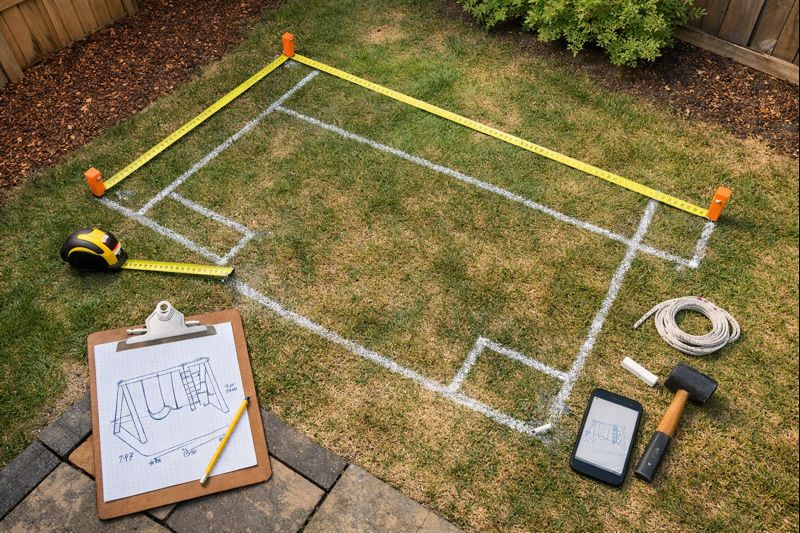
Step 2: Tape it out.
Use a tape measure (or even string/chalk) to mark the footprint plus breathing room around it.
Step 3: Think in zones.
Swings need extra clearance in front and back. Monkey bars need clearance on the sides. Your goal is: no tight squeeze near fences, walls, or garden beds.
Tiny tip that saves headaches: if your yard is narrow, look for sets where the swing beam runs parallel to the fence (it often fits better than facing the fence).
Pick the right setup for your child’s age (and your sanity)
The “perfect” swing set depends on who is actually using it.
Toddlers (2–4)
- Prioritize stability, low height, and soft-touch grips
- Consider a bucket swing option
- Monkey bars can be “future-ready,” but height matters
Kids (5–8)
- This is the sweet spot for monkey bars
- Look for comfortable rung spacing and a reachable first rung
- A trapeze/rings add variety without needing more space
Big kids (9–12)
- You’ll want higher weight limits, sturdier frames, and solid hardware
- Monkey bars and rings become the main attraction
If you’ve got mixed ages (or cousins always visiting), choose a sturdy base set, then upgrade with accessories over time.
Safety fundamentals: the stuff that matters more than the brand name
I’ll keep this practical.
Surfacing is not optional
Grass feels soft until someone falls from height. The most common serious injuries come from falls—not from “the monkey bars being evil,” just gravity doing its thing.
Check your clearances
- Keep swings away from walkways
- Avoid installing near hard edges (concrete, raised planters, walls)
Supervision isn’t hovering
Think “present and aware,” not “helicopter.” You’re there to prevent the obvious bad ideas:
- “Let’s jump off the swing at max speed!”
- “I’ll hang by my knees in flip-flops!”
Wood vs metal: which works better in small yards?
This is one of those “it depends” answers—but I’ll make it easier.
Wooden swing sets
Pros
- Looks beautiful (especially in cozy, landscaped yards)
- Often feels more “playground-like”
- Can blend into the backyard nicely
Cons
- Needs occasional sealing/staining depending on climate
- Can splinter if neglected
Metal swing sets
Pros
- Usually slimmer footprint (good for tight spaces)
- Lower maintenance
- Often simpler installation
Cons
- Can get hot in direct sun
- Aesthetically… depends on your vibe 😄
If your yard is small and you want clean + compact, metal can be a practical win. If you want natural + cozy, wood is gorgeous—just plan for basic upkeep.
Monkey bar design details to look for
Monkey bars aren’t all the same. A few details make a big difference:
Rung grip comfort
If rungs are too thin or too slick, kids slip sooner. If they’re too wide, little hands struggle.
Height and first-rung reach
In small yards, a “mega tall” set can be tempting… but for many kids, slightly lower monkey bars mean more confident daily use.
Side rails and spacing
Good designs reduce awkward gaps that cause missed grabs.
Parent test: If your child can’t reach a first rung safely (even with a small step platform designed for the set), they’ll either avoid it—or attempt something chaotic.

Layout ideas for tight spaces
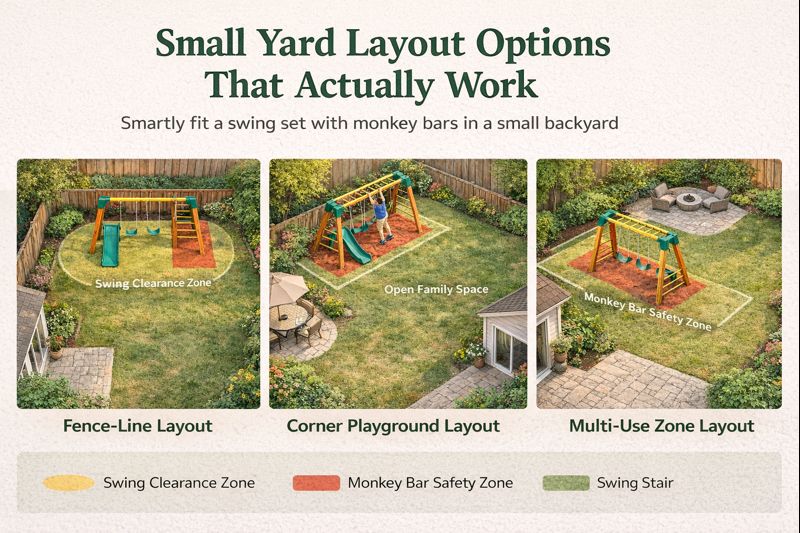
Small yards are basically Tetris. Here are three layouts that often work:
1) The “Fence Line” Layout
Place the set along one side, leaving the center open for running.
2) The “Corner Playground” Layout
Put the set in a corner so the rest of the yard stays usable.
3) The “Multi-Use Zone” Layout
One side is play, the other side is “family zone” (chairs, garden, pets).
If you’re also dreaming of bigger backyard builds later, it helps to plan your “zones” early—these treehouse plans can spark ideas that actually fit real backyards: smart backyard treehouse plans
Installation & anchoring: keep it steady
A swing set should feel boringly stable. If it wobbles, it won’t get used (or it’ll get used dangerously).
Practical tips:
- Install on level ground (take your time here)
- Tighten hardware in stages (not all at once)
- Anchor it properly for your ground type (soil, grass, etc.)
If you’re not handy, it’s totally okay to hire help. This is one of those “pay once, worry less” projects.
Maintenance plan: the 10-minute monthly check
Set a calendar reminder. Seriously.
Here’s your quick monthly checklist:
- Tighten bolts and connectors
- Check chains for wear
- Inspect wood for cracks/splinters (if wooden)
- Look for rust (if metal)
- Confirm surfacing depth and coverage (mulch shifts!)
Small maintenance prevents big injuries—and it keeps the set feeling “new” longer.
Add-on upgrades that don’t need more yard
Want more fun without buying a bigger set?
Try:
- Trapeze bar + rings (massive value, tiny footprint)
- Climbing rope (great for coordination)
- Toddler bucket swing (if you have little ones)
- Grip handles for easier climbing transitions
The goal is variety, not clutter. One or two upgrades can make the set feel brand new.
Budget & value: what “good deal” really means
When people say, “I found one for cheap,” I always ask: cheap upfront or cheap overall?
Real costs include:
- Delivery/shipping
- Surfacing (mulch/rubber, etc.)
- Anchors/hardware upgrades
- Tools (if you don’t already have them)
- Time (yours or someone else’s)
A solid mid-range set that lasts years often beats a bargain set that turns into a wobbly project.
Product Picks: 5 Amazon options that fit the vibe
1) Backyard Discovery Skyfort II Cedar Wood Swing Set (with Monkey Bars)
Why it’s a strong small-yard “big play” option: It packs multiple activities into one structure—so kids bounce between swinging, climbing, and monkey bars without needing extra yard space.
Features: Cedar build, monkey bars, swings, slide, clubhouse-style play
Best for: Families who want an “all-in-one” backyard centerpiece
2) Jungle Gym Kingdom Trapeze Bar with Rings & Chains
Why it helps: It upgrades your setup without increasing the footprint—plus it gives kids another way to build upper-body strength and confidence.
Features: Trapeze bar + gym rings, chains included
Best for: Kids who love “ninja style” play
3) Slackers NinjaLine 36′ Intro Kit
Why it’s awesome: If your yard has two sturdy anchor points (or a safe setup option), this adds climbing/obstacle play without installing a bigger structure.
Features: Intro ninja line kit, beginner-friendly setup
Best for: Ages that have outgrown “just swings”
4) Eastern Jungle Gym High Back Full Bucket Toddler Swing Seat
Why parents love it: If you have younger kids, this can make the swing portion safer and more usable—especially when older siblings are already into monkey bars.
Features: High-back bucket seat, coated chains
Best for: Toddlers and cautious little swingers
5) Dolibest Monkey Bars Swing Trapeze Bar + Climbing Rope
Why it’s a smart add-on: It adds variety (hanging + climbing) and keeps interest high, especially when kids get “same-same” with regular swings.
Features: Trapeze bar + rope combo
Best for: Kids who like active challenges
Research-backed: safety data and what monkey bars actually do for kids
Two useful, reliable sources are worth knowing before you buy.
What safety experts emphasize (and why it matters)
The U.S. Consumer Product Safety Commission (CPSC) highlights that over 200,000 children are treated in emergency rooms each year for playground-equipment injuries, and that falls to the surface are a major driver—so protective surfacing and good layout aren’t “extras,” they’re core safety features.
Source link (expert guidance): swing set with monkey bars safety guidance (CPSC playground handbook)
Monkey bars: common injury pattern, but also a real skill-builder
A 2024 study reviewing monkey bar injuries notes monkey bars can account for a meaningful share of childhood arm fractures—basically a reminder that grip strength + supervision + safe surfacing matter.
Source link (study): monkey bars injury study relevant to swing set with monkey bars
My takeaway: Monkey bars aren’t “bad.” They’re just powerful. When you pair them with smart surfacing, good spacing, and age-appropriate height, they become one of the best confidence-building tools in a small backyard.
FAQs
How much space do I need for a swing set with monkey bars?
Most sets need the footprint plus clearance around swings and climbing areas. Measure carefully and avoid tight installs near fences, walls, or hard edges.
What’s the safest surface under a swing set with monkey bars?
Protective surfacing matters most. Many families use playground mulch or rubber surfacing. The key is coverage and depth, not just the material name.
Are monkey bars safe for 3–4 year olds?
Sometimes—if the monkey bar height is low and the child is ready. For many families, monkey bars become a better fit around ages 5+ while toddlers use swings and lower climbing features.
How do I keep a swing set from wobbling?
Level the ground, tighten hardware correctly (in stages), and anchor the set properly. Then do quick monthly checks—loose bolts are the usual culprit.
What’s better for a small yard: wood or metal?
Metal often wins for slimmer footprint and low maintenance. Wood wins for looks and a classic playset feel. Pick based on your yard size, sun exposure, and how much upkeep you’re willing to do.
Final thoughts
A swing set with monkey bars can turn even a small yard into the place kids actually want to be—where confidence grows rung by rung, and energy gets burned in the best way.
If you do two things right, you’ll love your choice:
- Measure and plan clearance like a realist, and
- Prioritize safety basics (surfacing + stability) over fancy extras.
Then pick a set that fits your space, add one or two upgrades, and let your backyard become the “can we go outside?” spot.