Treehouse Deck Ideas for Extra Outdoor Living Space
We may earn a commission for purchases made using our links. Please see our disclosure to learn more.
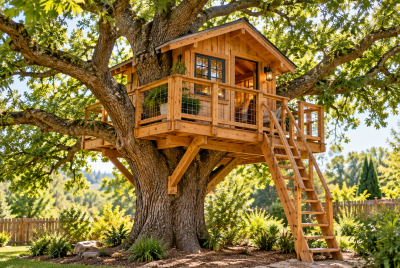
A treehouse can have a wonderful view and still feel cramped once you add chairs, toys, or a couple of visitors. A well-planned Treehouse Deck creates room to enjoy the outdoors without squeezing everything into the enclosed structure. The challenge is choosing a design that suits the available space, the people using it, and the tree or posts carrying the weight.
You might picture a quiet reading perch, a small breakfast spot, or a wraparound platform for watching wildlife. Each calls for a different layout and level of construction. Below, we explore practical deck ideas, materials, railings, furniture, and ways to protect the tree. We also explain when an inviting design needs professional structural advice before the first board goes down.
Why Add a Deck to Your Treehouse?
An outdoor deck makes a treehouse more versatile without requiring a larger enclosed room. It creates room to gather while keeping muddy shoes outside.
It also changes how the structure connects with its surroundings. A view-facing platform can make a modest treehouse feel spacious. However, every extension adds weight and exposed edges, so consider the deck part of the building’s structure, not an afterthought.
Match the Deck Layout to How You’ll Use It
Choose the deck’s main purpose before deciding its shape. A coffee spot needs seating; a children’s observation area needs clear space and secure barriers.
Measure the usable area after accounting for the tree trunk, door swing, steps, and guardrails. Mark a full-size outline on the ground with tape or string, then place your intended furniture inside it. This reveals awkward passageways before construction.
Create a Cozy Reading Deck
A reading deck needs a comfortable chair, small table, and room to move safely. Place seating against the treehouse wall rather than directly beside an elevated railing.
Choose outdoor fabrics that can dry between uses, and bring cushions indoors during extended wet weather. A securely mounted narrow shelf can hold a book. Keep the view open; crowded decorations usually make a small perch less relaxing.
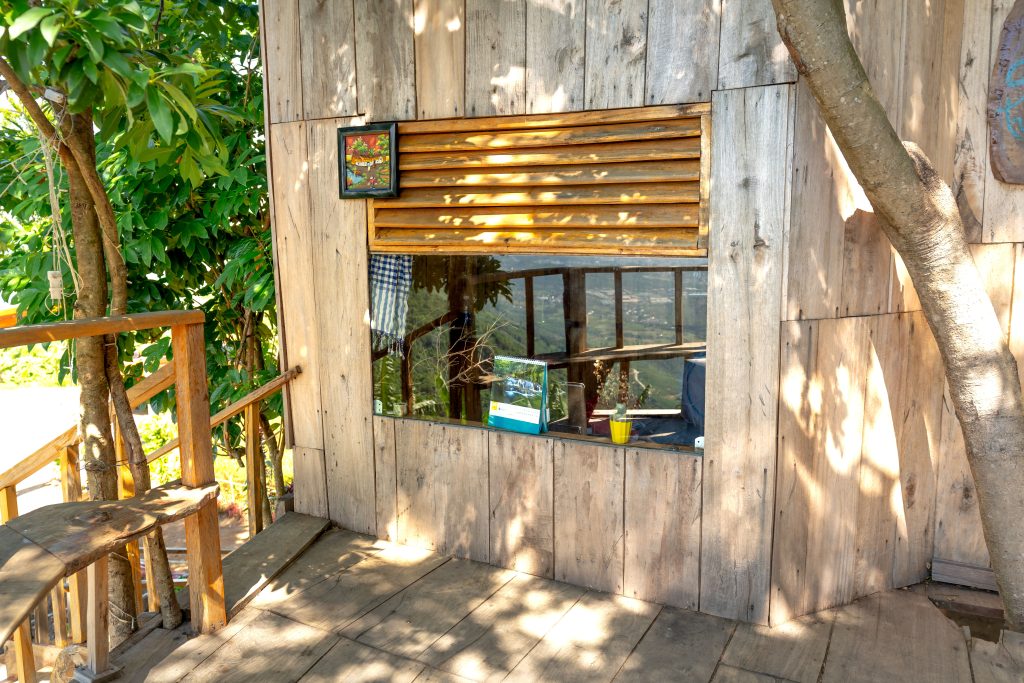
Design a Small Outdoor Dining Area
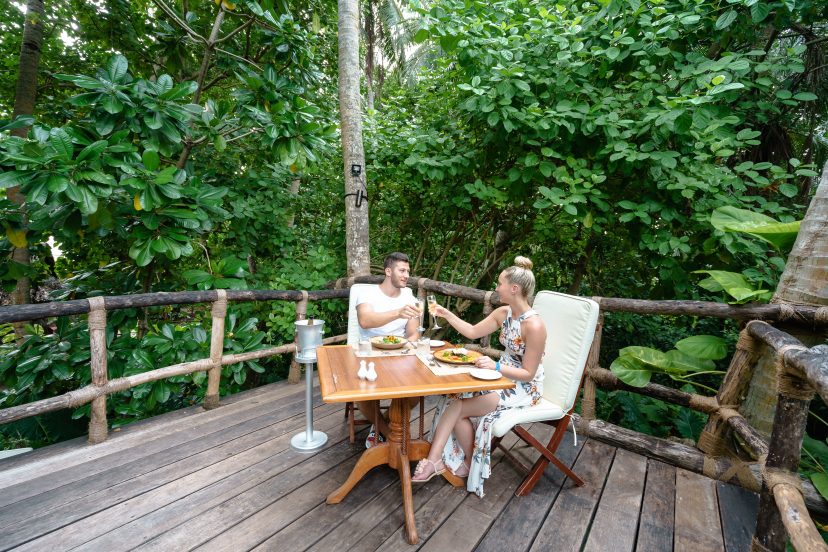
A dining deck suits snacks, games, or breakfast. A folding table and movable chairs offer flexibility when the deck also serves as the main entrance.
Allow space to pull out chairs without blocking the exit. Keep food preparation and open flames on the ground. For a larger gathering area, have the designer account for occupied furniture and groups of people rather than assuming an existing platform can carry them.
Try a Wraparound Treehouse Deck
A wraparound deck connects different views and seating nooks. It is especially appealing where the treehouse sits among several interesting branches or faces shifting sunlight.
The trade-off is a longer perimeter requiring more guardrail, framing, and upkeep. Avoid a narrow strip that looks impressive in pictures but cannot accommodate passing people. A partial wraparound can offer variety with less weight and complexity.
Build a Nature-Watching or Family Activity Zone
For birdwatching, drawing, or simple outdoor games, prioritize a clear floor and an uninterrupted view. A weatherproof chalkboard or removable activity tray avoids bulky furniture.
Avoid attaching climbing nets, swings, zip lines, or hanging chairs to the railing or framing without a separately engineered design. Those activities introduce forces beyond ordinary sitting and walking. Store binoculars and art supplies between visits.
Choose Tree-Supported or Ground-Supported Framing
A deck supported by living trees must accommodate trunk growth and wind-driven movement. Separate trees can sway independently, complicating connections. Specialist treehouse attachment hardware and engineered sliding connections may be appropriate, but the design depends on actual tree condition and loads.
Ground-supported posts can reduce the weight borne by a tree and may make expansion more straightforward. They still need suitable foundations and bracing. Ask a qualified arborist to assess the tree and a structural professional to design significant elevated additions; ordinary house-deck details do not automatically work in a living tree.
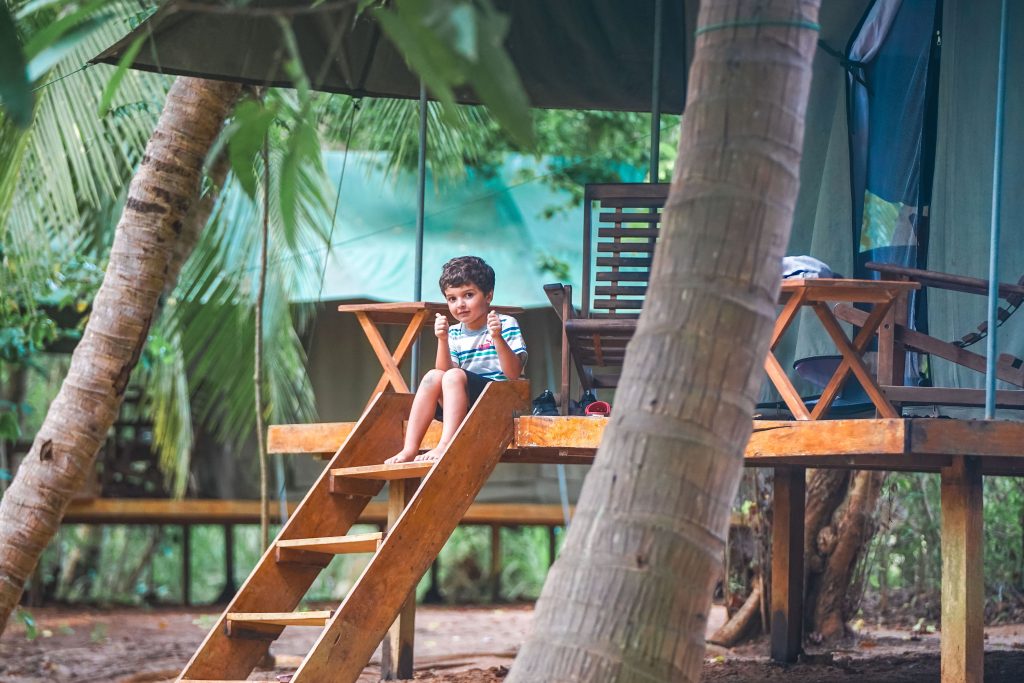
Make Railings, Gates, and Access Part of the Design
Treat every exposed edge as a fall hazard, even where a residential code might not require a guard at a particular height. Railings need sound posts, connections, rails, and infill—not just attractive panels.
For inspiration, compare treehouse railing ideas for safety and style before choosing an appearance that suits your structure. Keep benches and storage boxes away from railings where children could use them as steps. Provide secure handholds and clear entry landings.
Select Decking Materials That Handle Weather
Pressure-treated lumber, naturally durable wood, and appropriately specified composite decking can all suit outdoor platforms, depending on the design. Wood may require cleaning and periodic refinishing, while some composite boards become warm in direct sun and need manufacturer-specific support spacing.
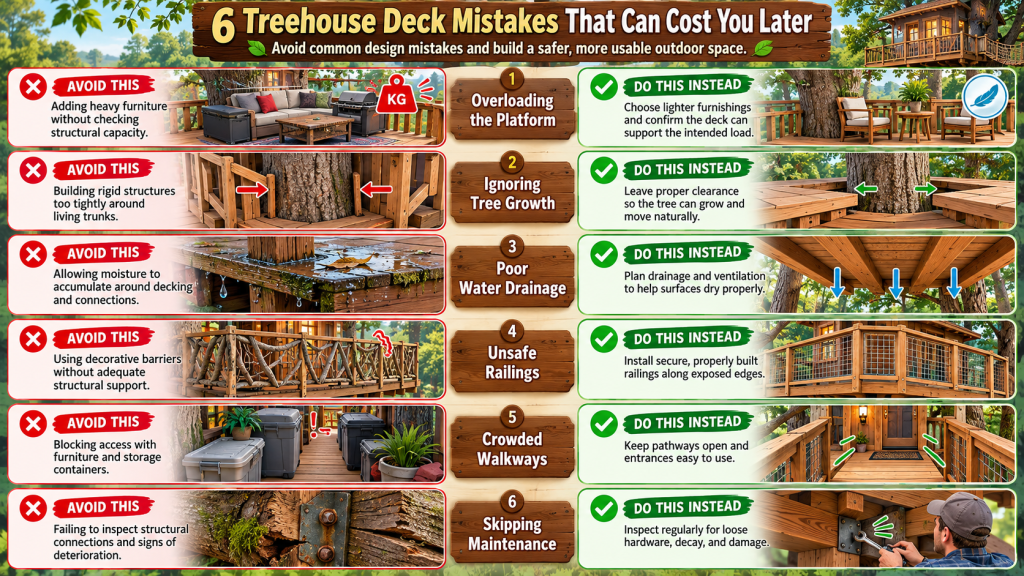
Match fasteners to decking and preservative treatments. Leave drainage and ventilation provisions in the design instead of trapping moisture beneath rugs or around trunk openings. Leave trunk clearance for growth and movement.
Add Shade, Soft Lighting, and Greenery Carefully
A small canopy, fabric shade, or string lights can make an open deck more welcoming, but attachments need thought. Shade sails can generate considerable wind loads, and lights should never be wrapped tightly around a growing trunk.
Solar lighting avoids routing household extension cords across the deck, although the panel still needs suitable sunlight. Prefer modest planters over heavy, wet containers. Place them inward, keep drainage away from vulnerable timber connections, and remove loose accessories before severe weather.
Plan for Maintenance and Realistic Costs
Compact platforms usually need less framing and upkeep than wraparound decks. Budget for foundations or specialist tree hardware, structural design, guardrails, weather-resistant fasteners, and safe access before spending on furniture.
Inspect the deck regularly for loosened connections, soft wood, corrosion, standing water, and changes in the supporting tree. Recheck it after storms and before seasonal use. If you notice a new lean, significant movement, cracking, or decay, close the deck until a qualified professional assesses it. Keep connection points accessible for inspection.
Recommended Products for a Treehouse Deck
These five accessories serve different needs on an elevated outdoor space. Confirm the deck’s capacity and usable dimensions before adding them, and keep every item clear of entrances and guards.
GCI OUTDOOR Freestyle Rocker Camping Chair — Indigo Blue
Best for: Comfortable, removable seating.
This folding rocker has a steel frame, solid armrests, a drink holder, and a spring-action rocking mechanism. It’s convenient for a relaxed reading corner and can be put away when you need more floor space. Rocking requires adequate clearance on all sides, so it suits a larger, level deck rather than a narrow platform.
Coleman Outdoor Folding Table with Snap-Together Design and Carry Bag
Best for: Flexible outdoor dining.
Coleman’s aluminum folding table offers a practical surface for meals, puzzles, or afternoon drinks, then packs into a carry bag when the deck needs to be cleared. Its roughly square tabletop is useful for shared activities, but it takes more room than a small side table. Measure the space needed for chairs and movement before choosing it.
Keter City 30 Gallon Resin Outdoor Storage Box and Patio Side Table — Dark Grey
Best for: Small-item storage.
This compact resin box keeps lightweight outdoor accessories together while providing a flat surface for occasional side-table use. Its wood-look finish fits a rustic treehouse without the upkeep of a wooden storage chest. Check its footprint and keep it away from the guardrail; it should not become a climbing aid or be assumed suitable as a seat.
Brightech Ambience Pro Solar Powered Outdoor String Lights, 48 ft — Soft White
Best for: Low-key evening atmosphere.
The 48-foot strand includes 15 LED bulbs and a detachable solar panel, making it useful where wired power would be inconvenient. It creates ambient rather than task lighting, so provide separate illumination for stairs and access points. Mount the cable without constricting branches or relying on fragile limbs, and remember that charging depends on available sunlight.
MontVoo Outdoor Waterproof Reversible Patio Rug, 6 x 9 ft — Boho Grey
Best for: Making a generous deck feel finished.
This reversible plastic-straw-style outdoor rug brings pattern and a more defined seating area to a plain platform. It is suitable for occasional outdoor use and can be moved for cleaning. Its 6-by-9-foot size is too large for many small treehouses; avoid letting it cover inspection points, trap moisture, or create curled edges that could trip someone.
What Injury Research and Building Guidance Tell Us
A 2009 study in Academic Emergency Medicine estimated 47,351 emergency-department-treated treehouse injuries among people aged 19 or younger in the United States during 1990–2006. Falls accounted for 78.6% of the cases. These historical figures cannot establish a deck’s current risk but underscore the need for guarding.
The 2021 International Residential Code’s guard provisions specify guards for certain open-sided residential walking surfaces more than 30 inches above the area below, generally at least 36 inches high with openings that prevent passage of a 4-inch sphere. These provisions are useful reference points, not automatic approval criteria for treehouses; local rules and occupancy classifications vary.
The American Wood Council’s deck guidance explains that prolonged moisture exposure affects structural wood design values. Its conventional residential deck details do not replace treehouse-specific engineering. For children, also consult the CPSC’s outdoor home playground guidance for fall protection, protective surfacing, and routine inspections.
Frequently Asked Questions About Treehouse Decks
Can you add a deck to an existing treehouse?
Yes, but only after checking the existing structure’s ability to support the extension. New joists, furniture, people, and guardrails change the loads on its supports. A designer should review the framing, connections, foundations, and tree condition before work begins. Decorative additions are simpler than enlarging the actual elevated floor.
What size should a treehouse deck be?
The right size depends on its purpose and the load-bearing design, not a universal measurement. For reading, plan around a chair, small table, and clear access. For dining, mock up the table with chairs pulled out. Keep the usable walking route and guard placement in the drawing before finalizing dimensions.
Is wood or composite better for a treehouse deck?
Either can work when the structural design permits it. Wood provides a natural appearance and may be easier to repair board by board, but its finish needs attention. Composite can reduce some maintenance demands, yet weight, thermal expansion, surface temperature, and joist spacing vary by product. Compare those requirements before deciding.
Can I put a pergola or roof over the deck?
Possibly, although overhead structures introduce extra dead load, wind forces, and potentially snow loads. A pergola must not be attached casually to existing guard posts. Have its columns and connections designed as part of the overall structure. A removable shade solution may be more practical for a modest deck, subject to wind conditions.
What furniture is safest for an elevated deck?
Stable, appropriately sized furniture that does not interfere with exits or guards is the sensible starting point. Lightweight folding pieces simplify cleaning and seasonal storage, but they still need a firm surface and enough room for safe use. Avoid placing benches, stools, or storage boxes beside railings where children might climb on them.
Final Thoughts: Make Your Treehouse Deck Work for You
The best Treehouse Deck is one you’ll comfortably use, rather than one that simply adds the most square footage. Start with a clear purpose and a layout that respects the entrance, the best view, and the available walking space. A reading perch may need just a chair and small table; a dining area calls for more clearance and an independently checked load capacity.
Choose weather-appropriate materials, keep railings and access uncomplicated, and remember that the supporting tree is alive and changing. Portable accessories such as the Coleman folding table or Keter storage box can add flexibility without permanent clutter. For any substantial expansion, confirm the structural design and tree health first. Then furnish the finished space sparingly enough that it remains safe, open, and easy to maintain.